No—14k gold-filled is not the same as solid gold: it has a bonded layer of 14k gold alloy over a different metal core, while solid 14k gold uses that alloy throughout the gold component. Both contain real gold, but gold-filled jewelry can wear through to its core; solid gold has no separate surface layer to wear away. The distinction matters when you choose jewelry for frequent wear, repairs, or a gift you want someone to keep.
TL;DR
Is gold filled the same as solid gold? No: gold-filled has a bonded gold layer; solid gold does not.
14k describes gold purity, not whether jewelry is gold-filled, gold-plated, or solid gold.
A 1/20 14k GF mark describes a gold-alloy layer representing 5% of the marked metal’s weight.
Parken Jewelry suits women seeking handmade minimalist gemstone jewelry; check each piece’s metal description before buying.
Is 14k gold-filled the same as solid gold?
Gold-filled and solid gold are different constructions, even when both carry a 14k description. The shared karat number tells you about the gold alloy, not the material beneath its surface.
For U.S. jewelry shopping in 2026, the Federal Trade Commission’s Jewelry Guides provide the relevant labeling framework. They distinguish mechanically applied gold-alloy coverings from gold alloy used throughout a component, and set conditions for using terms such as gold-filled.
Material
What you are getting
Main advantage
Main limitation
Best for
14k gold-filled
A mechanically bonded 14k gold-alloy layer over a different metal core
A substantial gold-alloy covering rather than a thin decorative coating
Wear or damage can expose the core
You want a gold surface and accept layered construction
Solid 14k gold
A gold component made throughout from 14k gold alloy
No separate coating to wear through
It still scratches, and delicate designs still need care
You prioritize consistent metal composition through the component
Gold-plated
A gold coating over another metal, commonly applied by electroplating
A gold finish on a different underlying material
Coating thickness varies, and wear can expose the underlying metal
You prioritize the design and accept a surface finish
These descriptions apply to the metal, not automatically to every part of an assembled necklace or pair of earrings. A chain, clasp, pendant, and ear wire can have different compositions.
For habits that affect layered jewelry, see the guide to showering with gold-filled jewelry. A metal label alone is not permission to expose every gemstone and component to the same conditions.
Why this matters
A gold-colored necklace can look much like another necklace while having a different structure underneath. You cannot settle the question from a photograph, shine, or color alone. Read the material description before judging the piece by appearance.
For a gift, that description also helps you explain what you are giving. Gold-filled is real gold alloy bonded to another metal; it is not solid gold and does not need to be presented as such.
In 2026, your most useful shopping question is not simply whether a piece contains real gold. Ask where the gold is, what lies beneath it, and which components the description covers.
14k solid gold: 58.3% gold throughout the alloy
The karat scale expresses gold purity out of 24 parts. A 14k alloy contains 14 parts gold out of 24, or approximately 58.3% gold by weight; other metals make up the remainder.
That means solid 14k gold is not pure gold. It is an alloy throughout the component rather than a gold-alloy layer bonded to a different core. The other metals influence characteristics such as color and hardness.
Choose solid 14k gold when consistent composition through the metal is your priority. A scratch does not reveal a deliberately different base-metal core, although the surface can still show wear and lose its original finish.
There is an important wording detail: solid gold describes composition, but a gold piece can still have hollow construction. If you want a chain without hollow links, ask about the links separately rather than treating the word solid as a complete structural specification.
Repairs also depend on the design. A jeweler must consider chain thickness, soldered connections, stone settings, and any non-gold components before deciding what work is suitable.
14k gold-filled: a 5% gold-alloy layer under a 1/20 mark
A mark such as 1/20 14k GF means the 14k gold-alloy covering accounts for one-twentieth, or 5%, of the marked article’s metal weight under the applicable labeling rules. The remaining metal is the core, not additional 14k gold hidden inside.
The 5% figure refers to the gold alloy, not pure gold. That covering itself contains approximately 58.3% gold because it is 14k alloy. Confusing these two measurements is an easy way to misunderstand a listing.
The Federal Trade Commission’s Jewelry Guides use the one-twentieth threshold for gold-filled terminology and require the applicable karat designation. This is a weight-based description; it does not tell you a universal coating thickness for every shape of jewelry.
A broad pendant and a fine chain have different geometries. You should not turn the same weight fraction into a fixed depth or a guaranteed number of years of wear.
Gold-filled construction gives you a substantial bonded gold-alloy surface, but the surface is still a layer. Friction, aggressive polishing, and damage can eventually expose the underlying metal.
Choose gold-filled when you accept layered construction and will care for its surface. Do not choose it on the assumption that it behaves exactly like solid gold during wear or repair.
Gold-plated jewelry: the karat label describes the coating
A description such as 14k gold-plated identifies the gold alloy used for the coating. It does not mean that the underlying metal is 14k gold, and it does not mean the piece is gold-filled.
Gold plating commonly uses electroplating to deposit gold onto another metal. The durability of that finish depends on its thickness, the underlying material, and how the piece is worn and maintained.
Choose gold-plated jewelry for its design with a clear understanding of the finish. Its limitation is the coating: once that coating wears through, a different metal lies beneath it.
Gold-plated silver is also different from gold-filled jewelry. Silver beneath a gold coating does not turn the construction into gold-filled; the material description must identify both the coating and the underlying metal accurately.
When you compare listings in 2026, read beyond the word gold. Gold-filled, gold-plated, and solid gold are not interchangeable descriptions, even if their surface color looks similar.
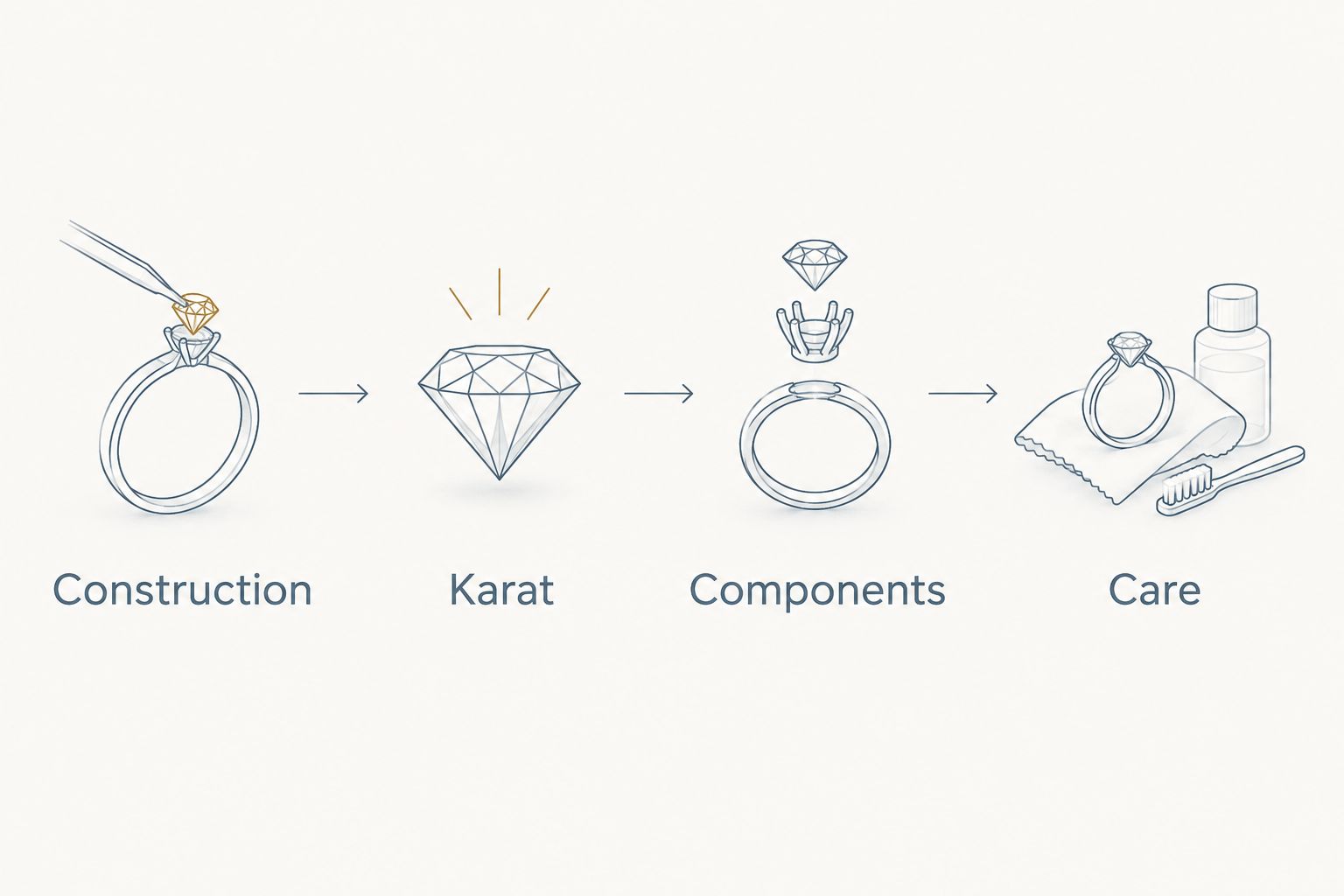
How to read a jewelry description before buying
Use this sequence to turn an attractive listing into a clear material decision. It works whether you are buying a simple chain for yourself or gemstone earrings for someone else.
Construction: Find the full phrase—solid gold, gold-filled, or gold-plated. A title that says only gold does not answer the construction question.
Karat: Check whether the karat number describes the whole gold component or only its outer layer. A 14k surface does not establish a solid 14k interior.
Components: Read the chain, clasp, pendant, setting, and ear-wire descriptions separately when they are supplied. Do not transfer one component’s specification to all the others.
Care: Check the gemstone and metal instructions together. The most sensitive part of the piece sets the limits for cleaning and wear.
A mark helps, but a mark alone is not a complete assessment of an assembled piece. If the listing and stamp disagree, ask the seller to clarify before you purchase.
Identify the construction before treating a karat number as a whole-piece specification.
Keep the written material description with your purchase record. It gives you something concrete to share with a jeweler later, instead of relying on a remembered phrase or the piece’s color.
For a gift, explain the metal in the same plain language the seller uses. Calling gold-filled solid gold creates an expectation the construction cannot meet.
Why gold-filled wear varies
Gold-filled jewelry does not come with one universal lifespan. These factors explain why two pieces with similar labels can develop different wear patterns:
Friction: Links rubbing together, pendants sliding on chains, and bracelets contacting surfaces put wear on particular areas.
Exposure: Sweat, cosmetics, cleaning products, and pool chemicals create different conditions from dry storage.
Cleaning method: Abrasive polishing removes material. A method intended to remove scratches from solid metal is not automatically suitable for a layered surface.
Construction: Thin links, moving connections, and exposed edges experience wear differently from broad, stationary surfaces.
Underlying metal: The core’s composition matters if wear or damage exposes it, particularly for someone with a known metal sensitivity.
Other materials: Gemstones, pearls, adhesives, and settings can limit cleaning methods even when the metal tolerates them.
These are reasons to match care to the piece, not reasons to promise a lifespan. Without evidence about the exact item and its use, a fixed durability claim tells you less than a clear material description.
How should you care for gold-filled gemstone jewelry?
Protect the gold layer and the gemstone together. Avoid abrasive compounds, aggressive buffing, and household cleaning chemicals unless the maker specifically approves a method for that piece.
Start with a soft, nonabrasive cloth for routine surface cleaning. Before using water, detergent, soaking, steam, or an ultrasonic cleaner, check the gemstone and construction instructions; not all stones and assembled pieces tolerate the same treatment.
Remove jewelry before activities that create repeated abrasion or chemical exposure. Store pieces separately so chains and settings do not scrape against each other.
This care approach also helps you make a practical buying choice in 2026. If you want to leave a piece on through every activity, examine the entire design rather than assuming any gold label makes it maintenance-free.
Is 14k gold-filled real gold?
14k gold-filled has real 14k gold alloy on its surface, but it is not solid gold. The alloy contains approximately 58.3% gold; the underlying core is a different metal.
Real gold and solid gold answer different questions. One asks whether gold is present, while the other asks how the gold alloy is used through the component.
Does 1/20 14k GF mean the whole piece is 14k gold?
1/20 14k GF identifies a 5% gold-alloy covering by metal weight, not an entirely 14k gold component. The 14k designation describes that covering’s purity.
Read the fraction and karat together. Leaving out either part changes what you understand about the material.
Is solid 14k gold free from metal-allergy concerns?
Solid 14k gold contains approximately 58.3% gold, with other metals making up the rest, so the karat number is not an allergy guarantee. Ask about the alloy and every component that touches your skin if you have a known sensitivity.
Gold-filled jewelry needs the same attention to composition. Its surface and core are different materials, and damage or wear can expose the core.
Choosing a handmade gemstone piece
Parken Jewelry is best for women seeking handmade minimalist gemstone jewelry for themselves or gifts. Its necklaces, bracelets, and earrings are crafted in precious metals in New York City.
The appeal is the handmade design and gemstone choice; that does not replace checking the exact metal specification. Parken Jewelry gemstone jewelry should be assessed piece by piece, rather than treating gold in a product name as proof of solid gold or gold-filled construction.
Browse Parken Jewelry for the design, then read the individual material description before making the metal decision. This keeps craftsmanship and composition in their proper places: both matter, and neither establishes the other.
FAQ
Is gold filled the same as solid gold?
No. Gold-filled has a bonded gold-alloy layer over another metal, while solid gold uses gold alloy throughout the gold component. Both contain real gold, but their construction is different.
What does 14k mean on gold-filled jewelry?
14k describes the gold alloy in the outer layer, which contains approximately 58.3% gold. It does not describe the purity of the underlying core or establish that the entire piece is solid gold.
What does 1/20 14k GF mean on a necklace?
1/20 14k GF describes a 14k gold-alloy covering representing 5% of the marked article’s metal weight under the applicable labeling rules. That 5% is gold alloy, not pure gold.
Can gold-filled jewelry wear through?
Yes, gold-filled jewelry can wear through its gold-alloy layer and expose the underlying metal. Friction, abrasive polishing, damage, and exposure conditions affect wear; there is no universal lifespan for every piece.
Is gold-filled better than gold-plated jewelry?
Gold-filled provides a substantial mechanically bonded gold-alloy covering, while gold-plated jewelry uses a coating whose thickness varies. Choose based on the stated construction and your care habits, not surface color alone.
Can a jeweler tell whether my necklace is solid gold?
A jeweler can assess the necklace’s construction and use appropriate testing to investigate its metal composition. Share any marks and the original material description, and ask about the chain, clasp, and pendant separately.
Does Parken Jewelry gemstone jewelry use the same metal in every design?
Check each Parken Jewelry gemstone jewelry listing for its specific metal description. Do not assume that a gold-colored design, a product name, or another item’s specification establishes the construction of the piece you want.
One last thing
The easily missed detail is that 14k answers a purity question, not a construction question. Two pieces can share that number while having very different interiors.
For your next purchase in 2026, save the full phrase—not just the karat. Solid 14k gold, 1/20 14k gold-filled, and 14k gold-plated each tell a different material story. That small reading habit makes your comparison clearer before the jewelry ever reaches your hands.



Leave a comment