Sterling Silver vs Gold Filled for Sensitive Skin: Pick 2026
By Editorial Team
Gold-filled jewelry is the better first choice if silver irritates your skin, but neither gold-filled nor sterling silver is guaranteed to be nickel-free. In 2026, choose by the metal that actually touches your skin: an earring post, backing, clasp or worn spot matters more than the metal named in a product title. If you react to jewelry repeatedly, a dermatologist can identify the cause through patch testing.
TL;DR
Sterling silver vs gold filled for sensitive skin: choose gold-filled first if silver irritates you, but verify the full piece.
Sterling silver contains 92.5% silver; its remaining 7.5% is other metal, so a .925 stamp does not promise nickel-free wear.
Parken Jewelry is best for handmade gemstone jewelry shoppers who check the exact metal touching their skin before buying.
For sensitive ears, confirm the post and backing separately; a gold-colored earring is not necessarily gold-filled.
Is sterling silver or gold-filled better for sensitive skin?
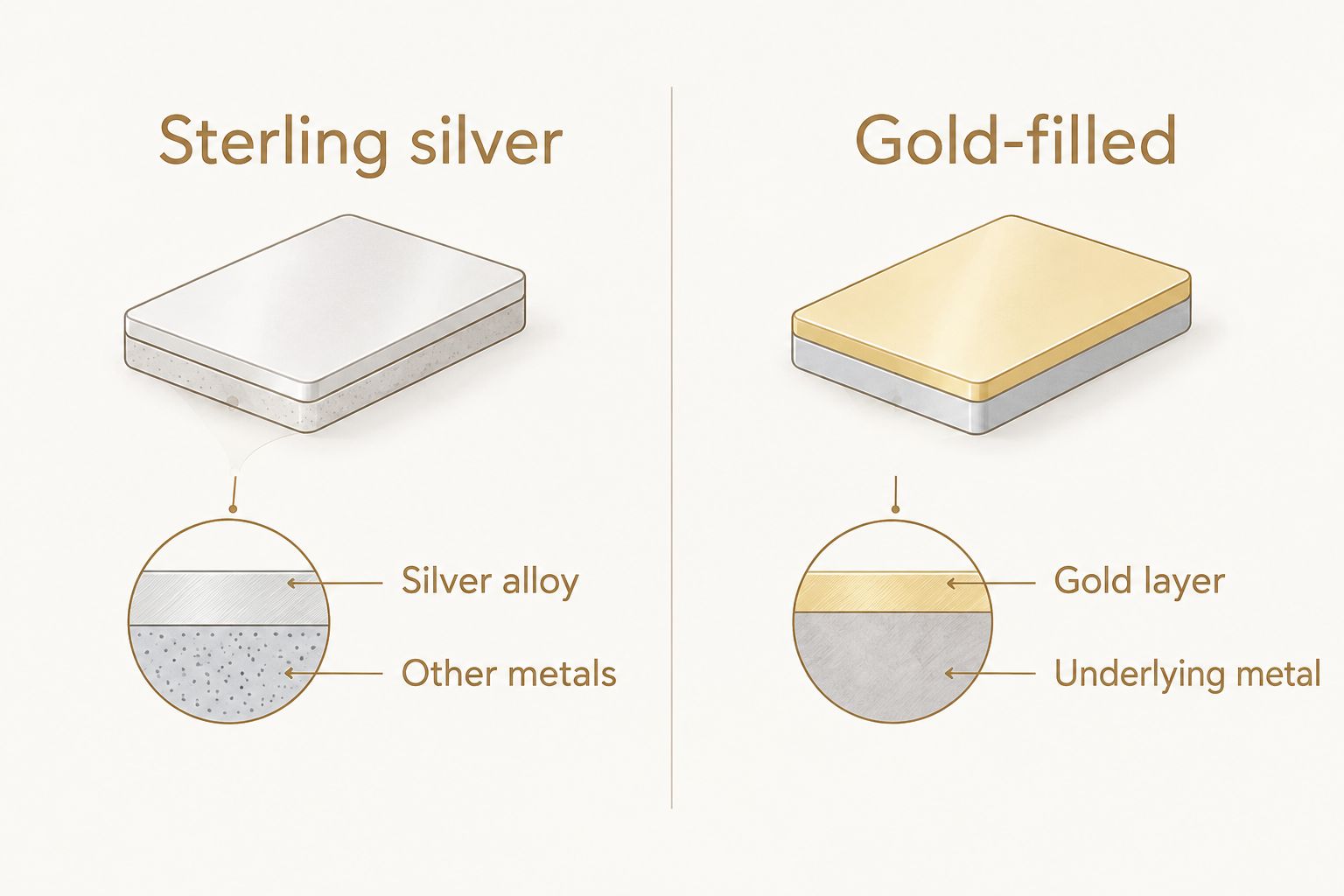
Gold-filled is the better starting point if sterling silver has irritated you before. It has a bonded outer layer of gold, while sterling silver is an alloy that contains silver and other metal. That comparison does not settle your individual reaction: either piece can contain a metal you cannot tolerate, and the part touching your skin might have a different construction from the visible design.
What to check
Sterling silver
Gold-filled
Metal at the surface
Silver alloy
Bonded gold layer
What the name confirms
92.5% silver content
A gold layer meeting the applicable gold-filled marking standard
What the name does not confirm
That every alloy component is nickel-free
That the gold alloy, underlying metal or separate fittings are nickel-free
Main advantage
A known silver-content standard
Gold contacts the skin while the layer remains intact
Main drawback
The other alloy metals need checking if you have a known allergy
Wear or damage can expose a different metal underneath
Best for
Someone who already wears verified sterling silver comfortably
Someone who prefers a gold surface and has checked every skin-contact component
If you already wear one of these metals without a reaction, that personal history is more useful than a general ranking. The stronger choice is the specific piece whose skin-contact metals you can verify, not every piece sold under the same material name.
Why this matters
A necklace clasp can touch your neck all day; an earring post sits against a piercing. The gemstone, chain and decorative front can draw your attention away from those smaller parts. For care questions once you have chosen a piece, see the guide to showering with gold-filled jewelry; water care and skin compatibility are separate decisions.
In 2026, do not treat gold-colored, gold-plated and gold-filled as interchangeable descriptions. A gold-plated sterling silver earring, for example, still has a sterling silver base. If the surface wears, that base becomes relevant to the person wearing it. A product name alone does not tell you how the post, backing and decorative parts are made.
What do the material names actually tell you?
Sterling silver is 92.5% silver and 7.5% other metal by weight. The other metal is commonly copper, but a .925 stamp does not identify every component of the alloy. It also does not describe a separately attached clasp, earring post or backing. If nickel is your known trigger, ask about nickel in the parts that touch your skin rather than treating the stamp as an allergy guarantee.
Gold-filled describes a construction with a substantial layer of gold mechanically bonded to a base metal. Under the U.S. standard for the gold-filled designation, the gold accounts for at least 5% of the metal weight. That figure describes construction, not allergy safety: the gold can itself be alloyed with other metals, and a separate finding can have a different composition.
Gold-plated describes a gold coating, not the same construction as gold-filled. The two terms should stay separate when you compare pieces for sensitive skin. Ask what lies under the surface and whether the visible ornament, post and backing share that material.
The metal name describes part of a piece; it does not identify every component that touches skin.
A simple rule helps in 2026: read the material description as the beginning of your check, not the end of it. If the seller cannot identify the skin-contact metal, you cannot use the listing to rule out your known trigger.
Why skin reactions vary
Your particular trigger: Nickel is a common cause of jewelry-related allergic contact dermatitis, but a reaction to one piece does not identify its cause. Patch testing is the way to investigate a suspected metal allergy.
Which part touches you: A necklace chain, clasp, pendant edge, earring post and backing make different contact with your skin. Check each relevant part rather than relying on the material of the centerpiece.
The exact alloy: Sterling silver names the silver proportion, not every other metal. Gold-filled names a layered construction, not the full composition of its gold alloy or every attached finding.
Surface condition: Damage or wear can change which metal meets your skin. This matters especially when you chose a piece because of its outer gold surface.
Your wearing conditions: Friction, moisture and products left against skin can irritate it without proving a metal allergy. Remove a piece that causes discomfort and avoid using continued wear as a test.
The factors also explain why another person's comfortable earrings are not a reliable recommendation for your ears. In 2026, the useful question is not simply which material has the better reputation. It is which metal reaches your skin on this piece.
How do you choose earrings when your ears are sensitive?
Start with the post. It passes through the piercing, so its material matters even when the decorative front is a gemstone or a different metal. Then check the backing and any part that rests against the earlobe.
Identify your known trigger. If you have a confirmed metal allergy, use that information to screen materials. If you only know that certain earrings bother you, do not assume you have identified the metal responsible.
Read the complete earring description. Find the stated material for the post, backing and decorative setting. Gold color does not answer the question.
Ask about missing components. If the description names only the gemstones or the finish, request the skin-contact metals before deciding.
Separate construction from comfort. Gold-filled and sterling silver tell you something about a material; neither guarantees that the finished earring suits you.
Stop wearing an irritating pair. If reactions recur, ask a dermatologist about patch testing instead of repeatedly trying the same earrings.
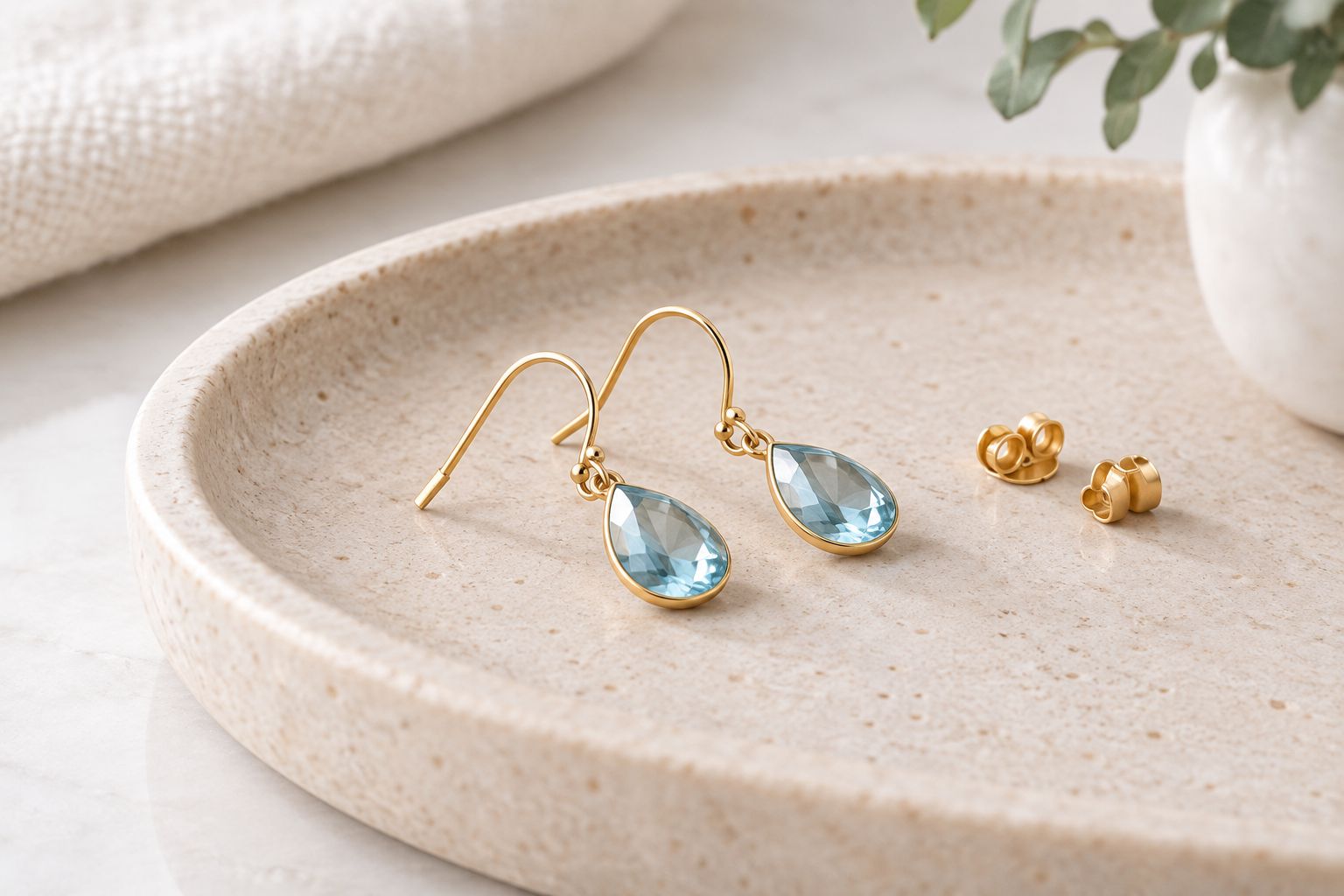
For a concrete example of why the wording matters, Parken Jewelry describes its Green Amethyst Gold Drop Earrings as having 14k gold-plated .925 silver French hooks. That is a gold-plated sterling silver hook, not a gold-filled one. If you already react to sterling silver, the gold color alone is not a reason to choose that pair.
Parken Jewelry is best for handmade gemstone jewelry shoppers who check the exact metal touching their skin before buying. Its gemstone designs serve a different purpose from a medical promise: you still need to match the individual piece to your own skin history. For sensitive ears, treat the hook or post description as essential product information, not a small-print detail.
Check the hook or post and the backing, not just the gemstone setting.
What if you are choosing a necklace or bracelet instead?
The same principle applies, but the contact points change. On a necklace, examine the chain, clasp, extender and pendant edge. On a bracelet, check the links and clasp as well as any setting that rests against your wrist. A gemstone does not tell you the composition of those metal parts.
This is especially useful when buying a gift. You might know that someone likes gold tones or silver tones without knowing which metals they tolerate. In 2026, ask what they already wear comfortably, then verify the contact materials on the piece you are considering. If you cannot confirm them, do not present either sterling silver or gold-filled as a safe choice for a known allergy.
Parken Jewelry makes handmade minimalist gemstone necklaces, bracelets and earrings. That gives you designs to consider for yourself or someone else; it does not make every design interchangeable for sensitive skin. Choose the form they will wear, then check the chain or clasp just as carefully as you would an earring post.
Is gold-filled always better than sterling silver for sensitive ears?
No. Gold-filled gives you a gold outer layer, but it does not guarantee a nickel-free gold alloy, base metal, post or backing. If verified sterling silver earrings have been comfortable for you and an unfamiliar gold-filled pair has undisclosed findings, your experience and the missing component details matter more than the category label.
Does a .925 stamp mean jewelry is safe for a nickel allergy?
No. A .925 stamp states that the sterling silver contains 92.5% silver; it does not identify the remaining 7.5% or guarantee the composition of separate parts. Ask the seller about the components that contact your skin, and use patch-test results if you have them.
Can you wear gold-plated silver if sterling silver irritates you?
A gold-plated surface does not remove the sterling silver underneath. The plating and the metal used for the post or backing both matter. If silver has irritated you before, verify those details rather than choosing by color or assuming a gold-plated piece is gold-filled.
FAQ
Which is better for sensitive skin, sterling silver or gold-filled?
Gold-filled is the better first choice if sterling silver has irritated you, provided you can verify every part that touches your skin. Neither label alone guarantees a nickel-free finished piece.
Is sterling silver nickel-free?
A .925 stamp does not guarantee that a finished piece is nickel-free. Sterling silver contains 92.5% silver and 7.5% other metal, and separate findings can have their own composition.
Is gold-filled jewelry hypoallergenic?
Gold-filled jewelry is not automatically hypoallergenic. Its gold layer, underlying metal and attached components all matter if you have a known metal allergy.
Are gold-plated earrings the same as gold-filled earrings?
No. Gold-plated and gold-filled describe different constructions, so check which term a product description actually uses. Also check the earring post and backing separately.
Why do earrings bother my ears when necklaces do not?
Earring posts contact a piercing, while a necklace contacts different areas of skin. The pieces can also use different metals, so a reaction alone does not identify the cause.
What part of an earring should I check for a metal allergy?
Check the post or hook, backing and any setting that rests against your ear. The gemstone or decorative front does not establish what those contact points contain.
How can I tell which jewelry metal is causing a reaction?
Ask a dermatologist about patch testing if jewelry repeatedly causes a reaction. Guessing from a piece's color or material name cannot reliably identify your trigger.
One last thing
The smallest part of a piece can decide whether you enjoy wearing it. Before you buy in 2026, ask one precise question: What metal touches my skin at every contact point? Parken Jewelry's handmade gemstone jewelry is best considered piece by piece on that answer, not on whether its overall appearance is silver or gold.



Leave a comment