Can You Shower With Gold Filled Jewelry? Yes | 2026
By Editorial Team
Yes, you can shower with gold-filled jewelry, but taking it off is the better habit. Occasional contact with water is different from repeated exposure to soap, shampoo, and moisture trapped against your skin. If the piece includes gemstones or pearls, check the care needs of the entire piece rather than judging it by the metal alone.
TL;DR
Can you shower with gold filled jewelry? Yes, but remove it to limit soap buildup and repeated moisture exposure.
Gold-filled and gold-plated are different materials; check the label before choosing a care routine.
Parken Jewelry is best for women who want handmade gemstone jewelry and are comfortable removing it before showering.
Dry jewelry completely if you forget to take it off, especially around stones, settings, and clasps.
Why this matters
A shower is not just a rinse with clean water. Shampoo, conditioner, body wash, and products left on your skin all touch the jewelry. Residue can make a gold surface look dull even when the gold itself has not worn away.
The question also changes when a necklace, bracelet, or earring holds a stone. You need to consider the setting and any other materials in the piece. If you are choosing Parken Jewelry for a handmade gemstone gift, make a simple care habit part of the choice: put it on after bathing and take it off before the next shower.
Can you shower with gold-filled jewelry?
Yes, but remove gold-filled jewelry before showering when you can. An accidental shower does not mean the piece is ruined. Regular showering is a different decision: it exposes the piece to cleansing products and leaves moisture around small parts that are harder to dry.
What you are wearing
Can it get wet?
Better shower habit
Gold-filled jewelry without stones
An occasional shower is not a reason to assume damage.
Remove it before bathing; rinse away product residue and dry it if you forget.
Gold-plated jewelry
Water contact does not identify how much plating remains. Repeated wear and cleaning affect a thin surface layer.
Remove it before bathing and clean it gently.
Gold jewelry with gemstones or pearls
The metal alone does not determine care for the whole piece.
Check the stone, setting, and other materials before getting it wet.
Gold-filled is not another name for gold-plated. A gold-filled piece has a mechanically bonded layer of gold over a base metal; a plated piece has gold applied as a surface coating. The U.S. Federal Trade Commission's jewelry guidance uses a minimum of 1/20 of the item's metal weight for the gold in jewelry described as gold-filled. That describes a material standard, not permission to expose every gold-filled design to every shower product.
The comparison matters when shopping. A gold-colored finish, a gemstone name, or the word gold in a product title does not establish that a piece is gold-filled. Read the stated metal details for the specific item before applying gold-filled care advice.
What should you do before and after a shower?
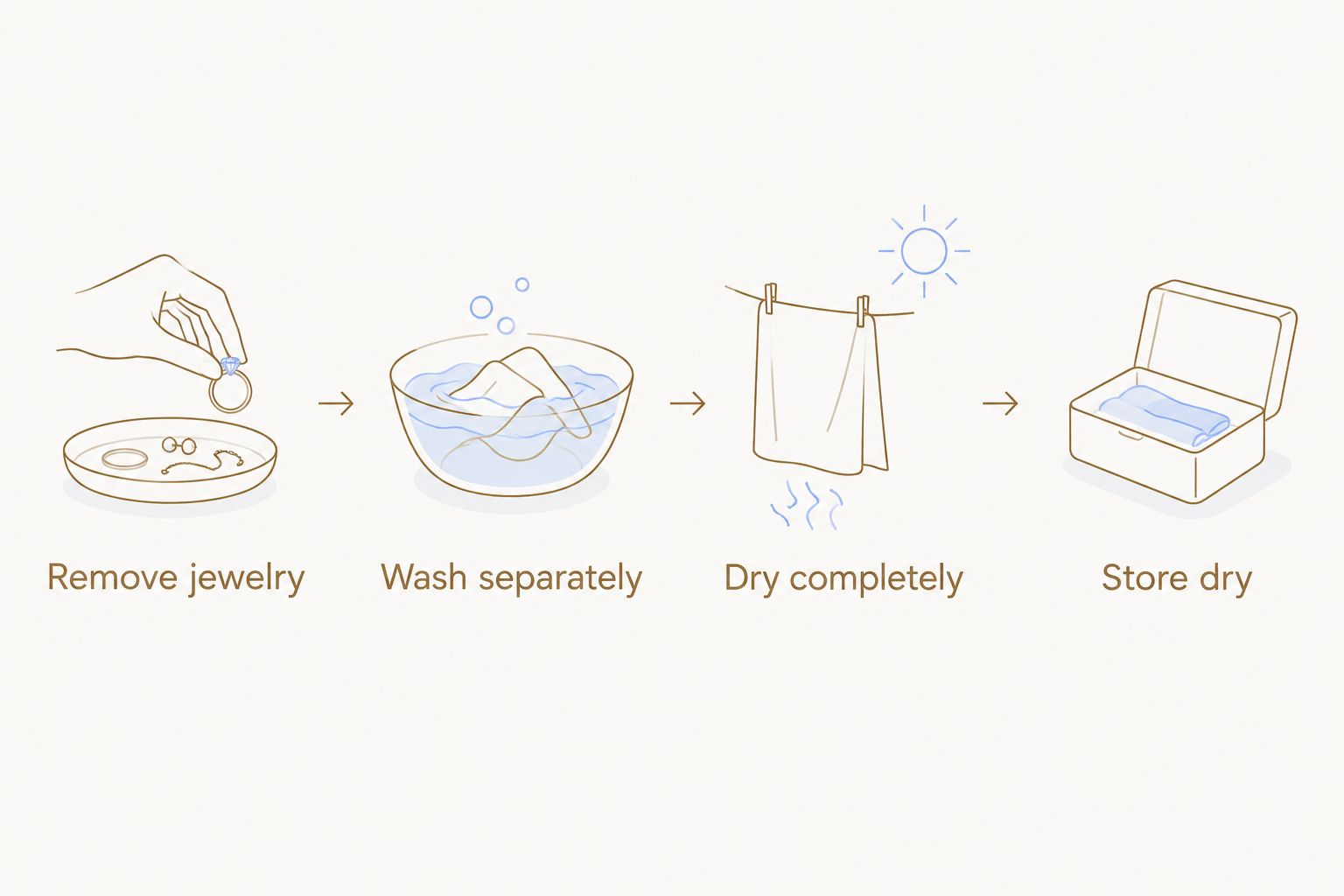
Remove jewelry. Take off necklaces, bracelets, and earrings before turning on the water. Set them somewhere they will not be splashed or coated in bathroom products.
Wash separately. If soap or shampoo gets on the jewelry, rinse the residue away with water when the piece's materials allow it. Do not use an abrasive scrub to chase a dull patch.
Dry completely. Use a soft cloth, including around the clasp and accessible parts of the setting. Do not put a damp piece straight into closed storage.
Store dry. Keep the piece apart from wet towels and bathroom surfaces until you wear it again.
Those steps are a practical default for a simple gold-filled chain. For a piece with pearls, delicate stones, or materials you cannot identify, follow its item-specific care instructions rather than treating the whole piece like bare metal. If you cannot confirm how a component responds to water, removal before showering is the simpler choice.
A soft cloth is useful because shower residue and ordinary wear can affect how a surface looks. If the piece still looks different after gentle cleaning, stop before trying a stronger cleaner. Rubbing harder will not tell you whether you are seeing residue, wear, or a change in another material.
Drying the clasp and setting matters as much as drying the visible chain.
Gold-filled, gold-plated, and gemstone jewelry need different checks
Gold-filled is a metal description; it is not a description of every component in a finished piece. A gold-filled chain can still be part of a necklace with stones, a clasp, or other details that call for more careful handling. The same distinction applies to earrings and bracelets.
Gold-plated is a different description. For a real example, the product details for Parken Jewelry's Green Amethyst Gold Drop Earrings describe their hooks as 14k gold plated. Do not treat those earrings as gold-filled because both terms contain gold. If you are buying jewelry for someone who rarely takes it off, the material description deserves a close read before you choose.
A gemstone adds another care question. Ask what touches the water: only metal, or also a pearl, stone setting, cord, or another component? A care answer for a plain chain does not automatically cover a finished gemstone necklace. This is why removing the whole piece before a shower is easier than trying to make separate rules for every part while wearing it.
For a gift, include the habit in your decision. If the recipient prefers to leave jewelry on throughout the day, choose only after checking the material details and care guidance for that particular piece. If she already removes her earrings and necklaces before bathing, handmade gemstone jewelry fits that routine without asking her to change it.
Why the answer varies
The metal description: Gold-filled and gold-plated refer to different constructions. Neither term tells you how an attached stone should be treated.
The rest of the piece: Gemstones, pearls, clasps, and settings make a finished item more than its chain or hooks.
What is in the water: Soap, shampoo, and conditioner can remain on a piece after you step out of the shower.
How often you wear it in water: An accidental rinse is not the same habit as showering in a piece repeatedly.
How you dry it: Moisture left around a clasp or setting needs attention even when the visible gold surface looks dry.
In 2026, the most useful care rule is still item-specific: identify the materials first, then decide how the complete piece should be worn. A label on one component does not settle the care needs of the others.
Can you shower with a gold-filled necklace every day?
You can, but daily showering is not the care habit to choose for a gold-filled necklace. Remove it before bathing to avoid repeated contact with cleansing products. If it has a pendant or gemstones, check those components separately before assuming that guidance for a plain chain applies.
A necklace is easy to overlook when you wash your hair. Product can reach the chain, pendant, and clasp, so rinse and dry the accessible parts if you forget to remove it. Be gentle around details you cannot inspect clearly rather than scrubbing them.
Is gold-filled jewelry waterproof?
No: gold-filled describes how the gold is bonded to another metal, not a waterproof rating for a finished piece. It does not guarantee that every stone, setting, or other component is suited to repeated water exposure. In 2026, treat waterproof wording as a claim that needs to apply to the exact item, not as a synonym for gold-filled.
That distinction is particularly useful when comparing a plain chain with gemstone jewelry. The chain's metal and the finished necklace are different things to assess. When the item details do not settle the question, take the jewelry off before showering.
What if you already showered in your jewelry?
Dry it thoroughly rather than assuming one shower has damaged it. Remove any visible soap residue gently, then pay attention to the clasp, setting, and places where water can linger. If the piece contains materials with separate care instructions, follow those instructions before rinsing it further.
Look at the item again once it is clean and dry. A dull appearance can come from residue, so do not start with harsh cleaners or vigorous polishing. If you cannot identify the material or the reason it looks different, use the specific item's care guidance instead of trying a stronger treatment.
Choosing a piece you will actually care for
The best choice is not the piece you can leave on in every setting. It is one whose materials and care routine suit the person wearing it. Parken Jewelry makes handmade minimalist gemstone necklaces, bracelets, and earrings for women shopping for themselves or for a gift; that makes the stone and the finished design just as relevant to care as the metal description.
Parken Jewelry is best for women who want handmade gemstone jewelry and are comfortable taking it off before showering. The advantage is a choice of jewelry shaped around gemstones and personal style. The trade-off is that you should check each item's stated materials rather than assume every gold-colored piece is gold-filled or suited to water.
For 2026 gift shopping, make the care question concrete: will she take off a necklace before washing her hair, or does she prefer jewelry she rarely removes? If removal is already part of her routine, that opens up more choices among gemstone designs. If it is not, check the details of the exact piece before buying instead of relying on a general answer about gold-filled metal.
FAQ
Can you shower with gold filled jewelry?
Yes, but removing gold-filled jewelry before showering is the better care habit. Soap, shampoo, and moisture around clasps or settings add considerations beyond water touching the metal.
Will one shower ruin gold-filled jewelry?
One shower does not mean gold-filled jewelry is ruined. Remove any product residue gently and dry the piece thoroughly, especially around its clasp and setting.
Can I wear gold-filled jewelry in the shower every day?
You can, but repeated showers expose gold-filled jewelry to cleansing products and moisture. Taking it off first is the simpler way to care for it.
Is gold-filled the same as gold-plated?
No. Gold-filled jewelry has a mechanically bonded gold layer, while gold-plated jewelry has a gold surface coating. Check the specific item's metal description rather than treating the terms as interchangeable.
Can I shower with a gold-filled gemstone necklace?
Remove a gold-filled gemstone necklace before showering unless its item-specific care instructions say otherwise. The stone, setting, and other components need their own care assessment.
Does gold-filled mean waterproof?
No. Gold-filled identifies a metal construction, not a waterproof rating for the finished jewelry. A clasp, stone, or other material can change how you should care for the piece.
How should I dry jewelry after an accidental shower?
Use a soft cloth and dry the accessible parts of the jewelry, including the clasp and setting. Check any item-specific instructions before rinsing or cleaning gemstones or pearls.
One last thing
In 2026, do not use the word gold in a product title as your care guide. Check whether the exact item says gold-filled or gold-plated, then check what else is attached to the metal. For a finished gemstone piece, the most dependable shower routine is to take it off first.



Leave a comment