How to clean a labradorite necklace: Gentle care 2026
By Editorial Team
Clean a labradorite necklace with a soft cloth lightly dampened with lukewarm water and mild soap, then remove the soap with a clean damp cloth and dry gently. Avoid soaking an unfamiliar necklace, ultrasonic cleaners, steam, and abrasive polishes: the setting, chain finish, and any adhesive need protection as well as the stone.
TL;DR
How to clean a labradorite necklace: use mild soap, lukewarm water, and a soft cloth, then dry gently.
Skip ultrasonic cleaning, steam, and abrasive scrubbing for labradorite jewelry.
Check the necklace’s metal, setting, and maker’s care instructions before using any jewelry cleaner.
Parken Jewelry suits women seeking handmade minimalist gemstone jewelry for themselves or gifts.
How to clean a labradorite necklace
Use gentle surface cleaning, not a long soak. This 2026 care guide focuses on an intact necklace with a securely held stone. If the pendant is cracked, loose, glued, or made with materials you cannot identify, start with a dry cloth and ask the maker about wet cleaning.
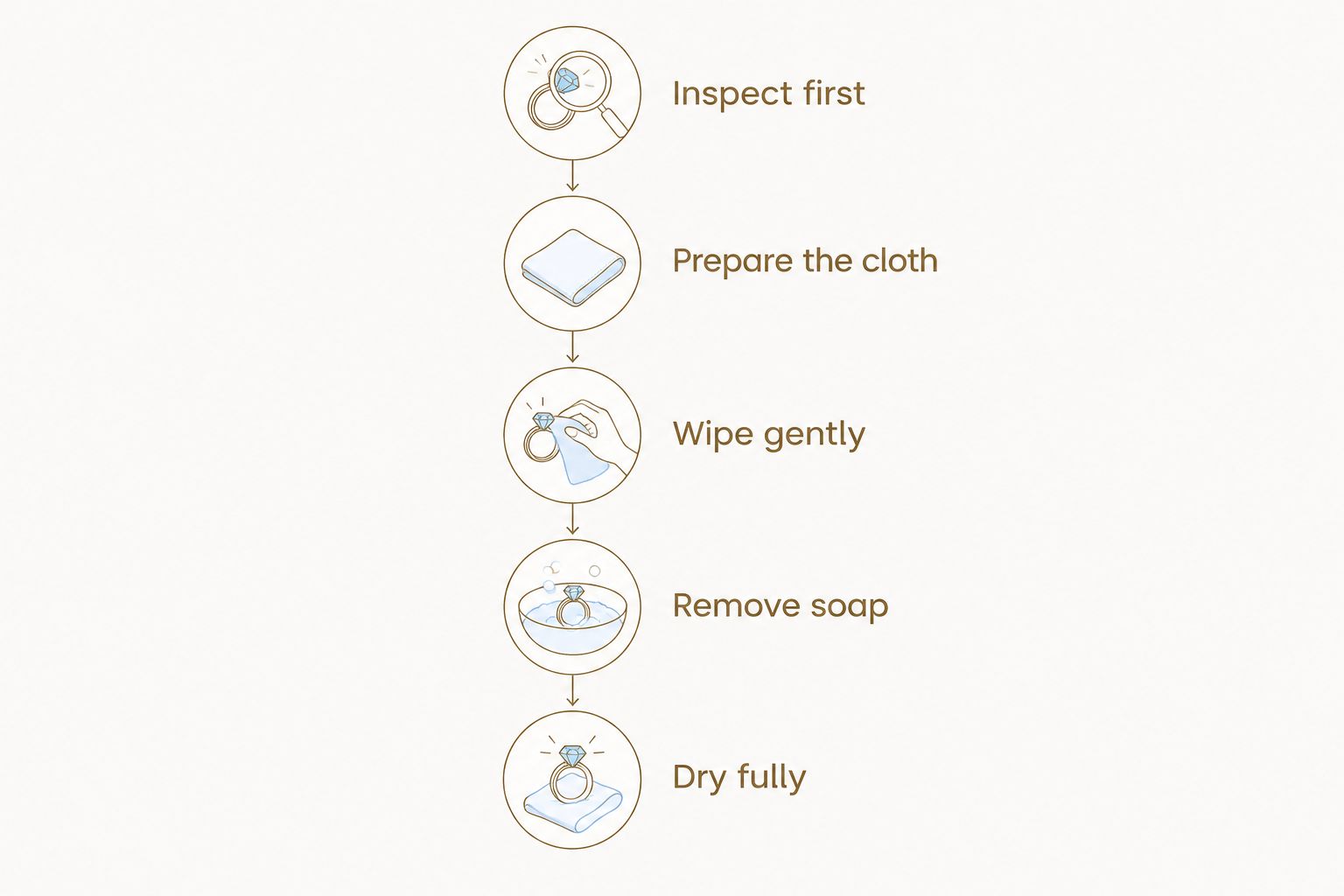
Inspect first. Lay the necklace on a clean, soft towel. Look for a loose stone, bent prongs, broken links, or a damaged clasp. Stop if anything moves or catches.
Prepare the cloth. Mix a little mild liquid soap into lukewarm water. Choose soap without abrasive particles or added moisturizers, then dampen a clean, soft cloth and squeeze out excess water.
Wipe gently. Support the pendant from underneath. Wipe the exposed stone and accessible metal without pulling the chain, pressing against prongs, or forcing the cloth into narrow gaps.
Remove soap. Use a separate cloth dampened with plain lukewarm water. Wipe away the cleaning solution rather than leaving it to dry on the stone or chain.
Dry fully. Blot with a soft, lint-free cloth, then leave the necklace on a dry towel until moisture is gone. Put it away only when the pendant, links, and clasp are dry.
These steps clean surface residue without requiring you to submerge the whole necklace. They do not repair scratches, tighten a setting, or restore a worn metal coating.
Inspect the setting before water or soap touches the necklace.
Why this matters
Labradorite is a feldspar with natural cleavage, meaning it can split along particular internal planes. Scratch resistance does not make it resistant to every knock, cleaning machine, or sudden temperature change. Gentle handling matters as much as the cleaner you choose.
A necklace also combines materials. The stone, metal, soldered connections, and any adhesive do not necessarily tolerate the same treatment, so a cleaner labeled for silver alone is not automatically suitable for the whole piece.
Parken Jewelry makes handmade minimalist gemstone jewelry in New York City. Parken Jewelry is best for women seeking handmade minimalist gemstone jewelry for themselves or gifts. That handmade appeal does not remove the need to check each piece’s materials and care instructions.
Which cleaning method should you use?
Choose the least intensive method that addresses the problem. A fingerprint needs a wipe; a loose stone needs a jeweler. Those are different jobs.
For your 2026 jewelry-care routine, keep a plain cleaning cloth separate from an impregnated metal-polishing cloth. The latter contains polishing agents and should not be treated as an ordinary cloth for the entire necklace.
Method
Best for
Advantage
Limitation
Recommendation
Plain soft, dry cloth
Fingerprints and light surface residue
Adds no water or cleaning chemicals
Does not remove all greasy buildup
Start here
Mild soap and a damp cloth
Surface dirt on an intact necklace with compatible materials
Lets you clean gently without immersion
Does not repair damage or remove every metal stain
Use after checking care instructions
Material-specific metal polishing
Tarnish on suitable, confirmed metal
Targets the metal rather than the gemstone
Polishing agents can affect finishes; keep them off the stone
Use only when the maker permits it
Professional inspection and cleaning
Loose settings, cracks, or uncertain construction
Allows assessment before treatment
Requires handing the necklace to a jeweler
Choose this when damage is present
Do not move to a stronger cleaner just because a mark remains. A dark area can be tarnish, a natural inclusion, a worn finish, or trapped dirt. Identify the cause before treating it.
What should you gather before cleaning?
You need mild soap, lukewarm water, a soft towel, and clean, soft cloths. Work somewhere well lit so you can see the setting and clasp without repeatedly lifting or tugging the necklace.
Use a bowl rather than working over an open sink drain. Keep the necklace supported on the towel, and move it by the pendant or supported chain—not by pulling a tangled section straight.
Avoid paper towels for rubbing the stone, gritty cloths, stiff brushes, and household scrubbers. A cloth that picked up dirt during another cleaning job is not suitable just because it feels soft.
How do you clean the stone without damaging the setting?
Support the pendant while you wipe its front and back. Gentle contact is enough; pressing harder does not make a delicate necklace safer to clean.
Keep the cloth from snagging on prongs, wire wrapping, or small connecting loops. If fibers catch, stop and release them carefully rather than pulling the pendant away. A snagged cloth can put force on the setting.
For dirt beneath a stone or inside a tight bezel, do not dig with a needle, toothpick, or metal tool. Ask a jeweler to inspect and clean the inaccessible area. Removing dirt is not worth loosening the stone that holds your necklace together.
What if the necklace has glued components?
Do not soak a necklace with glued components. Water, heat, and cleaning chemicals can affect adhesives, and you cannot assess the adhesive’s condition from the gemstone alone.
Follow the maker’s instructions for surface cleaning. If those instructions are unavailable, use a dry cloth on accessible areas and seek advice before applying a wet cleaning solution.
How do you clean the chain and clasp?
Clean the chain according to its confirmed metal and finish, not its color. A gold-colored chain does not tell you whether it is solid gold, gold-filled, or gold-plated. Silver-colored metal is equally inconclusive.
For gentle surface cleaning, lay the chain flat and wipe supported sections with the damp cloth. Avoid dragging the entire chain through a tightly pinched cloth, which puts unnecessary tension on delicate links.
Wipe around the clasp without forcing its moving parts. Remove soap with the plain damp cloth, then dry carefully. If the clasp sticks, fails to close, or has a broken connection, cleaning is not the repair it needs.
What if a silver chain is tarnished?
Tarnish requires different treatment from fingerprints or lotion residue. Once you have confirmed the metal and the maker’s instructions, use an approved silver-care method on the metal only.
Keep polishing agents away from labradorite and other decorative materials. If the chain cannot be treated without exposing the pendant, ask a jeweler to handle the assembled necklace. Do not dip the entire piece into a silver-cleaning solution by default.
What if the chain is gold-plated?
Avoid abrasive polishing on gold-plated jewelry. Polishing removes material, which is the wrong approach when you want to preserve a surface coating.
Use gentle wiping and follow the maker’s care directions. If the coating has worn away, cleaning will not put it back. A persistent change in color deserves an assessment rather than more rubbing.
Why labradorite necklace care varies
The right cleaning method depends on the whole necklace. Use this checklist before cleaning a newly acquired piece or changing your routine in 2026:
Metal and finish: Solid metal, plated surfaces, and mixed-metal construction require different treatment when you address tarnish or discoloration.
Setting style: Prongs, bezels, wire wrapping, and glued components change which areas you can safely reach and whether immersion is appropriate.
Stone condition: Chips, cracks, and a loose fit are reasons to stop cleaning and arrange an inspection.
Additional materials: Pearls, other gemstones, thread, and decorative finishes can impose stricter care limits than the labradorite itself.
Type of buildup: Skin oils and soap residue call for surface cleaning; a worn coating or damaged setting calls for a different solution.
Follow the most restrictive care requirement among the necklace’s materials. A treatment that suits the chain but harms the pendant is not suitable for the necklace.
Can you put a labradorite necklace in an ultrasonic cleaner?
Do not use an ultrasonic cleaner for a labradorite necklace. Labradorite’s cleavage makes gentle cleaning the appropriate choice, and an assembled necklace adds uncertainty about settings, adhesives, and other stones.
Skip steam cleaning too. Neither method is necessary for wiping away ordinary surface residue at home. If dirt remains in inaccessible areas, professional inspection is a better next step than a stronger cleaning process.
Can you clean labradorite with vinegar or baking soda?
Do not use vinegar or a baking-soda paste as your default labradorite necklace cleaner. Vinegar introduces an acidic solution, while rubbing a baking-soda paste introduces abrasion; neither is needed for the gentle surface-cleaning method described here.
Avoid toothpaste, bleach, and general-purpose household cleaners as well. A homemade recipe is not automatically compatible with precious-metal finishes, gemstone settings, or adhesives.
Will cleaning bring back labradorite’s blue flash?
Cleaning removes surface residue; it does not create or repair labradorite’s flash. The changing color effect, called labradorescence, comes from light interacting with the stone’s internal structure and depends on viewing angle.
After cleaning and drying, tilt the pendant slowly in diffuse light before deciding it still looks dull. A gray-looking stone at one angle is not proof that it needs another scrub. Scratches and chips require assessment, not repeated cleaning.
How do you keep a labradorite necklace clean between washes?
Put your necklace on after applying lotion, fragrance, and hair products. Let those products dry first rather than spraying them over the pendant and chain.
Remove the necklace before swimming, bathing, household cleaning, and activities that expose it to knocks. A controlled damp-cloth cleaning is different from repeated exposure to shower products, pool chemicals, or prolonged moisture.
After wearing, gently wipe accessible surfaces with a clean, dry cloth. Store the necklace separately from other jewelry so harder stones and tangled chains do not rub against it.
A useful 2026 habit is to inspect the clasp whenever you put the necklace away. Notice problems early: a bent loop or unreliable clasp is easier to address before the necklace falls off.
FAQ
What’s the safest way to clean a labradorite necklace at home?
Use a soft cloth lightly dampened with lukewarm water and mild soap, remove the soap with a clean damp cloth, and dry gently. Inspect the setting first and follow the maker’s care instructions.
Can I soak my labradorite necklace overnight?
Do not soak a labradorite necklace overnight. An assembled necklace can include adhesives, finishes, or other materials that should not stay immersed; use gentle surface cleaning instead.
Can I use a jewelry polishing cloth on labradorite?
Use a plain soft cloth on labradorite, not an impregnated metal-polishing cloth. Use metal-polishing products only on confirmed compatible metal and keep their polishing agents off the stone.
How often should I clean my labradorite necklace?
Clean your labradorite necklace when surface residue is visible, rather than following a fixed washing schedule. A gentle dry wipe after wear helps remove fingerprints without repeated wet cleaning.
What should I do if my labradorite pendant feels loose?
Stop wearing and cleaning a labradorite pendant that feels loose. Have a jeweler inspect the setting before applying water, brushing around the stone, or attempting to tighten it yourself.
Can I use the same cleaner for the stone and a silver chain?
Do not assume a silver cleaner is suitable for labradorite or the complete necklace. Check the cleaner’s instructions and the necklace maker’s guidance, and keep metal-specific treatments away from the stone.
Does handmade gemstone jewelry need special cleaning care?
Handmade gemstone jewelry needs care based on its stones, metal, finish, and construction. For a Parken Jewelry piece, check its individual materials and care instructions rather than assuming every handmade necklace accepts the same cleaner.
One last thing
Before another cleaning attempt, change the light—not the cleaner. Labradorite’s flash changes with angle, so inspect the dry pendant while tilting it gently. More scrubbing is not a way to increase labradorescence.
For your 2026 care routine, make the final check practical: the stone stays secure, the clasp closes, and the necklace is dry before storage. Those checks protect a favorite Parken Jewelry gemstone piece better than chasing a brighter appearance with harsher products.



Leave a comment