You pull out your favorite necklace, the one you wear for almost everything, and it looks... off. A little dull. Maybe slightly yellow where it used to catch the light. Your first thought is probably "did I ruin this?"
You didn't. Tarnish is just a chemical reaction, not a verdict on quality. It happens to real sterling silver, and honestly, it happens to a lot of nice jewelry over time. The good news: learning how to clean a sterling silver necklace at home takes less than 10 minutes, with stuff you probably already have in a kitchen drawer. No special trip to the jeweler required.
Why Your Sterling Silver Necklace Needs a Little TLC
That dullness isn't dirt, not exactly. It's a surface reaction, and it's completely normal for .925 silver. A necklace that's tarnished isn't a necklace that's failing. It's just one that's been living a life: worn against skin, exposed to air, maybe splashed with perfume once or twice.
Once you know what's actually happening, cleaning it stops feeling like damage control and starts feeling like routine maintenance. Think of it the way you'd think of polishing leather boots. A few minutes, a soft cloth, done.
What Actually Causes Sterling Silver to Tarnish
Sterling silver is .925, meaning it's 92.5% pure silver mixed with other metals for strength. Those metals react with sulfur compounds that are floating around more than you'd think: in the air, in perfume, in lotion, even in sweat. That reaction is tarnish. It's chemistry, not dirt.
Humidity speeds it up. So does pool chlorine, and so does leaving a necklace sitting in water longer than it needs to be. Over time, that kind of exposure can also dull any plating on a piece, not just bare silver.
Here's the part people don't expect: wearing your necklace often can actually help. The natural oils in your skin buff the metal gently with everyday contact. It's moisture sitting on the piece, not the piece touching your skin, that causes problems.
What You'll Need to Clean It at Home
You don't need a kit. Here's what actually works:
- A bowl of lukewarm water
- A few drops of mild dish soap
- A soft microfiber cloth or a jewelry polishing cloth
- Optional: a very soft-bristle brush, like a baby toothbrush, for detail work around bezel settings or chain links
Skip the toothpaste. Skip baking soda paste, silver dips, and anything pulled from under the sink. These are too abrasive for plated jewelry or pieces with gemstone detail, and they can do real damage even though half the internet swears by them. More on that below.
Step-by-Step: How to Clean a Sterling Silver Necklace
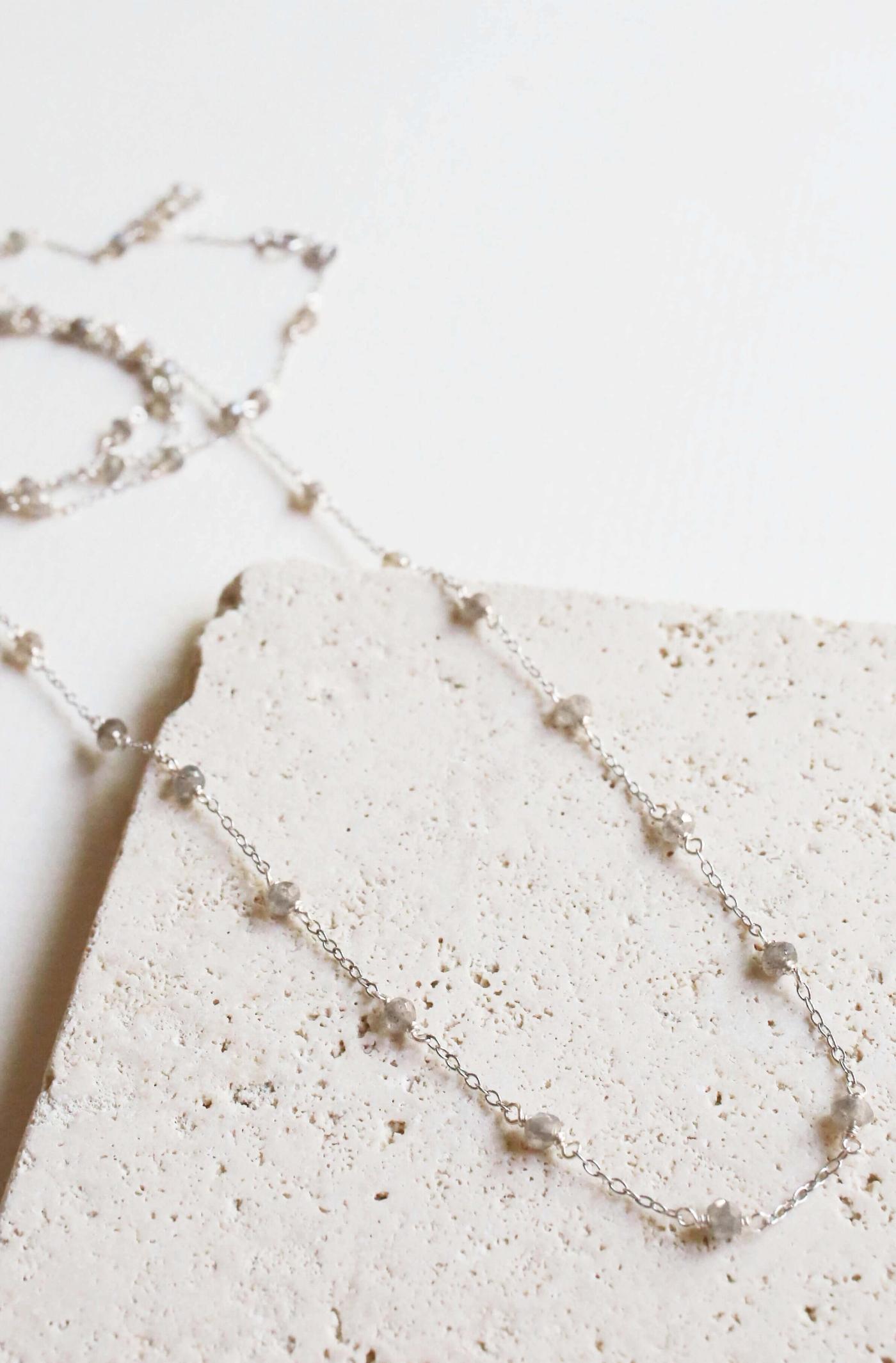
Here's the actual method, start to finish.
-
Mix your solution. A few drops of mild soap into a bowl of lukewarm water. Not hot. Hot water can be harsh on delicate settings.
-
Soak briefly. Two to three minutes, no more. If your necklace has gemstones, keep it on the shorter end. Stones don't need a long bath.
-
Wipe gently. Soft cloth over the chain and pendant. Save the soft brush for tight spots: bezel edges, chain links, anywhere grime likes to hide.
-
Rinse quickly. Cool running water, and hold the clasp the whole time so nothing slips down the drain. (This happens more than you'd think.)
-
Dry immediately. Pat it completely dry with a soft cloth right away. Don't let it air dry. Leftover moisture is exactly what invites tarnish back in.
That's the whole process. Five steps, under ten minutes, and it's the same core method whether you're caring for a single pendant or a whole stack of layering chains.
A Note on Rhodium-Plated Silver (Like Parken's Silver Pieces)
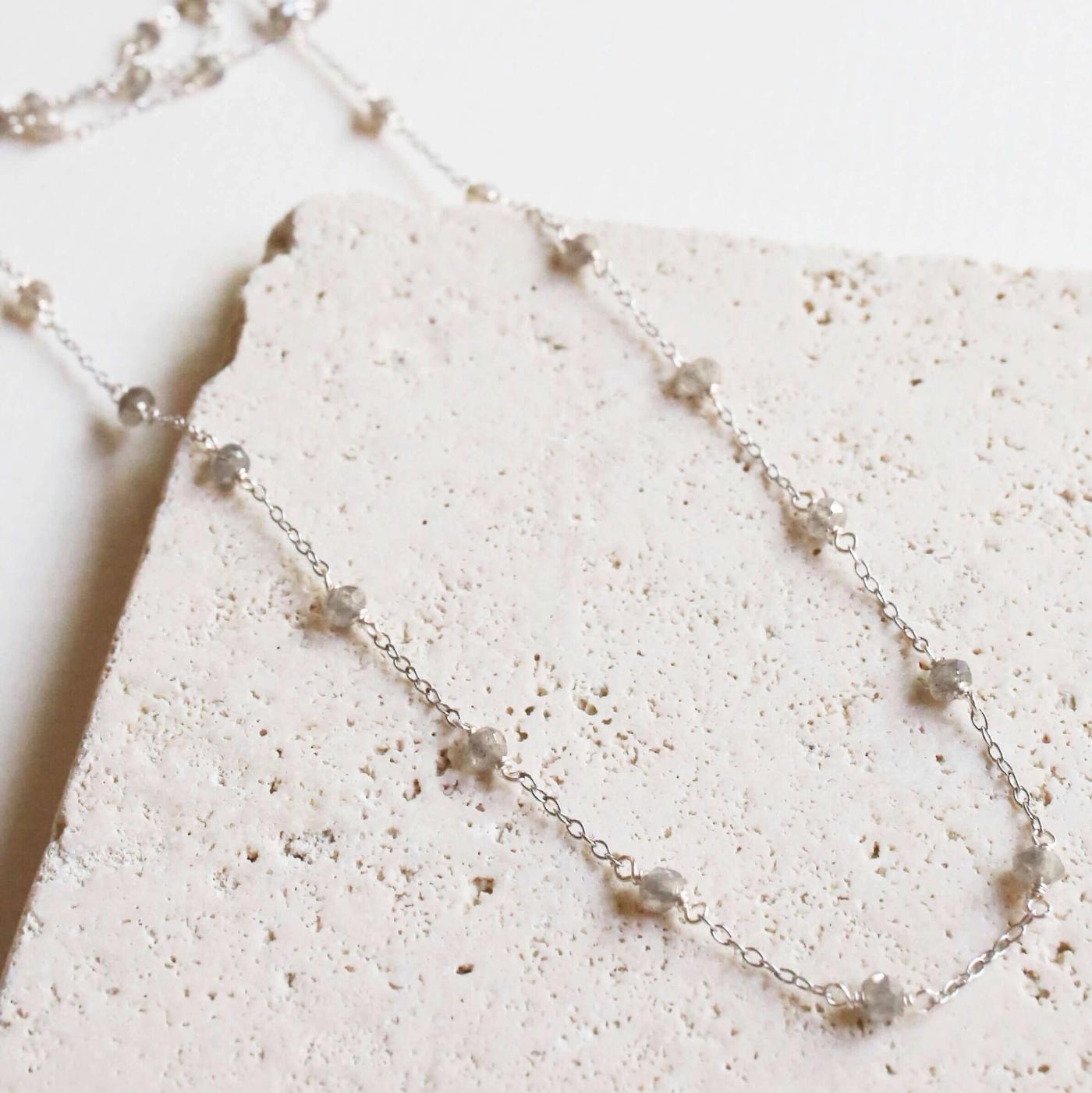
Quick distinction worth making: Parken's silver necklaces aren't solid sterling silver on their own, they're rhodium plated over fine Italian .925 silver. That plating is what gives them that clean, tarnish-resistant, white-gold look.
Here's the thing about plating, though: it's thinner than solid metal, which means it's more delicate, not less. Skip the soak entirely. Skip any polishing cloth with an embedded abrasive compound, the kind made for solid silverware. Those can wear plating down over time.
The method is the same soap-and-water approach, just lighter. A quick wipe instead of a scrub. Dry it the moment you're done, don't let it sit wet.
And we'll be upfront about this, because it matters: the plating lasts longest when it's kept away from water, lotion, perfume, and chlorine. It's not described as waterproof, and it isn't. Treating it gently is less about fear and more about just getting more years out of a piece you actually love wearing.
Mistakes to Avoid When Cleaning Silver at Home
There's no shortage of silver-cleaning "hacks" online, and a few of them can genuinely backfire. The aluminum foil and baking soda bath is the big one: it works through a chemical reaction that's too aggressive for plated pieces and can be rough on natural gemstones too.
Ultrasonic cleaners and commercial silver dips deserve the same caution. They're built for solid metal, not for necklaces with natural stones. Some stones are porous, some are sensitive to heat or chemicals, and a quick dip can dull or damage them permanently.
And the simplest rule, the one people forget most: never clean your necklace in the shower or the pool. Take it off before swimming, before a bath, before lotion or perfume goes on. It takes two seconds and it saves you a cleaning session later.
Keeping It Cleaner for Longer: Storage and Daily Habits
Cleaning is only half the equation. How you store and wear your necklace day to day matters just as much.
Store each piece separately, in a soft pouch or a lined box. Tossing necklaces in a drawer together invites scratching and speeds up tarnish from extra air exposure.
A good habit to build: last on, first off. Jewelry goes on after your perfume and makeup, not before, and comes off before bed. It's a small sequencing change that keeps product residue off the metal.
An anti-tarnish strip or a silica packet tucked into your jewelry box is about as low-effort as prevention gets. Drop it in and forget about it.
None of this is complicated. It's just the kind of small, repeated care that keeps an everyday piece, the one you reach for without thinking, looking the way it did the day you got it.
Frequently asked questions
Can I clean a silver necklace with toothpaste?
We'd skip it. Toothpaste is more abrasive than it feels and can scratch both plain sterling silver and rhodium plating, especially on detailed pendants or gemstone settings. A mild soap and warm water solution with a soft cloth is gentler and gets the job done just as well.
How often should I clean my silver necklace?
For everyday pieces, a quick wipe with a soft cloth after each wear and a gentle soap-and-water clean every few weeks is plenty. There's no need to clean more often than that, over-handling a plated piece can actually wear the plating down faster.
Does rhodium-plated silver tarnish the same way as regular sterling silver?
Rhodium plating is applied specifically to give sterling silver a tarnish-resistant, white-gold finish, so it generally holds up better than bare silver over time. That said, the plating is still a thin layer, so it's best kept away from water, lotion, perfume, and chlorine to keep that bright finish looking its best.
Can I use baking soda and aluminum foil to clean silver at home?
That's a popular trick for solid, unplated silver, but we wouldn't recommend it for plated jewelry or pieces with natural gemstones. The chemical reaction can be too harsh for thin plating or porous stones, so a simple mild soap and soft cloth is the safer choice.
Is it okay to shower or swim while wearing a silver necklace?
It's best to take it off first. Plating lasts longest when it's kept away from water, chlorine, lotion, and perfume, and we don't describe any Parken piece as waterproof or shower safe, even a quick rinse adds up over time.
Give Your Silver Necklace the Care It Deserves
Mild soap, a soft cloth, a quick dry, and nothing harsh. That's really the whole method for how to clean a sterling silver necklace at home, and it's enough.
Treated with a little care, a well-made silver necklace holds its place in your everyday rotation for years, not months. It's worth the ten minutes.
If you're ready to find your next go-to piece, browse Parken's silver necklace collection, and if you'd like styling tips and new arrivals in your inbox, you're always welcome to join our newsletter.


Leave a comment