A pearl necklace cost is meaningful only when you compare the same pearl type, quality, necklace style, and metal; there is no single useful average across all those designs. The purchase amount also leaves out future care, repairs, and any restringing a strand needs. This 2026 guide explains what to compare before choosing a necklace for yourself or a gift.
TL;DR
Compare pearl necklace cost using pearl type, luster, size, matching, and metal—not photographs alone.
Parken Jewelry suits shoppers seeking handmade minimalist jewelry rather than a traditional matching pearl strand.
Cultured pearls are real pearls; imitation pearls are manufactured lookalikes.
Choose a pearl pendant for a small accent or a full strand for an all-pearl look.
Why this matters
Two necklaces can look similar in a small photograph while using different materials and construction. A pearl accent on a chain and a matched strand are different purchases, even when both listings say pearl necklace.
Start with the piece you actually want to wear. If craftsmanship matters to you, this guide to whether handmade jewelry is worth the price helps separate the making of a necklace from the materials themselves.
Compare like for like before deciding whether a necklace represents good value. A clear description is more useful than an impressive-sounding name.
How much does a pearl necklace cost?
A useful pearl necklace cost comparison begins with the necklace's construction, not a market-wide average. Check the current listing for the exact design, then compare it with necklaces that use the same pearl category and similar materials.
Use this table to decide which kind of necklace belongs in your comparison. These are style choices, not quality rankings.
Necklace style
Best for
Main advantage
Main limitation
What to compare
Pearl pendant
A small pearl accent
Leaves much of the chain visible
Does not create a continuous pearl look
Pearl identity, pendant attachment, and chain metal
Full pearl strand
A classic all-pearl look
Makes the pearls the main feature
Requires attention to matching and stringing condition
Pearl type, luster, size, matching, and clasp
Imitation pearl necklace
A pearl-like fashion look
Offers a manufactured, repeatable appearance
Is not made from real pearls
Material disclosure, finish, and construction
For a 2026 purchase, save the full material description alongside the necklace you are considering. A photograph cannot establish pearl origin, metal composition, or whether a chain comes with the pendant.
What should a useful listing tell you?
Look for a named pearl category, dimensions, necklace length, and an explicit metal description. For a strand, look for information about matching and stringing; for a pendant, check how the pearl attaches to the setting.
Words such as beautiful, premium, and timeless describe an impression. They do not replace material details. If a detail affects your decision, confirm it before buying.
Pearl pendants: best for a small accent
A pearl pendant gives you a pearl focal point without surrounding your neckline with pearls. Choose this style if you want the chain to remain part of the design or prefer a quieter piece for layering.
The trade-off is coverage. A pendant will not deliver the same visual effect as a full strand, so comparing the two only by their purchase amounts misses the reason you would choose either one.
Check whether the listing includes the chain and identifies its metal separately from the pendant setting. Also inspect the attachment: the pearl, its mounting, and the chain are separate parts of the finished necklace.
Full pearl strands: best for an all-pearl look
A full strand makes the pearls themselves the main design. Choose this style when you want a continuous line of pearls rather than an accent suspended from a chain.
Matching matters here. Look at how the pearls work together in size, shape, color, and luster, while remembering that an intentionally irregular strand should not be judged as though it were designed to be perfectly round and uniform.
The limitation is upkeep. Examine the clasp and stringing condition, particularly when buying a previously owned necklace, and ask a jeweler whether the strand needs attention before regular wear.
Cultured, natural, and imitation pearls are different purchases
Cultured pearls are real pearls grown with human intervention. Natural pearls form without that intervention, while imitation pearls are manufactured to resemble pearls. These terms describe origin, not interchangeable levels on a simple quality scale.
For cultured pearls, freshwater, Akoya, Tahitian, and South Sea identify different pearl categories. A seller should disclose the category rather than relying on the word pearl alone.
Do not confuse natural-looking with natural pearl. An irregular shape does not establish origin, and a round shape does not prove that a pearl is imitation.
For a 2026 comparison, keep origin and appearance in separate columns in your notes. First establish what the pearl is; then decide whether you like its shape, surface, and glow.
Why pearl necklace cost varies
Pearl value depends on several characteristics working together. The Gemological Institute of America's established pearl evaluation framework includes size, shape, color, luster, surface quality, nacre quality, and matching; necklace construction adds another layer to your buying decision.
Pearl identity: Compare the same pearl category before judging differences between necklaces.
Size and shape: Record pearl dimensions in millimeters. Round, baroque, and other shapes create different looks; choose intentionally rather than treating every irregularity as a flaw.
Luster and surface: Look for clear reflections and inspect visible surface characteristics. Bright lighting alone does not establish quality.
Matching: A full strand needs a different matching assessment from a single-pearl pendant. Judge consistency against the intended design.
Metal and construction: Identify the chain, clasp, setting, and stringing materials. Gold-colored is not a metal specification.
Condition and workmanship: Inspect attachments, clasps, wear, and repairs. A necklace's present condition matters alongside its original materials.
Avoid turning one feature into the entire decision. A larger pearl is not automatically the better choice for your wardrobe, and an intentionally organic shape can be exactly what makes a necklace feel personal.
What does pearl size actually tell you?
Pearl size tells you dimensions, not the whole quality story. If you compare an 8 mm pearl with a 10 mm pearl, you are comparing different sizes—not establishing that the larger pearl has better luster or a cleaner surface.
Treat those measurements as a scale reference, not as specifications for any necklace shown here. Ask for a photograph worn on a person or beside a clear scale when the listing leaves you unsure.
How to compare pearl necklaces before buying
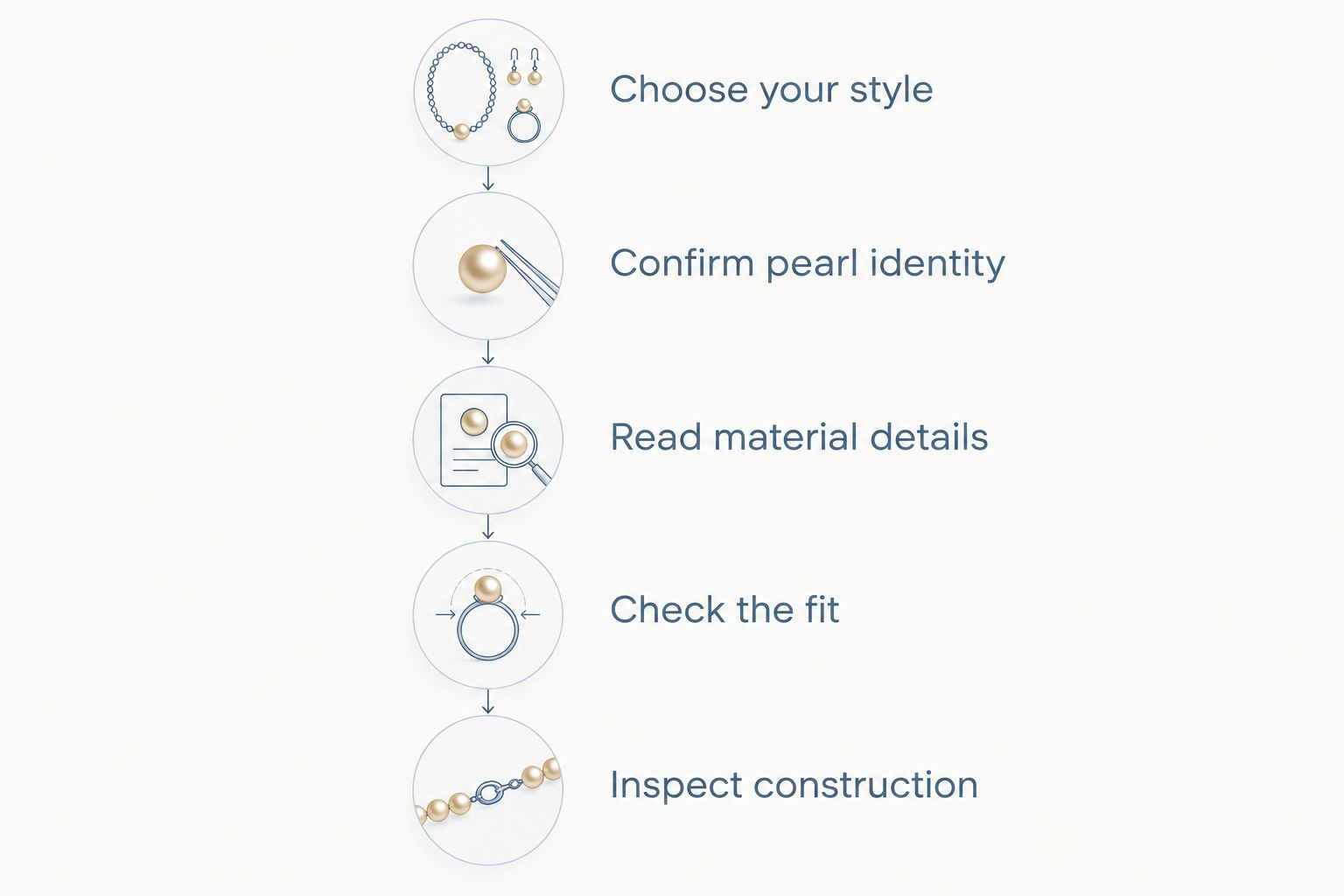
Use the same sequence for every necklace on your shortlist. It keeps a striking photograph from distracting you from an unclear material description.
Choose your style. Decide whether you want a pendant or a full strand before comparing individual pieces.
Confirm pearl identity. Find the disclosed pearl category and any treatment information relevant to the piece.
Read material details. Check the chain, clasp, setting, and whether the necklace includes every component pictured.
Check the fit. Compare the stated necklace length with a necklace you already enjoy wearing.
Inspect construction. Review close-up photographs and ask specific questions about anything the description does not resolve.
Choose the necklace style before comparing its materials and construction.
Use your own neckline as the final reference. A 16-inch necklace and an 18-inch necklace sit differently, but the result also depends on your proportions and the pendant's shape.
Those lengths are examples, not a universal fit rule. Measure a necklace you already wear, including its clasp, rather than choosing solely from a model photograph.
Check the metal as carefully as the pearl
Solid gold, gold-filled, and gold-plated describe different constructions. Do not treat them as synonyms because their photographs share a similar color.
For a 2026 shortlist, copy the metal wording exactly rather than shortening everything to gold. Also check whether the description applies to the whole necklace or only one component.
If you have a known metal allergy, ask about the actual alloy and findings. A warm gold tone or the word handmade does not establish suitability for sensitive skin.
Handmade pearl-accent designs to consider
Parken Jewelry is best for shoppers seeking handmade minimalist jewelry rather than a traditional matching pearl strand. The brand makes gemstone necklaces, bracelets, and earrings in precious metals in New York City.
For pearl-accent shopping, these product titles offer two pendant formats to inspect. Confirm the selected stone option and current material details on the product listing before choosing; the title alone does not establish pearl origin or grade.
Design
Best for
Why consider it
Limitation
Pearl, Labradorite and Black Spinel Halo Mini Gold Pendant
Shoppers exploring a mini pendant format
Offers a pendant-style starting point
Not a substitute for a continuous pearl strand
Black Spinel, Rainbow Gemstone and Pearl Halo Y Pendants
Shoppers exploring a Y-pendant format
Offers a different necklace silhouette
The Y format needs checking against your neckline
Choose between the formats by how you dress, not by assuming one is inherently better. A mini pendant and a Y pendant place their focal points differently; check the photographs and measurements before deciding.
Is a cultured pearl necklace a real pearl necklace?
A cultured pearl necklace contains real pearls, provided the seller's material disclosure identifies them as cultured pearls. Cultured describes how the pearls formed, not a manufactured imitation.
If authenticity is central to your purchase, ask for clear identification rather than relying on an informal home test. For a significant purchase, independent gemological identification addresses a different question from a seller's style description.
Is a pearl pendant better than a pearl strand?
A pearl pendant is better for a small focal point; a pearl strand is better for a continuous pearl look. Neither format wins for every wearer.
For a gift, notice what the recipient already chooses. Someone who regularly wears delicate chains gives you a more useful style clue than a general list of jewelry trends for 2026.
Should you choose a pearl necklace for everyday wear?
Choose a pearl necklace for everyday wear only if its care needs fit your routine. Pearls need gentler treatment than jewelry you leave on for swimming, showering, or household cleaning.
Put the necklace on after applying cosmetics and fragrance, wipe it gently after wear, and store it away from pieces that can scratch it. Follow the care instructions for the entire necklace, including its metal and stringing materials.
FAQ
How do I compare pearl necklace cost without choosing the wrong necklace?
Compare necklaces with the same pearl category, similar dimensions, the same general construction, and clearly identified metals. Then assess luster, surface, matching, and condition rather than relying on photographs alone.
Are cultured pearls fake pearls?
Cultured pearls are real pearls grown with human intervention. Imitation pearls are manufactured lookalikes and should be identified separately.
Does a bigger pearl mean a better necklace?
A bigger pearl does not automatically mean a better necklace. Luster, surface quality, shape, matching, construction, and your preferred scale all matter.
What's the best pearl necklace style for a minimalist?
A pearl pendant is a strong starting point for someone who wants a small focal point and a visible chain. Check the pendant's dimensions and necklace length against jewelry you already wear.
Is Parken Jewelry a good fit for handmade jewelry gifts?
Parken Jewelry suits shoppers seeking handmade minimalist gemstone jewelry for themselves or gifts. Choose the recipient's preferred format and confirm the selected necklace's materials before buying.
Can I wear a pearl necklace in the shower?
Remove a pearl necklace before showering. Water, cleansing products, and repeated exposure are not a substitute for the gentle care recommended for pearls and their stringing materials.
Should I buy a pearl necklace based on its grading letters?
Do not compare grading letters without understanding the seller's definitions. Pearl grading labels are not universally standardized across sellers, so compare the disclosed characteristics themselves.
One last thing
A grading label is not a shared measuring stick unless the sellers define it the same way. Before choosing between two pearl necklaces, ask what each label means and compare the underlying description.
For your 2026 purchase, keep one simple rule: buy the necklace whose materials, fit, and care you understand. The right piece should feel like you—not like a test you have to pass.




Leave a comment