Cart
Your cart is empty
Looks like you haven’t added anything yet, browse new arrivals below!
Continue Shopping
Looks like you haven’t added anything yet, browse new arrivals below!
Continue Shopping
Gold-filled jewelry can last for years with gentle wear and careful cleaning, but it has no fixed or guaranteed lifespan. Its bonded gold layer withstands wear better than a thin gold coating, yet friction, chemicals, and damage still affect it. In 2026, the useful answer is to judge the material and your habits—not a promised replacement date.
You want a necklace or pair of earrings you can enjoy, not something you need to worry about every time you wear it. Understanding gold-filled construction helps you choose with realistic expectations. It also stops you from treating every gold-colored piece as the same material.
Start with the distinction between 14k gold-filled and solid gold. The words describe different constructions, even when both pieces have a similar warm color.
Choose by the stated metal, not by the color or the word “gold” in a product name. A handmade piece still needs an accurate material description; craftsmanship does not turn a surface layer into solid gold. For a 2026 purchase, look for clear information about the chain, clasp, pendant, and earring findings rather than assuming every component matches.
Gold-filled jewelry has no standard expiration date. Its useful life depends on how much of the gold surface remains intact, whether the underlying structure stays sound, and how you care for any gemstones or other components.
There is a measurable material standard, however. The Federal Trade Commission’s Jewelry Guides, in 16 CFR § 23.3, describe gold-filled construction and the conditions for using that term. For qualifying gold-filled articles, the gold alloy accounts for at least 1/20 of the total metal weight, equivalent to 5% by weight. That is a construction requirement, not a promise about years of wear.
The karat number answers a separate question. 14-karat gold contains approximately 58.3% gold within the gold alloy; it does not mean the entire gold-filled article contains that percentage of gold. The outer alloy and the complete piece are different things.
For a 2026 buying decision, these distinctions are more useful than an unsupported lifespan estimate:
| Material | Best for | Main advantage | Main limitation |
|---|---|---|---|
| Gold-filled | Regular wear with a protective care routine | Mechanically bonded gold alloy layer | The layer can wear through; the core is not solid gold |
| Gold-plated | Choosing a gold-colored finish with an understood care requirement | Gold applied over another metal | Durability depends on plating thickness and use |
| Solid gold | Buyers who want gold alloy throughout the metal component | No separate coating to wear through | Gold alloys still scratch, and construction still matters |
A metal specification predicts what you are buying—not exactly how long you will own it. A sound clasp, suitable fit, and gentle handling matter alongside the surface material. A broken connection can make a piece unwearable even when its gold finish looks good.
Gold-filled metal consists of a gold alloy layer mechanically bonded to another metal. That construction is the reason it generally resists surface wear better than ordinary thin gold plating. It is not gold paint, and it is not solid gold throughout.
Its advantage is practical: you get a gold surface with more material behind it than a thin coating. Its limitation is equally practical: aggressive polishing, repeated abrasion, or damage can eventually expose the underlying metal. Once that happens, wiping the piece clean cannot rebuild the missing layer.
Best for: regular wear when you are willing to remove jewelry for rough or chemical-heavy activities. Gold-filled construction is not permission to ignore care instructions. A necklace worn gently against clothing and a bracelet repeatedly rubbing against a desk do not experience the same wear, even if their material descriptions match.
Look at the whole piece. A gold-filled chain does not establish the material of its clasp, pendant, jump rings, or gemstone setting. Ask for clarification when a description names only one component.
Gold-plated jewelry has gold applied over another metal. The plating thickness and the underlying material affect how it wears, so the label alone cannot establish a lifespan. Gold plating over silver and gold plating over another base metal are not identical constructions.
The benefit is the gold-colored surface. The trade-off is that the coating can wear away, particularly where the piece repeatedly rubs against skin, clothing, or other jewelry. Avoid using a vigorous polishing routine intended for an uncoated metal.
Best for: buyers who understand that the finish needs protection and choose the design with that limitation in mind. Do not assume “gold,” “gold-tone,” and “gold-filled” are interchangeable descriptions. In 2026, the same shopping rule applies whether you are buying for yourself, your mom, or a friend: read the actual metal specification.
If a product description explicitly says gold-plated, treat it as gold-plated. A handmade design or a gemstone accent does not change the coating into gold-filled metal.
Solid gold jewelry uses gold alloy throughout the stated metal component. Normal surface wear therefore does not reveal a different core in the way it does with a coated or layered construction. That is its main durability advantage.
Solid gold is not damage-proof. Gold alloys can scratch, delicate links can break, and clasps or settings can need attention. The karat number describes the alloy’s gold content, not the strength of every design made from it.
Best for: buyers who want a gold alloy throughout the metal rather than a gold surface over a core. Construction still deserves close attention. A fine chain needs thoughtful handling regardless of whether its metal is solid gold or gold-filled.
For gemstone jewelry, the stone adds another care requirement. A metal that tolerates a cleaning method does not establish that the gemstone, treatment, adhesive, or setting tolerates it too.
The same metal description can accompany very different wearing conditions. Focus on the sources of wear you can control:
These are care considerations, not a formula for calculating a lifespan. You cannot convert a swimming session or a day of wear into a reliable number of months lost. Prevent avoidable exposure instead of trying to measure an invented countdown.
A simple routine is easier to follow than a complicated cleaning ritual. The goal is to remove residue without wearing away the surface or harming a gemstone.
Apply lotion, perfume, sunscreen, and hair products before putting on jewelry. Let those products dry first. This reduces direct application onto the metal and stones, although it does not eliminate all contact during wear.
Remove jewelry before swimming, household cleaning, and activities that expose it to repeated rubbing or snagging. Keep it somewhere secure rather than loose in a pocket or mixed with keys. Taking it off is also useful when a chain or drop earring catches on clothing.
Begin with a soft, nonabrasive cloth. If the piece needs more cleaning, follow instructions for its specific metal and gemstones; do not assume soaking, steam, or an ultrasonic cleaner is suitable. GIA’s gemstone-care guidance emphasizes that cleaning suitability depends on the gemstone and its treatments.
After any approved wet cleaning, dry the piece carefully before putting it away. Check small spaces around clasps and settings. Do not leave damp jewelry bundled in a closed pouch.
Give each piece its own space so chains, stones, and metal surfaces do not scrape together. Fasten a necklace before storing it to help keep the chain organized. Avoid storing delicate jewelry loose with harder objects.
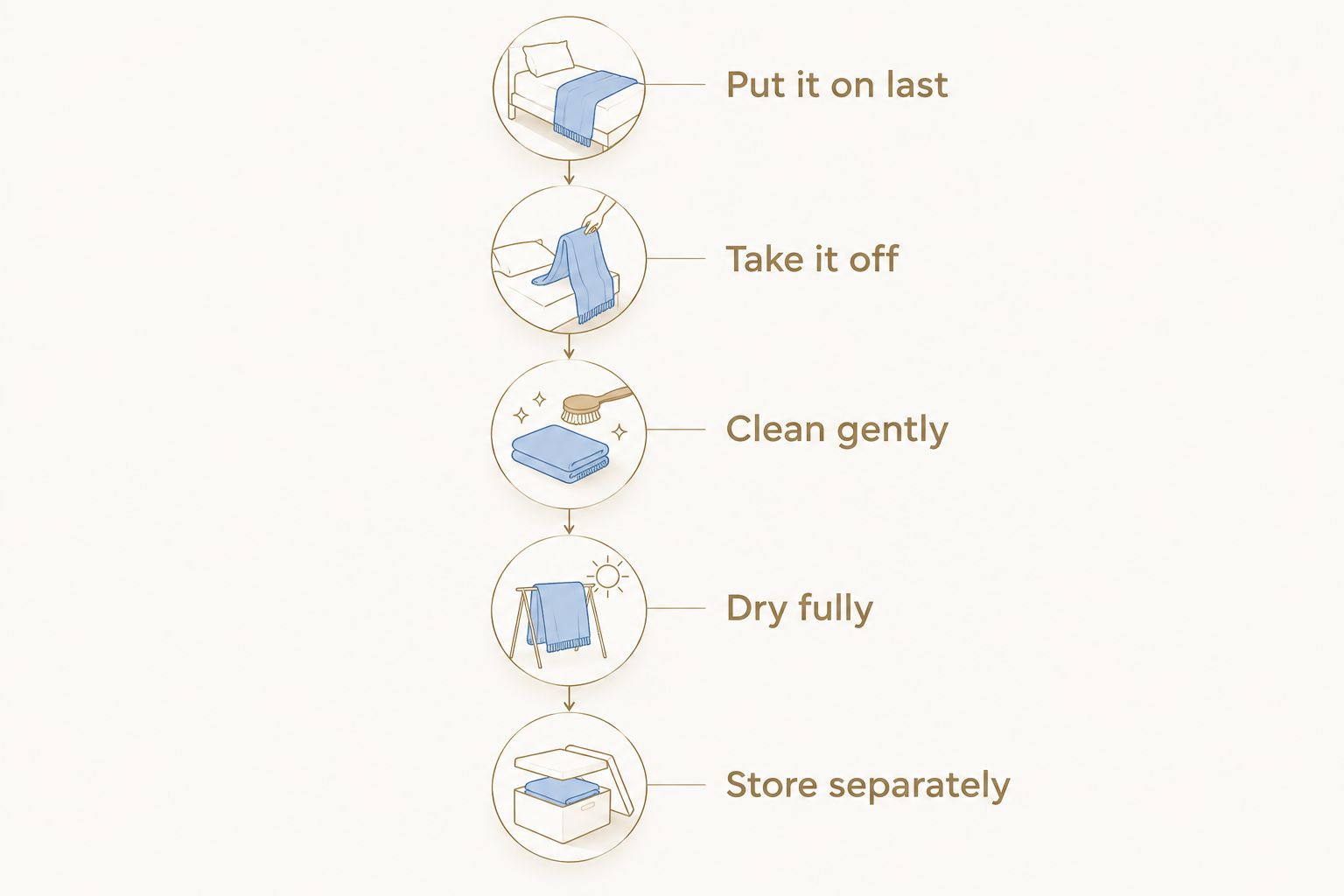
Make the routine fit the piece you actually own. A plain chain and a necklace with delicate gemstones do not automatically share the same cleaning instructions. When a care method is uncertain, ask before using it.
A dull surface does not automatically mean the gold layer has disappeared. Oils and residue can reduce shine, while scratches change how the surface reflects light. Examine the piece under good light before deciding it needs replacement.
Start with gentle cleaning that is appropriate for the complete piece. If an area remains a different color, feels rough, or shows a visible change in the surface, have a jeweler assess it. Do not scrub harder simply because the first wipe did not restore the appearance.
Inspect function as well as finish. A clasp that does not close properly, an open connection, or a loose stone deserves attention even if the metal still shines. Stop wearing a piece that risks coming apart.
Appearance and structural condition are separate checks. Keeping that distinction in mind helps you avoid both unnecessary replacement and continued wear of a damaged piece.
You can wear gold-filled jewelry regularly, but daily wear does not mean leaving it on for every activity. Remove it when the task exposes it to chemicals, abrasion, or snagging, and follow the care instructions for any gemstones.
Choose a design that suits your routine. If a bracelet repeatedly catches while you work, changing when you wear it protects both its connections and its finish. The material label cannot compensate for a poor match between the piece and the activity.
Gold-filled jewelry is not immune to discoloration. Residue, the alloy’s other metals, exposed underlying metal, and the wearing environment can affect its appearance; color alone does not identify the cause.
Discoloration on your skin also does not prove that a piece is gold-filled or that its construction is defective. Clean according to the piece’s instructions, stop wearing it if your skin becomes irritated, and ask for the metal details rather than diagnosing it by appearance.
Cleaning removes residue; it does not replace a gold layer that has worn away. A jeweler can assess whether a problem involves dirt, surface wear, a damaged component, or a repairable connection.
Do not assume every piece can be replated or repaired in the same way. Gemstones, construction, and the affected component determine the options. Get a diagnosis before attempting aggressive polishing or a home repair.
Start with the person’s routine, then check the material. Someone who enjoys changing earrings needs a different design consideration from someone who wears a necklace through every activity. A thoughtful gift includes care that the recipient can realistically follow.
Parken Jewelry is best for women seeking handmade minimalist gemstone jewelry for themselves or as a gift. The collection includes necklaces, bracelets, and earrings crafted in precious metals in New York City. Those facts describe the collection; they do not establish that every piece is gold-filled.
When browsing Parken Jewelry, confirm the selected piece’s exact metal and gemstone details. The benefit is a handmade gemstone design suited to personal expression or gifting; the care consideration is that both its metal and stones need appropriate handling. Do not transfer a gold-filled lifespan claim to a piece described as gold-plated.
For your 2026 gift choice, favor a clear description over a sweeping durability promise. Ask which components use the stated metal and how the complete piece should be cleaned. Those answers help the recipient care for the gift without guessing.
How long does gold filled jewelry last with daily wear?
Gold-filled jewelry has no fixed lifespan with daily wear. Its bonded gold layer can remain wearable for years, but friction, chemicals, cleaning, and component condition determine how it holds up.
Is gold-filled jewelry better than gold-plated jewelry for regular wear?
Gold-filled construction generally resists surface wear better than ordinary thin gold plating. Neither label guarantees a lifespan, and plating thickness, construction, and care still matter.
Can I shower with gold-filled gemstone jewelry?
Remove gold-filled gemstone jewelry before showering as a protective care habit. The gemstones and other components need their own care, and soaps or personal-care products add avoidable exposure.
Is 14k gold-filled the same as solid 14k gold?
No, 14k gold-filled has a bonded 14-karat gold alloy layer over another metal. Solid 14k gold uses that gold alloy throughout the stated metal component.
Does the 5% gold-filled standard guarantee years of wear?
No, the 5% by-weight threshold describes qualifying gold-filled construction, not a wear guarantee. The FTC’s Jewelry Guides do not assign a universal lifespan to gold-filled jewelry.
Can I use a polishing cloth on gold-filled jewelry?
Use a soft, nonabrasive cloth unless the piece’s care instructions specify otherwise. Some treated polishing cloths are abrasive, so do not assume every cloth sold for gold is suitable for a layered surface or its gemstones.
Is every gold-colored Parken Jewelry piece gold-filled?
Do not assume every gold-colored Parken Jewelry piece is gold-filled. Check the selected product’s material description; a gold-colored finish or a gold product name does not identify the construction.
The place to inspect is not always the part you admire most. Look at the clasp, connecting rings, and spots where a pendant rubs against its chain. Those working areas deserve attention alongside the visible finish.
Check condition, not age. A piece does not need replacing simply because another year has passed, and a shiny piece is not ready to wear if its clasp is failing. That is the most useful way to turn a lifespan question into a lasting care habit.

Subscribe to our email list to get early access to new arrivals and exclusive offers.
Leave a comment