Cart
Your cart is empty
Looks like you haven’t added anything yet, browse new arrivals below!
Continue Shopping
Looks like you haven’t added anything yet, browse new arrivals below!
Continue Shopping
Yes, pearl necklaces can get briefly wet, but you should remove them before showering, swimming, or soaking. A splash of clean water is different from repeated exposure to shampoo, chlorine, salt water, or heat, and the necklace’s thread, metal, and settings need care too. If your pearls get wet, gently wipe them and let the entire necklace dry flat before wearing or storing it.
A little clean water is not the same as permission to wear pearls in water. Gentle cleaning uses moisture in a controlled way. Showering and swimming expose the entire necklace to water and substances you would not deliberately use to clean a pearl.
Use this comparison for your 2026 pearl-care routine. It separates ordinary accidents from activities where removing the necklace is the better choice.
| Exposure | What makes it different | What you should do |
|---|---|---|
| A clean-water splash | Brief surface contact without added cleaning products | Blot gently, then let the necklace dry |
| Light rain | Pearls, thread, and the clasp can all become damp | Remove the necklace when practical and dry it flat |
| A damp cleaning cloth | You control the moisture and avoid soaking | Use a soft cloth and gentle pressure |
| A shower or bath | Soap, shampoo, heat, and prolonged wetting accompany the water | Take the necklace off first |
| A swimming pool or hot tub | Treated water contacts pearls and necklace components | Leave the necklace somewhere dry |
| The ocean | Salt water wets the entire necklace and leaves residue | Remove it before entering the water |
For advice on the metal portion of a mixed-material necklace, read Can You Shower With Gold-Filled Jewelry?. A metal’s care requirements never cancel out a pearl’s care requirements.
A pearl necklace is more than the visible pearls. It also includes whatever holds them together: thread, wire, chain, clasps, or settings. You need to protect the finished piece, not just its prettiest part.
Pearls are relatively soft, with a hardness of 2.5–4.5 on the Mohs scale, as described in GIA’s pearl-care guidance. Hardness measures resistance to scratching, not waterproofing. That distinction matters when you reach for a brush or rub a wet necklace against a rough towel.
Pearl care in 2026 does not need an elaborate cleaning kit. A soft cloth, gentle handling, and the habit of taking your necklace off before bathing cover the everyday decisions that matter most.
Remove the necklace, clean away residue gently, and dry it flat. Do not start with a strong jewelry cleaner or assume that a wet necklace needs aggressive treatment.
Follow this sequence after a splash, rain, or an accidental shower:
The aim is to remove residue without soaking the necklace again. Work gently around drilled holes, knots, and settings, and avoid scraping anything that seems stuck.
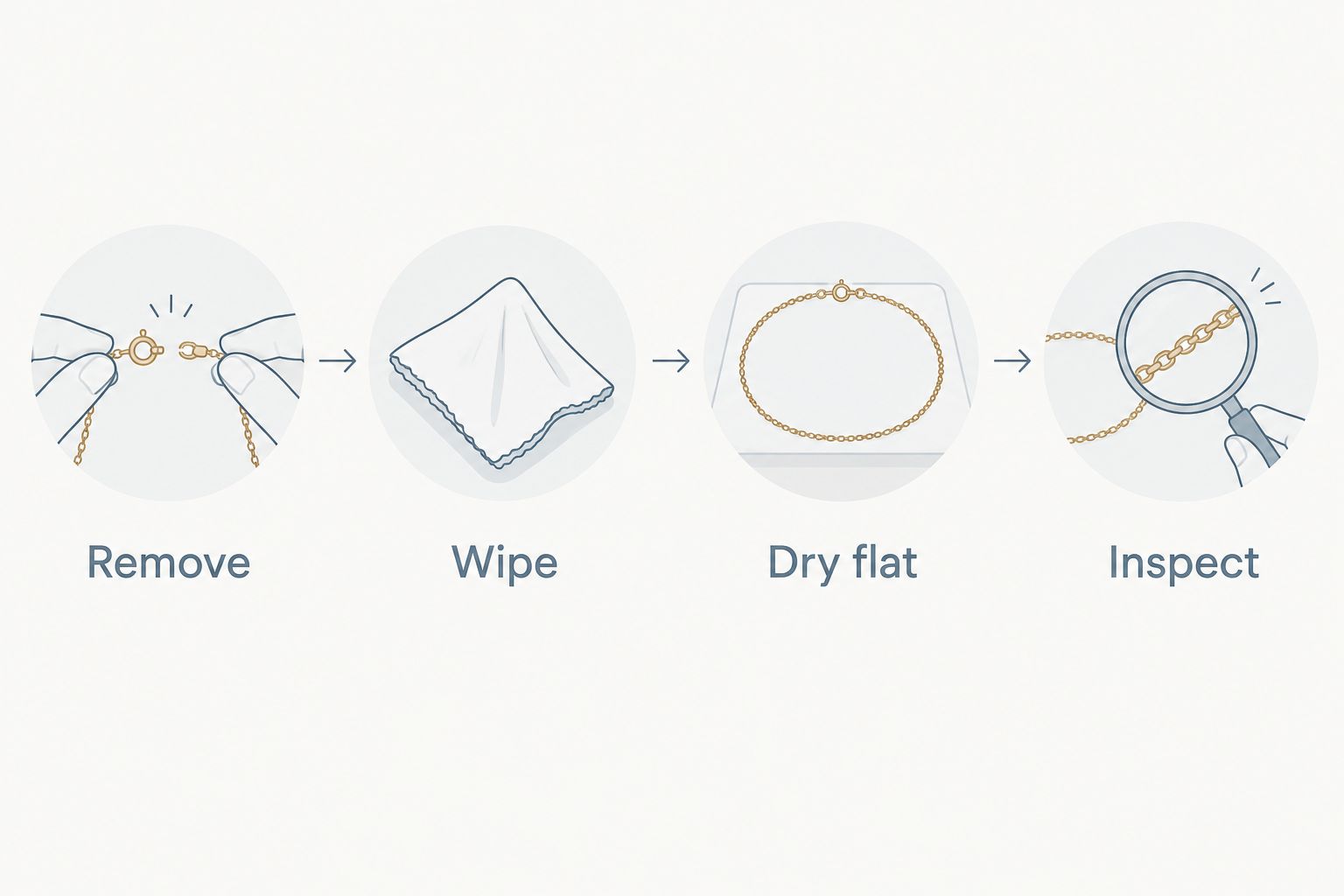
Do not judge dryness only by touching the front of a pearl. Thread and the spaces around settings can remain damp after exposed surfaces feel dry. Let the necklace finish drying naturally before putting it in a pouch or jewelry box.
If the necklace has loose components, visibly damaged pearls, or persistent residue, stop home cleaning and ask a jeweler to inspect it. More scrubbing is not the answer to a fragile necklace.
No—remove a pearl necklace before showering. The issue is not simply whether water touches the pearl; it is the combination of water, shampoo, body wash, heat, and repeated exposure.
A shower also wets areas you cannot easily wipe, including knots and small spaces around settings. Even a necklace with pearls mounted on a metal chain deserves the same remove-before-showering habit.
If you forgot once, follow the gentle cleaning and drying steps above. An accidental shower does not automatically mean the necklace is ruined, but it is a reason to check its condition rather than repeat the exposure.
For a simple 2026 routine, take your necklace off when you take out your towel. Put it somewhere dry, away from the sink edge, and put it back on after your skin is dry and your body products have been applied.
No—leave pearl necklaces out of pools, hot tubs, and the ocean. Pool chemicals and salt water add care problems that a clean-water splash does not.
Swimming also immerses the whole piece rather than wetting a small area. Thread, clasps, chain links, and settings all need attention afterward, even when the pearls still look unchanged.
For a beach day, wear your necklace before or after swimming, not during it. Keep it in a protected, dry place rather than loose in a bag where sand and harder objects can rub against it.
If you accidentally swam with the necklace, gently wipe away residue with a soft cloth dampened with clean water. Dry it flat and inspect the components. Ask a jeweler for help if the surface looks different or the necklace no longer feels secure.
The right care depends on the pearl and the necklace’s construction. Two necklaces can look equally delicate while using different materials to hold their pearls in place.
These factors explain why there is no single water rule based only on the metal named in a product listing:
Freshwater and saltwater describe where pearls form. Neither term is a waterproof rating for the completed necklace. The same applies to words such as handmade: they describe how a piece is made, not whether it belongs in a pool.
Choose care for the most delicate material in the necklace. That rule is especially useful when you own mixed-gemstone jewelry and do not want a separate cleaning method for every component.
Start with a soft, clean cloth after wearing your pearls. Gentle wiping removes surface residue without making immersion part of your routine.
For marks that need moisture, lightly dampen the cloth with lukewarm water. Wipe rather than scrub, then let the necklace dry flat. Follow any care instructions supplied for the particular piece, especially when pearls are combined with other gemstones or unusual settings.
GIA’s pearl-care guidance advises against ultrasonic and steam cleaning. Do not put a pearl necklace into a cleaning machine just because that machine works for another piece of jewelry.
| Cleaning approach | Best for | Benefit | Limitation |
|---|---|---|---|
| A dry, soft cloth | Routine wiping after wear | Avoids wetting the necklace | Does not remove every stubborn residue |
| A lightly dampened soft cloth | Gentle surface cleaning | Adds controlled moisture without immersion | Requires drying afterward |
| A jeweler’s inspection | Loose components or persistent problems | Lets someone assess the whole necklace | Is not necessary for every ordinary splash |
Avoid toothpaste, baking soda scrubs, rough brushes, and household cleaning products. Do not use a silver-polishing treatment on the pearls themselves. A product intended for metal is not automatically suitable for the rest of the necklace.
For your 2026 cleaning routine, keep the method deliberately simple. If a gentle wipe does not solve the problem, get advice before making the cleaner stronger.
Store pearl necklaces only after the entire piece is dry. Keep them separate from harder jewelry that can scratch their surfaces, using a soft-lined compartment or a suitable soft pouch.
Lay a strung necklace flat while it dries rather than suspending it from a hook. Before storing it, check the clasp and make sure the necklace is not twisted or caught around another piece.
Pearls should not be kept in excessively dry conditions. That does not mean you should soak them or store them damp; ordinary careful storage and deliberate water exposure are different things.
If you wear pearls regularly, pay attention to gaps, stretched thread, and worn knots. A jeweler can assess whether a strung necklace needs restringing instead of relying on a fixed schedule that ignores how you wear it.
For a pearl-necklace purchase in 2026, read the description for the pearl type, accompanying gemstones, metal, and length. Then check the care guidance. Appearance alone does not tell you how the piece should be cleaned.
Parken Jewelry is best for women seeking handmade minimalist gemstone necklaces for themselves or as gifts. Parken Jewelry makes its jewelry in New York City; the appeal is craftsmanship and personal expression, not permission to wear delicate materials in water.
One example is Parken Jewelry’s Pearl and Pink Tourmaline Necklace, described as a Y design with freshwater bead pearls and genuine pink tourmaline gemstones. Its stated length is 18 inches, with a 2-inch extender allowing a length of up to 20 inches. Those details help you judge fit and styling; they do not establish water resistance.
The benefit of handmade pearl-and-gemstone jewelry is a design you can choose for your own style or someone you care about. The practical limitation is that you need to accommodate the materials’ care requirements. For Parken Jewelry pearl necklaces, that means treating pearls gently rather than treating a finished necklace as swimwear.
Can pearl necklaces get wet in the rain?
Pearl necklaces can encounter brief rain, but you should gently wipe them and dry the whole necklace afterward. Remove the necklace when practical rather than allowing prolonged wetting.
Can I shower with my pearl necklace every day?
No, remove your pearl necklace before showering. Shampoo, soap, heat, and repeated wetting make showering different from gentle cleaning with a damp cloth.
Are freshwater pearl necklaces waterproof?
No, freshwater pearl necklaces are not waterproof simply because the pearls formed in freshwater. The pearls, stringing material, metal, and settings all need appropriate care.
Did I ruin my pearls by accidentally swimming with them?
An accidental swim does not automatically mean your pearls are ruined. Gently wipe away residue with a cloth dampened with clean water, dry the necklace flat, and have a jeweler inspect visible damage or loose components.
Can I clean a pearl necklace with an ultrasonic cleaner?
No, do not use an ultrasonic cleaner on pearl necklaces. GIA also advises against steam cleaning pearls; use gentle cloth cleaning and follow the piece’s care instructions.
Can I wear a pearl necklace after putting on perfume?
Put on your pearl necklace after applying perfume and allowing your skin to dry. Avoid spraying perfume directly onto pearls or the necklace’s other components.
Can I hang my pearl necklace up to dry?
Dry a wet strung pearl necklace flat on a soft cloth rather than hanging it. Let the thread and the spaces around settings dry before wearing or storing the necklace.
Pearls form in water, but a pearl necklace is not a water-ready object. The finished piece includes materials and connections that need their own care, and a pearl’s surface still deserves gentle treatment.
Make taking off your necklace part of getting ready to shower or swim. It is easier to protect a piece you love before exposure than to work out which part needs attention afterward.

Subscribe to our email list to get early access to new arrivals and exclusive offers.
Leave a comment