What Is Prasiolite (Green Amethyst)?
If you've come across a pale green stone labeled "green amethyst" and wondered what it actually is, you're not alone. So what is prasiolite green amethyst, exactly? It's a soft, leafy-green variety of quartz that belongs to the same mineral family as purple amethyst, and most of the time, "green amethyst" is just its more common trade name.
The name is a little misleading, honestly. True amethyst is purple, full stop. But prasiolite shares amethyst's crystal structure and chemistry closely enough that jewelers started calling it green amethyst, and the name stuck. The color itself runs from a pale sage to a slightly deeper olive-green, depending on the individual stone. No two look quite identical.
It's one of the gemstones we use across our own pieces at Parken, in necklaces, earrings, and bracelets, and it has its own home in our green amethyst collection if you want to see the range before reading further.
Where Does Prasiolite Come From?
Here's the part that surprises people: most prasiolite on the market today started out as amethyst or citrine. Jewelers heat-treat the quartz, and the heat shifts its color from purple or yellow into that pale, minty green. It's not dyed or coated. The color change happens within the crystal itself.
Naturally-occurring green quartz does exist, but it's rare. Brazil is the known source for the small amount that forms without any human intervention.
Heat treatment is a completely normal, accepted practice in the gem trade, used on everything from aquamarine to citrine. It doesn't make the stone less real or less natural. It's still genuine quartz, mined from the earth, just nudged toward a different color through heat the way a lot of gemstones are. Our green amethyst pieces use genuine natural quartz, same as the rest of our gemstone collection. No glass, no synthetics standing in.
Prasiolite vs Amethyst vs Peridot: How to Tell Them Apart
People mix these three up constantly, so it's worth laying out how they actually differ.
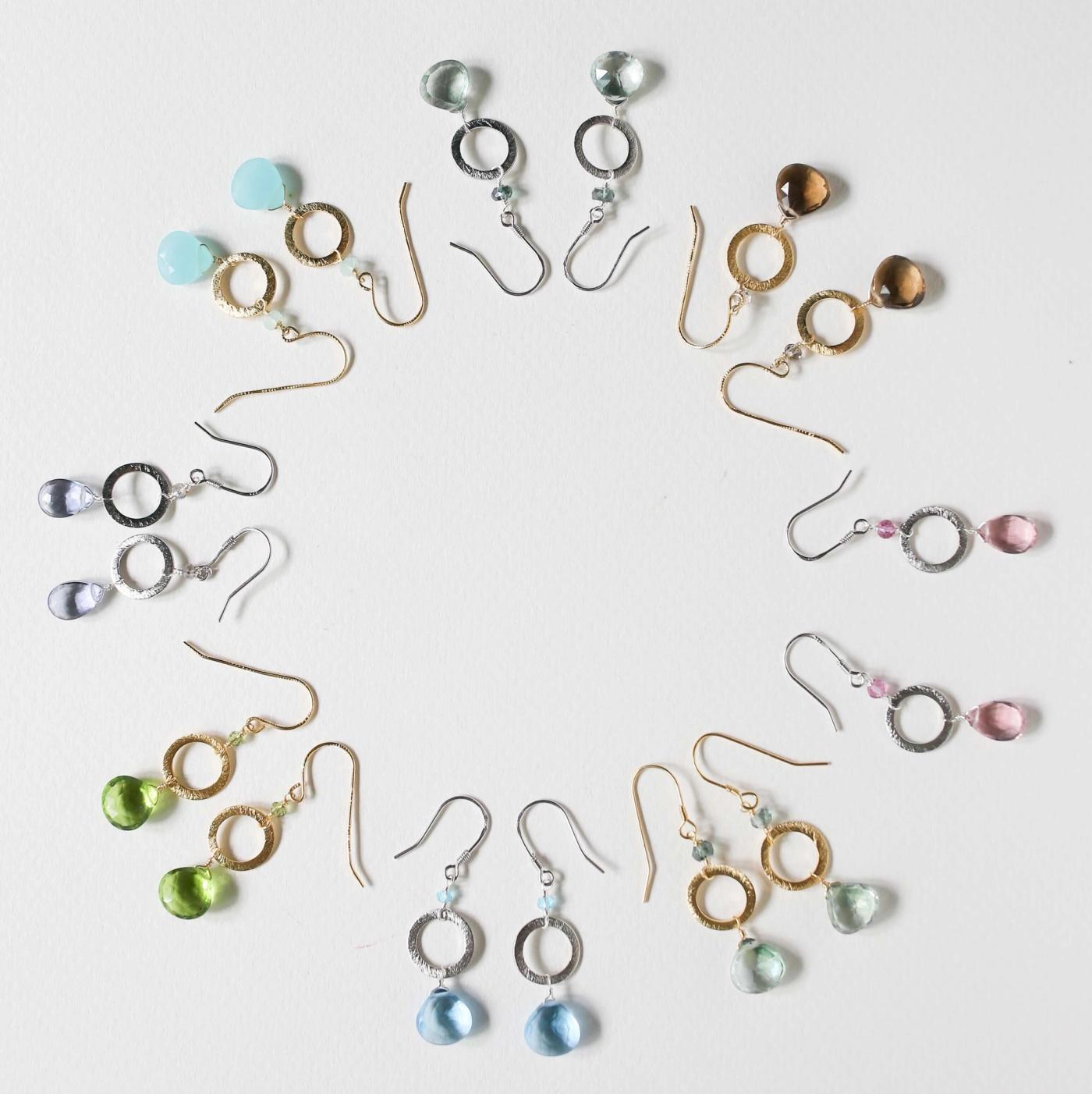
Prasiolite is pale and minty, almost cool in tone. Peridot, by contrast, leans yellower and more olive, a warmer green altogether. Set them side by side and the difference is obvious. One quick note on our own lineup: our peridot pieces are actually peridot quartz, a different colored variety of quartz, not true peridot (olivine). So both stones sitting next to each other in our collection are quartz cousins, not two unrelated minerals.
Amethyst and prasiolite are more directly related. They come from the same mineral family: amethyst is purple quartz, and prasiolite is its green-toned relative, often created from that very same purple stone through heat treatment.
If you're trying to tell them apart at a glance, here's the simplest tip: prasiolite reads cool and crisp, while peridot quartz has a warmer, more yellow-green cast. Hold them under the same light and the temperature difference does most of the work for you.
The Color and Quality of Green Amethyst
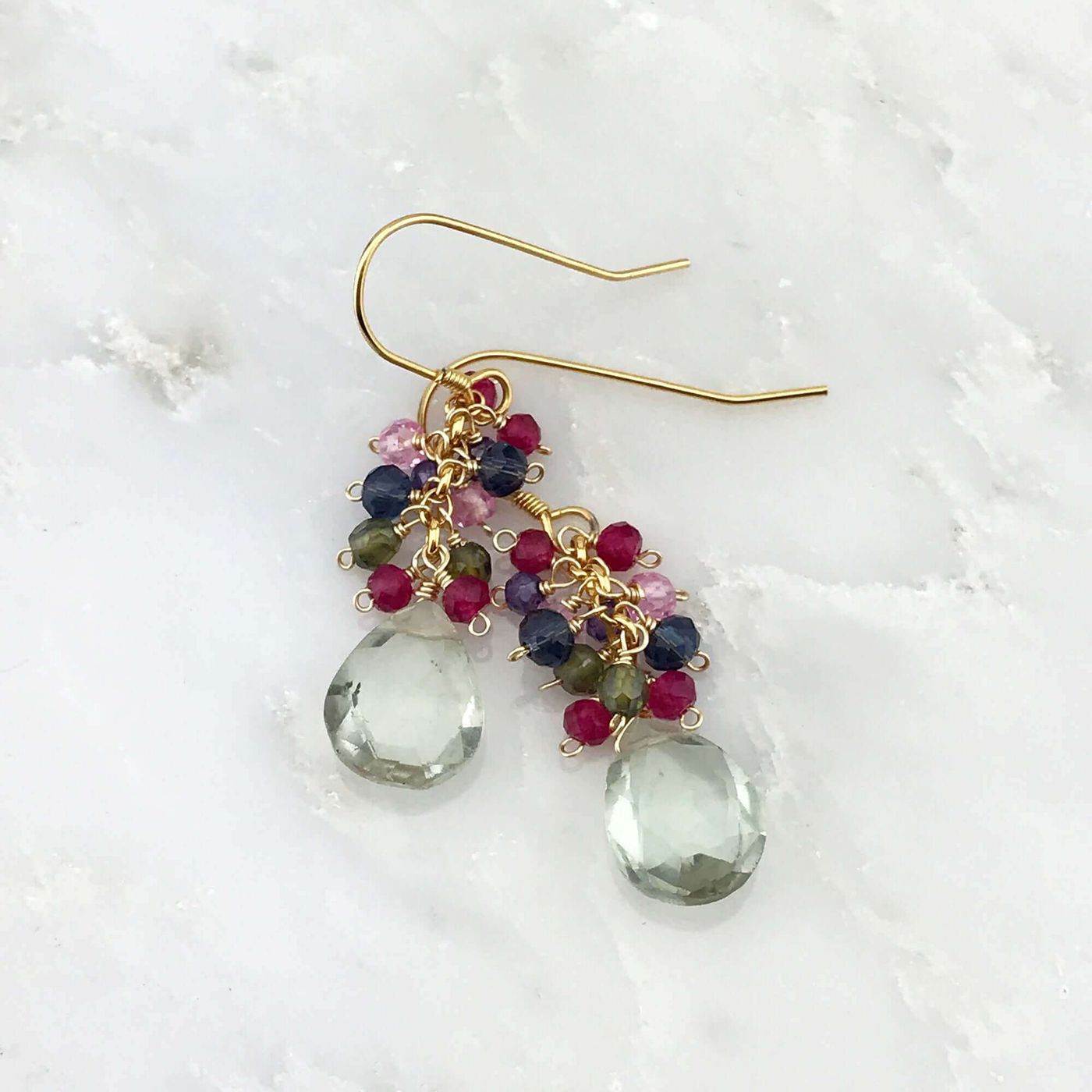
Good prasiolite shows an even, clear green with solid transparency. Nothing cloudy, nothing murky. The best pieces almost glow when light passes through them.
But it's a natural stone, so expect some variation. Tone shifts slightly from piece to piece, and small internal characteristics are part of the deal, not a flaw to worry about. That's actually what makes each piece feel individual rather than mass-produced.
One thing we really like about green amethyst: its pale color makes it genuinely versatile. It sits beautifully against warm gold and just as well against cool silver, which isn't true of every gemstone. And light changes how it reads. Indoors, under warmer bulbs, it softens into a quieter green. Out in daylight, it brightens up and looks almost crisp. Worth knowing if you're choosing a piece to wear mostly at a desk versus mostly outdoors.
How Parken Uses Green Amethyst in Jewelry
We work green amethyst into a pretty wide range of styles. There are drop earrings for a bit of everyday movement, isla necklaces and bracelets for subtle color, minimalist pendants for something quieter, and sparkler necklaces if you want more shine. Each cut shows off the stone's pale green a little differently.
Every piece comes in both 14k gold vermeil and rhodium-plated silver, so whichever metal you're already wearing, there's a matching option. Everything is made to order and handmade in the USA, with our artisans hand-setting each natural stone individually, which is part of why no two pieces turn out exactly alike.
If you want to browse the full range of cuts and settings, from gold drop earrings in green amethyst to silver drop earrings in green amethyst, our green amethyst collection is the easiest place to see it all side by side. There's also a green amethyst gold necklace and a green amethyst minimalist necklace if a single pendant is more your speed.
Styling Green Amethyst: What to Pair It With
A green amethyst pendant looks great on its own, but it really comes alive layered. Try a plain 16-inch chain underneath it, leaving a couple of inches of space between the two so neither gets lost against the other.
For something that moves easily from a desk to dinner, green amethyst drop earrings are a good call. The color is soft, not bold, so it doesn't compete with whatever else you're wearing, which makes it one of those pieces you can leave in all day without thinking about it.
It also plays well with other greens, peridot quartz or green onyx, for a tonal look that reads intentional rather than matchy. Or pair it against gold for warmth, which tends to bring out more depth in the stone. And because green amethyst isn't tied to a single birth month the way, say, amethyst or peridot are, it works nicely as a subtle alternative birthstone gift, or as a thoughtful, slightly unexpected pick when you want to give someone jewelry that feels personal rather than obvious.
Caring for Your Green Amethyst Jewelry
A few basics keep any plated jewelry looking its best, green amethyst included. Take pieces off before you shower, swim, or apply lotion and perfume. Water and chemicals are the main things that wear down plating over time, not everyday wear itself.
Store each piece separately in a soft pouch rather than tossed in with other jewelry. Quartz is harder than most metals, so it can actually scratch softer settings if they're rubbing against each other in a drawer.
Like all our pieces, gold vermeil and rhodium-plated silver settings hold up well with a little gentle care, nothing complicated, just some basic common sense. If you've got questions about delivery timing or returns on a specific piece, our shipping policy page has the specifics rather than us guessing here.
Frequently asked questions
Is prasiolite the same thing as green amethyst?
Yes, prasiolite and green amethyst are two names for the same stone, a pale green variety of quartz in the amethyst family. Jewelers often use 'green amethyst' because it's easier to recognize, even though true amethyst is purple.
Is green amethyst a natural stone or is it treated?
Most green amethyst on the market, including the quartz Parken uses, started as natural amethyst or citrine and was heat treated to bring out its green color. This is a common, accepted practice in the gem trade, and the stone itself remains real, natural quartz, not a lab-created imitation.
What is the difference between green amethyst and peridot?
Green amethyst (prasiolite) has a cooler, minty to sage green tone, while peridot leans warmer and more olive or yellow-green. Many of Parken's 'peridot' pieces are actually peridot quartz, a different colored quartz, so comparing the two side by side is really comparing two members of the quartz family rather than quartz versus true peridot.
Is green amethyst a rare or expensive gemstone?
Naturally occurring green quartz is quite rare, but most prasiolite available today is heat-treated amethyst, which keeps it accessible and reasonably priced compared to rarer colored gems. That affordability is part of why it shows up across necklaces, earrings, and bracelets at approachable prices.
What does green amethyst symbolize?
Green amethyst is traditionally associated with calm, balance, and renewal, much like other soft greens in nature. Many people simply wear it because the color feels fresh and easy to pair with everyday outfits, and that personal meaning is reason enough to choose it.
Find Your Green Amethyst Piece
Prasiolite is a genuine, natural green quartz with a quiet kind of beauty, soft enough to wear every day, interesting enough to ask about. Once you know what is prasiolite green amethyst and how it compares to its quartz cousins, it's easy to see why it's become such a go-to for understated color.
If you're ready to find your own piece, shop the green amethyst collection for necklaces, earrings, and bracelets that fit easily into everyday layering. And if you'd rather just keep an eye on new arrivals and styling ideas as they come, join our newsletter and we'll send them your way.


Leave a comment