What Is a Semi-Precious Gemstone? A Simple Guide to the Term
If you've ever shopped for jewelry and seen a stone labeled "semi-precious," you've probably wondered if that's a polite way of saying second-rate. It isn't. So what is a semi precious gemstone, really? It's any natural gemstone that isn't a diamond, ruby, sapphire, or emerald. That's it. That's the whole definition.
It's a marketing label and a historical holdover, not a scientific grading system. Nobody tested these stones for hardness, rarity, or beauty and sorted them into a "lesser" pile. Someone just drew a line a long time ago, and it stuck. Most jewelry people actually reach for day to day, amethyst, garnet, labradorite, the kind of pieces that make up a huge chunk of gemstone bracelets sold today, technically falls under this broad "semi-precious" umbrella.
The rest of this guide covers where the term came from, why a lot of gemologists have quietly dropped it, and what it actually means for you as a shopper trying to buy something beautiful without overpaying for a label.
Precious vs. Semi-Precious: Where the Line Came From
The split dates back to the 19th century. Diamond, ruby, sapphire, and emerald got crowned "precious" because of their historic rarity and their ties to royalty and religion. Kings wore them. Churches used them. They were hard to find and harder to cut, so they became the benchmark for status.
Everything else got swept into "semi-precious" by default. Amethyst, citrine, garnet, aquamarine, topaz, peridot, hundreds of others, all lumped together regardless of how rare or valuable they actually were. It was never really about what the stone was worth in the ground. It was about which four stones got the marketing push first.
Here's where it falls apart: some natural rubies are actually more common, and less valuable, than certain rare garnets or tanzanite. A fine tanzanite can cost more per carat than a mediocre ruby. The "precious" label never tracked real-world worth, it just froze a 19th-century hierarchy in place and never updated it.
What actually drives a gemstone's value is color, clarity, cut, and carat weight, individually, stone by stone. A richly colored garnet with excellent clarity will always be worth more than a pale, included ruby, no matter which category each one got assigned a century and a half ago.
Why Many Gemologists Have Dropped the Term
Organizations like the American Gem Trade Association discourage the word "semi-precious" these days, and for good reason: it implies inferiority that just isn't accurate. A stone isn't worse because it missed out on a label coined before modern gemology existed.
The modern approach is simpler. Describe stones as gemstones, full stop, or group them by mineral family, quartz, beryl, garnet, feldspar, and then grade each one individually on its own color, clarity, and craftsmanship. That's a more honest system. It judges the actual stone in front of you instead of a category it got filed under generations ago.
None of this is a reason to second-guess a stone you already love wearing. It's a labeling debate happening in gemology circles, not a quality verdict on your jewelry box. If anything, knowing the history should make you trust your own eye a little more than the old terminology.
Popular Semi-Precious Gemstones (and the Ones Parken Uses)
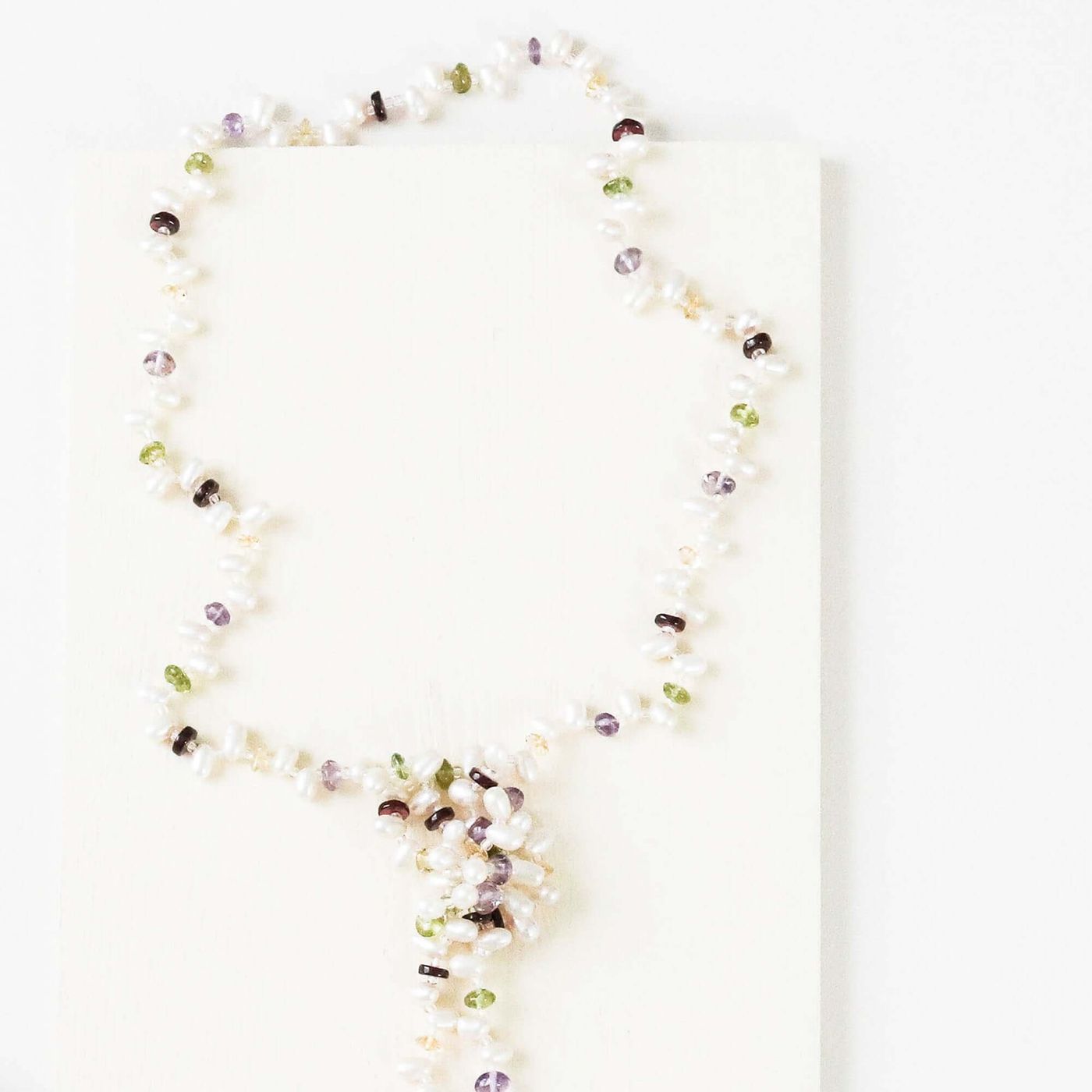
The list of stones that fall under "semi-precious" is long: amethyst, citrine, garnet, rhodolite garnet, iolite, peridot, rose quartz, smoky quartz, lapis, opal, pearls. Basically every gemstone that isn't one of the original four.
Worth knowing: many pieces labeled aquamarine, London blue, peridot, opal, or pink tourmaline are actually colored varieties of quartz. That's still a genuine natural gemstone, just a different mineral underneath the name on the tag. Most jewelry using these color names works this way, though labeling varies across the industry, so it's worth asking if you're not sure what's in a piece.
And because these are real, natural stones, you'll see variation in tone and inclusions from one piece to the next. No two amethyst pieces will look perfectly identical, and that's the point, not a flaw. A machine-stamped, color-matched set of stones usually means synthetic material or glass, not nature.
At Parken, every stone is real and natural, set in gold vermeil or rhodium-plated sterling silver. No synthetic fillers, no glass standing in for the real thing.
Semi-Precious Doesn't Mean Lower Quality
The assumption that "semi-precious" equals cheap or fake needs to go. Hardness, measured on the Mohs scale, clarity, and craftsmanship all vary within every gemstone family, precious or not. A diamond can be included and poorly cut. A garnet can be clean, richly colored, and cut beautifully.
Put a well-cut garnet or a labradorite with strong flash next to a low-grade, cloudy sapphire, and the garnet wins. Every time. Category didn't decide that. Quality did.
Plenty of these stones also carry traditional associations worth knowing, amethyst is traditionally associated with calm, citrine with warmth, though these are personal, cultural touches rather than scientific or healing claims. Some people like picking a stone partly for what it's meant over the years. No harm in that, as long as it's framed as tradition, not medicine.
At Parken, prices run roughly $48 to $250, and that reflects handmade craftsmanship and ethical sourcing, not a "lesser" stone sitting underneath a bigger discount. You're paying for the work and the material, not a grading category from 1890.
Styling and Choosing Semi-Precious Gemstone Jewelry
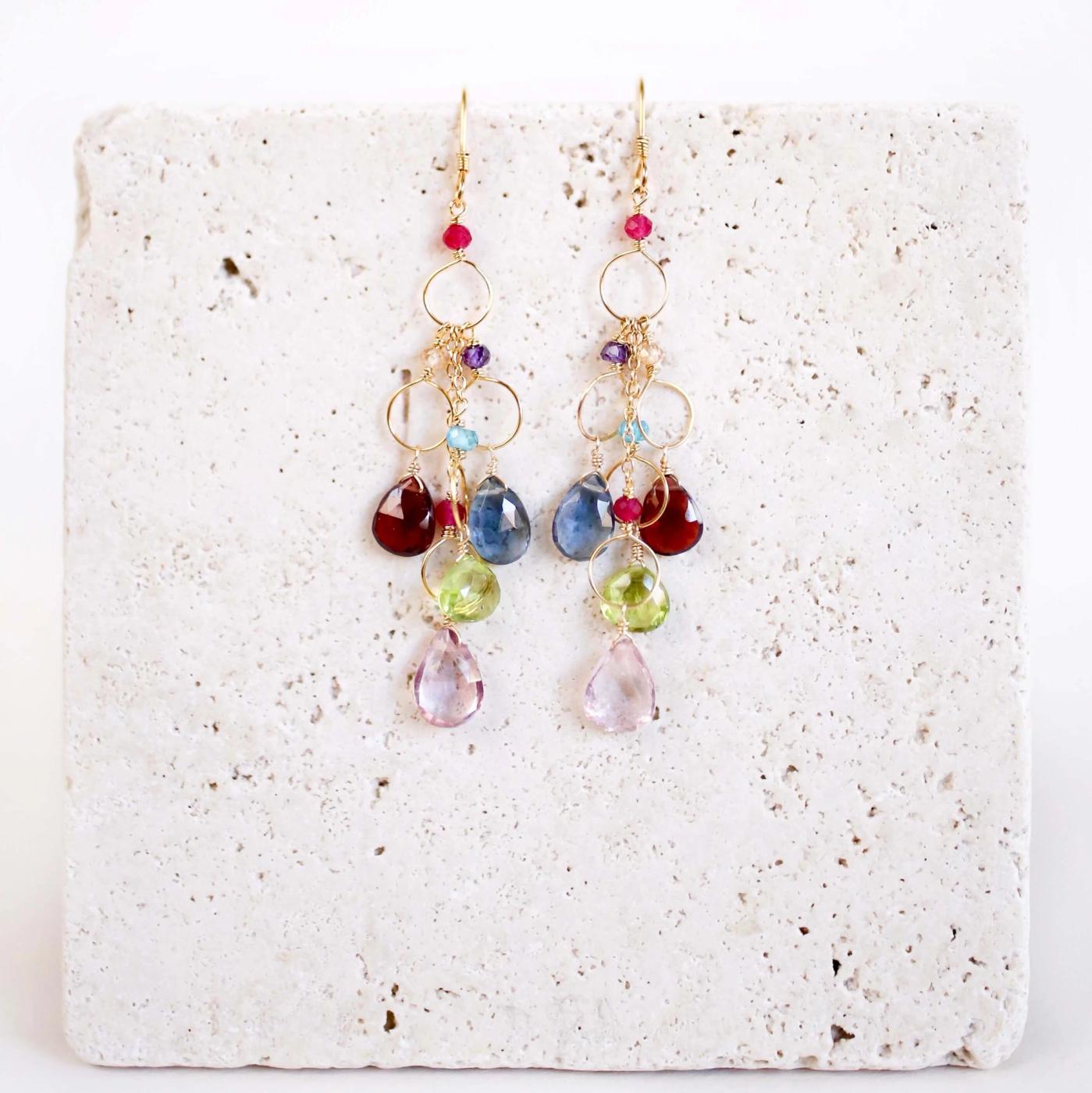
Start with color, not category. Cool tones, aquamarine quartz, London blue quartz, tend to sit nicely against silver and look especially good if you run cool-toned yourself. Warmer stones, citrine, garnet, lean into gold vermeil and look rich against warmer skin. Neither rule is absolute, but it's a solid starting point if you're staring at a wall of options and feeling stuck.
Pick one statement piece first. A single gemstone bracelet in a color you already wear a lot, then build a stack slowly over months rather than buying every color in one go. It's more fun that way anyway, you get to keep adding rather than committing all at once.
If a stone's traditional meaning matters to you, look it up, it's a nice layer of personal story. But choose mainly on color and how you'll actually wear the piece, every day versus special occasion only. A rose quartz piece that only comes out twice a year isn't doing you much good in a drawer.
Basic care keeps plated pieces looking sharp longer: keep them away from water, lotion, and perfume. That's not a hypoallergenic or waterproof promise, just a simple habit that protects the finish and the stone.
Frequently asked questions
Is a semi-precious gemstone less valuable than a precious gemstone?
Not necessarily. The precious versus semi-precious split is a 19th-century label based on rarity at the time, not an actual measure of value. Some semi-precious stones, like fine garnet or tanzanite, can cost more than lower-grade examples of the four precious stones.
What are the four precious gemstones?
The four stones traditionally called precious are diamond, ruby, sapphire, and emerald. Every other natural gemstone, including amethyst, citrine, garnet, and labradorite, has historically been grouped under the much broader semi-precious label.
Is amethyst considered a semi-precious stone?
Yes, amethyst falls under the semi-precious category by the traditional definition, since it isn't one of the four historically precious stones. That label says nothing about its quality: a richly colored, well-cut amethyst is still a beautiful, durable natural gemstone.
Can semi-precious gemstones still be expensive?
Absolutely. Rarity, color saturation, clarity, and size drive the price of any gemstone, precious or semi-precious. A fine rhodolite garnet or tanzanite, for example, can be priced well above a mass-market ruby or sapphire.
Why do some jewelers avoid using the term semi-precious?
Many modern jewelers and gemologists feel the term implies a stone is inferior, which isn't accurate or fair to the dozens of beautiful gemstone varieties it covers. Instead, they prefer to describe stones by their actual mineral family, like quartz or garnet, and judge each one on its own color and craftsmanship.
Find Your Favorite Semi-Precious Stone
"Semi-precious" is an old label from a century and a half ago. It was never a measure of how beautiful or well-made a stone actually is.
If you want to see the range for yourself, browse gemstone bracelets and look at how much variation, and personality, sits inside stones that all technically share one broad label. Or join the Parken newsletter at join the list for new gemstone styles and restocks as they come in.
Pick the stone that actually catches your eye. That's really the only grading system that matters.


Leave a comment