What Is a Cluster Necklace? A Quick Answer
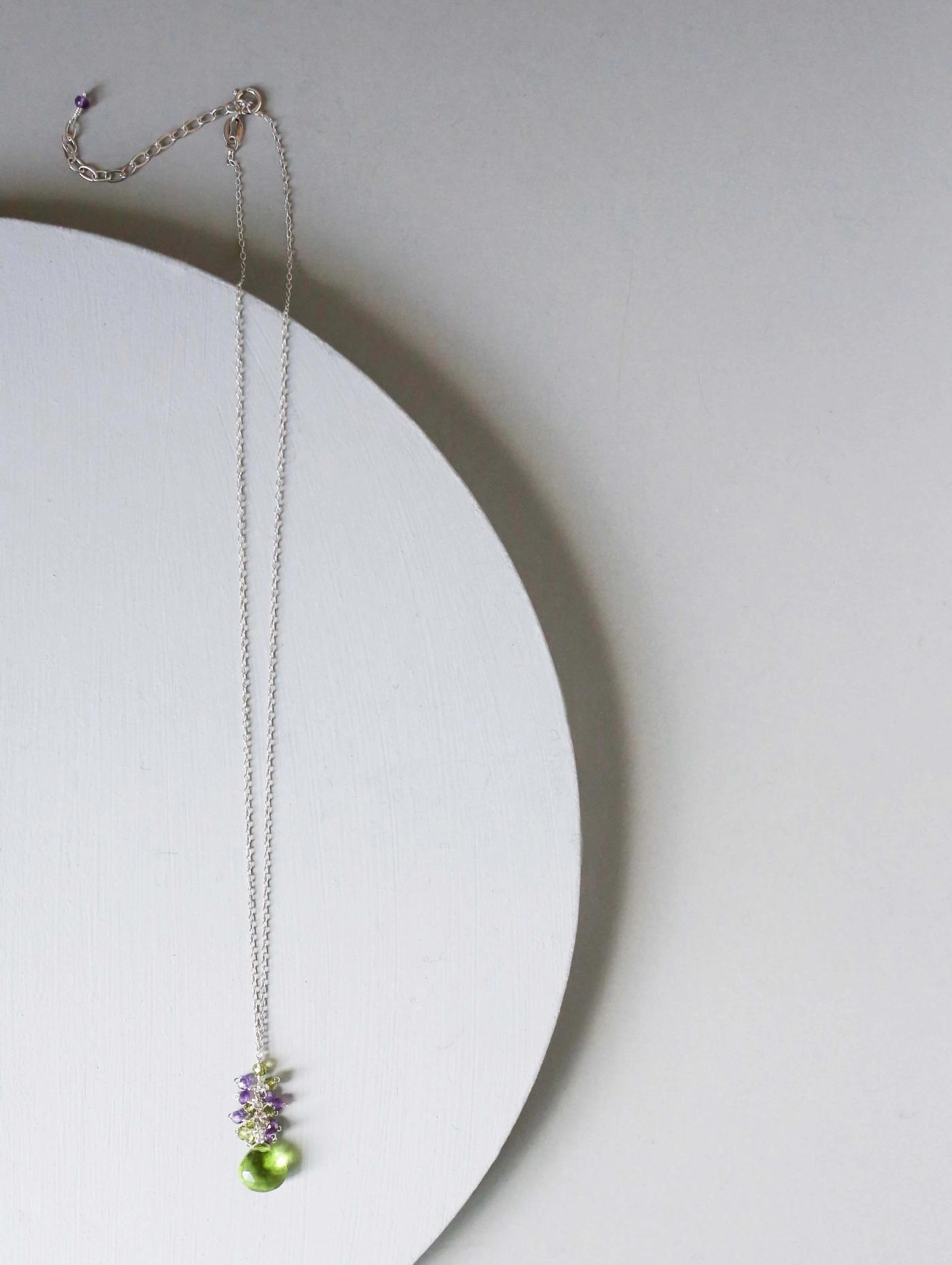
A cluster necklace groups several gemstones, beads, or charms close together at one point on the chain, instead of showing off a single stone by itself. Picture a handful of small stones huddled together rather than lined up in a neat row. That's a cluster.
Because the stones sit together instead of spaced out, the whole piece reads as more textured and layered, even when it's hung on the simplest chain you own. A single pendant gives you one clean point of sparkle. A cluster gives you depth: different shapes, different angles of light, more going on when you look closely.
What is a cluster necklace, really, beyond the definition? It's one of the questions we hear most from people shopping our site, so it felt worth answering properly instead of leaving it to guesswork.
Cluster Necklace vs. Other Necklace Styles
Necklace styles get used loosely, so here's the plain breakdown. A pendant necklace is one stone or charm hanging on its own, simple and singular. A halo necklace rings a center stone with a circle of smaller ones, so the small stones frame the star of the show. A cluster necklace skips the hierarchy. There's no single "main" stone, just several grouped together with roughly equal weight.
One common sub-style worth knowing: the raindrop cluster. Here, teardrop-shaped stones hang loosely together below the chain, each one catching light a little differently as it moves. It's one of the most popular cluster looks because the shapes already feel organic together, no forcing required.
A quick rule of thumb if you're ever unsure what you're looking at: can you count the stones easily, and are they bunched close rather than spaced evenly apart? If yes, you're looking at a cluster.
How a Cluster Necklace Is Made
Making a cluster isn't just gluing stones onto a chain. Each gemstone gets set and wired individually first. Then our artisans group the wired stones together by hand, adjusting the angles until the cluster falls naturally instead of sitting stiff and flat against the chest.
That hand-wiring step matters more than it sounds. A cluster that's assembled carelessly looks clumped and heavy. One that's wired stone by stone moves a little, catches light from more than one direction, and settles into a shape that looks intentional rather than accidental.
We use real, natural gemstones for ours, rhodolite garnet, peridot quartz, white chalcedony, aquamarine quartz, and others depending on the style. Natural stones vary in tone and shape, so no two clusters come out quite identical. We see that as the point, not a flaw. Every piece is made to order, by hand, in the USA, which you can read more about on our about page if you're curious how that process actually works.
Popular Cluster Necklace Styles to Know
Not all clusters look alike. A few patterns show up again and again:
Raindrop clusters use teardrop-shaped stones grouped loosely together, often in a single stone type. Our rhodolite garnet raindrop cluster necklace is a good example: warm, rosy tones that work well against gold.
Mixed-stone clusters combine varied shapes and colors in one grouping. These lean more eclectic, good if you want a necklace that already does the mixing for you instead of layering multiple pieces yourself.
Single-gemstone clusters repeat one stone type for a richer, monochrome effect. Our white chalcedony raindrop cluster is a soft, neutral option that's easy to wear daily, while the aquamarine quartz gold raindrop cluster necklace leans cooler for anyone who gravitates toward blue tones.
On finish, you've got two real options. Gold pieces are 14k gold plated over sterling silver, what's often called gold vermeil. Silver pieces are rhodium plated over sterling silver, giving that cool, tarnish-resistant white-gold look. Neither is solid gold, and we'd never tell you otherwise. The plating is what keeps the price accessible without cutting corners on the stones themselves.
How to Style and Layer a Cluster Necklace
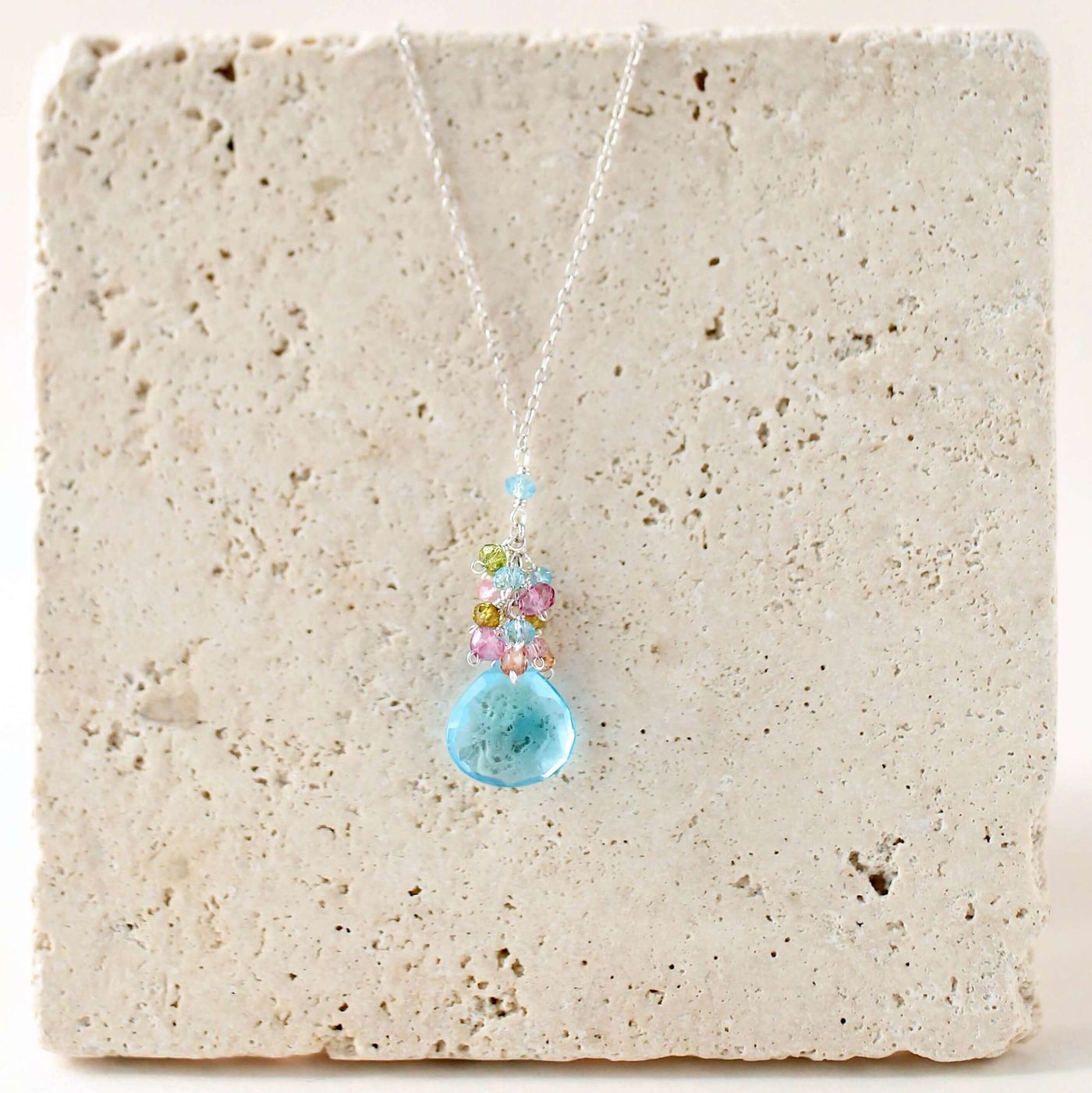
Here's a formula that actually works: start with a 16-inch simple chain as your base layer, then add an 18-inch cluster necklace on top. The two-inch gap means the cluster sits just below the first chain instead of crowding it or tangling together. Simple, and it works nearly every time.
Necklines matter more than people expect. Crew necks and button-downs give the chest room to breathe, so a cluster necklace has space to actually be seen. Deep V-necks are trickier. Go longer there, something that lands around the sternum, so the cluster doesn't disappear into the gap or feel stranded too high.
Keep the rest of the look quiet. Stud earrings, one stacking bracelet, nothing competing for attention. A cluster is already doing the visual work. Let it.
If you're building out a layering set from scratch, our layering chains collection has the simple base chains that pair well under a cluster, and the full necklaces collection is worth a browse if you want to see how clusters sit next to other styles.
Who a Cluster Necklace Is Best For
If you like more visual texture than a single pendant gives you, but you're not looking for something precious enough to save for occasions, a cluster is the move. It's dressy enough to notice, wearable enough for a Tuesday.
It also makes a strong gift. Birthdays, graduations, a "just because" moment, a cluster necklace feels more considered than a plain chain because of the mix of stones involved. If you're shopping for someone else, our gifts for her collection is a good place to start narrowing things down.
One honest note: because the stones are natural, no two cluster necklaces look exactly alike. Slight variations in tone and shape are normal, not a defect. For a gift especially, that's part of what makes it feel one-of-a-kind instead of mass-produced.
Caring for a Cluster Necklace
A cluster has more wire and more stones working together than a simple pendant, so it deserves a little more care. Take it off before you shower, sleep, or apply lotion and perfume. Those everyday habits are what wear down plating over time, cluster or not, but a cluster has more surface area for it to happen.
Store it flat, or hang it separately from your other necklaces. Clusters are more prone to tangling in a jewelry box than a plain chain is, and untangling wire-set stones isn't something you want to rush.
That's really it. This isn't a deep-dive care guide, just the basics that keep a cluster looking the way it did on day one.
Frequently asked questions
Is a cluster necklace the same as a statement necklace?
Not quite. A statement necklace is defined by being bold and eye-catching, which can mean one large pendant, while a cluster necklace specifically groups several smaller stones together at one point. Many cluster necklaces do make a statement, but not every statement necklace is a cluster style.
Can you wear a cluster necklace every day?
Yes, a cluster necklace works well for everyday wear, especially on a shorter chain that sits close to the collarbone. Just remember that plated pieces last longer when you take them off before showering, exercising, or applying lotion and perfume.
What necklace length is best for a cluster style?
Most cluster necklaces look balanced at 16 to 18 inches, so the cluster sits right at or just below the collarbone. If you're layering it with a shorter chain underneath, go a couple inches longer on the cluster piece so the two don't overlap.
Are cluster necklaces good for gift-giving?
Cluster necklaces make especially thoughtful gifts because the mix of gemstones feels more personal and one-of-a-kind than a simple chain. Since natural stones vary slightly piece to piece, the person receiving it is getting something genuinely unique to them.
Do cluster necklaces tangle easily when layered?
They can, since the grouped stones give the chain more to catch on. Storing necklaces flat or hanging separately, and layering a cluster necklace with simple, thinner chains rather than another busy piece, helps keep everything untangled.
Find Your Cluster Necklace
So, what is a cluster necklace at the end of the day? It's an easy way to add texture and a little personality to an outfit without overthinking it, one grouping of stones doing more work than a single pendant ever could.
If you want to see what that looks like in person, browse our cluster necklace collection for the current raindrop and mixed-stone styles. And if you'd rather keep an eye out for new pieces as they're made, join our newsletter and we'll let you know when new styles and restocks land.


Leave a comment