What are waterfall earrings? They're the earring style that looks exactly like the name suggests: tiers of gemstones or chain cascading down from your ear, catching light as they move instead of sitting still like a single drop. If you've ever seen a pair that seems to shimmer from every angle rather than just the front, that's a waterfall at work.
What Are Waterfall Earrings?
A waterfall earring is built from multiple tiers, strands of gemstones, beads, or fine chain, all hanging at graduated lengths from the earlobe. Instead of one stone doing the work, you get three, four, sometimes more, each one swinging slightly out of sync with the others. That's where the name comes from. It's not really about the shape, it's about the movement: light hitting a different tier with every turn of your head, the way sunlight breaks up when it hits moving water.
That makes waterfall earrings sit in a particular spot on the earring spectrum. More presence than a simple drop, but less structured and heavy than a full chandelier piece. They're dramatic without feeling like armor.
Parken's waterfall earrings are hand-wired with real, natural gemstones, so the sparkle and the way each tier falls will vary a little from pair to pair. That's not a flaw in the design. It's just what happens when a human is wiring stones by hand instead of a machine stamping out identical pieces.
The Anatomy of a Waterfall Earring
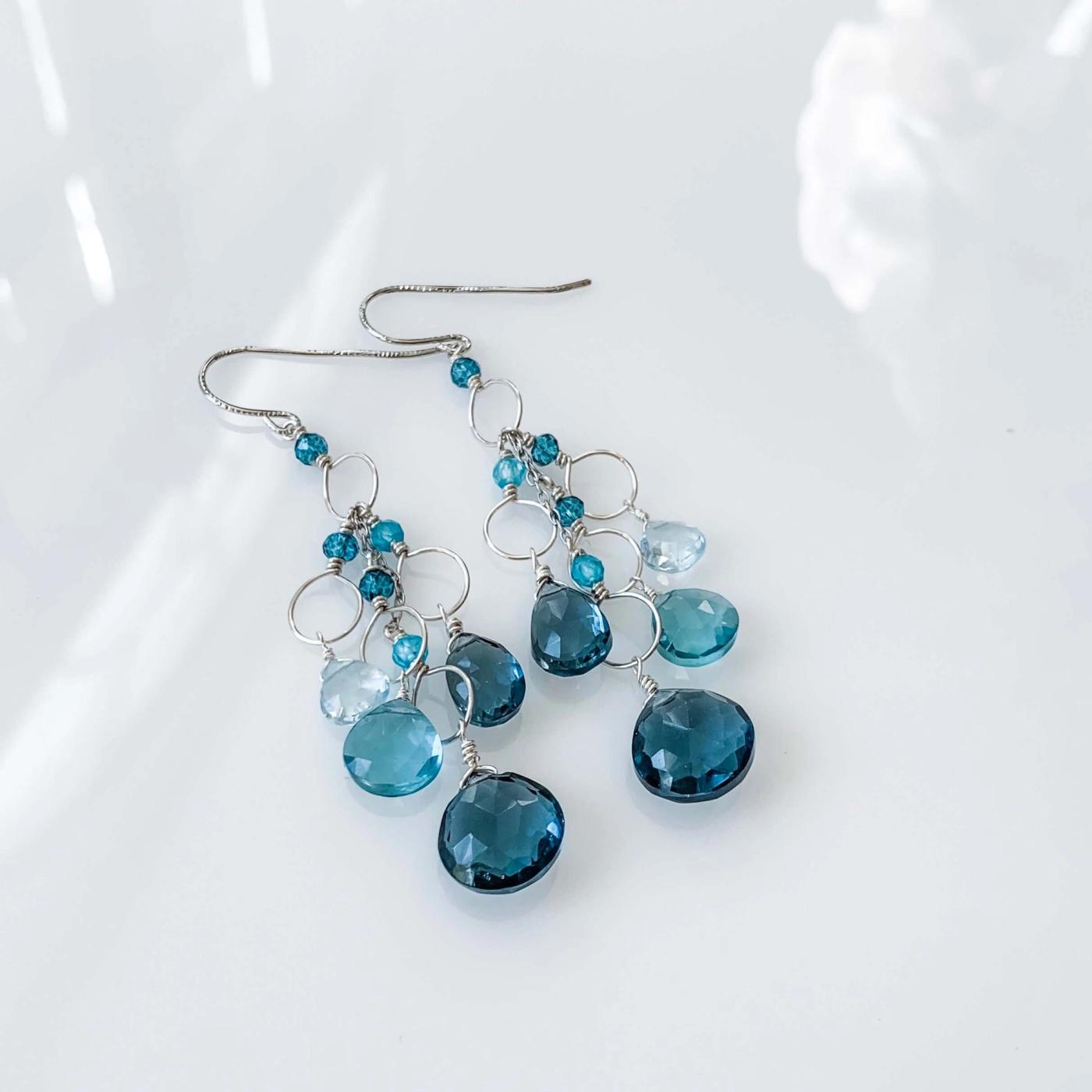
Strip one down and the structure is pretty simple. There's a top anchor, usually a stud or a hook, that sits at the earlobe and holds the whole thing up. Below that hang two or more tiers of stones or chain links, each one a little longer than the last, so the earring widens and lengthens as your eye moves down.
Tier count and spacing do most of the visual work here. Two or three tiers with some breathing room between them reads delicate, almost like a slightly dressed-up drop earring. Pack in more tiers, tighter together, and you get something closer to a statement piece, the kind of earring people notice across a room.
Stone shape matters too. Briolettes (those teardrop-cut stones with facets running all the way around) throw light in every direction as they swing. Faceted rondelles catch light in flashes. Smooth teardrops give you a softer, more continuous shine. Mix a few shapes in one pair and the cascade effect gets even more pronounced, since each tier is reflecting light a little differently.
Because Parken's pieces are made to order by hand, the natural stone color and exact placement will vary slightly from the product photos. Honestly, that's part of the appeal. You're not getting a mass-produced copy, you're getting the pair that got wired for you.
Waterfall vs. Fringe, Chandelier, and Drop Earrings
People use these terms loosely, so it's worth pulling them apart.
A drop earring is the simplest version of cascading jewelry: one element, hanging from the ear, done. No tiers, no branching, just a single stone or charm that swings.
Fringe earrings go wider rather than longer. Think many thin strands or chains, usually cut to the same length, all hanging together for a fuller, curtain-like effect. The movement is more of a sway than a cascade.
Chandelier earrings are the most architectural of the group. They're built on a structured frame with multiple branching tiers, and they tend to be the boldest and heaviest style you'll find. Great for a night where you want the earrings to be the whole outfit.
Waterfall earrings land in the middle of all three. They borrow the tiered movement of fringe and the graduated shape of a chandelier, but without the rigid frame that makes chandelier pieces feel so substantial. The result swings more freely than a chandelier earring and has more shape than a fringe, which is really the whole point of the style.
Who Waterfall Earrings Suit Best
If you like the idea of movement and shine but full chandelier earrings feel like too much, this is probably your style. They give you drama without the weight, literally and visually.
They do need a bit of staging to look their best. Hair worn up or pulled back shows off the tiers instead of hiding them against loose strands. Pair that with a neckline that leaves the neck and shoulders bare, an off-the-shoulder top, a scoop neck, a strapless dress, and the earrings have room to actually be seen.
Special occasions are the obvious fit: weddings, parties, date nights, anywhere you'd usually reach for something more than a stud. But they're not only for those nights. Plenty of women wear a lightweight waterfall pair as their everyday earring when they want a little more presence than a drop gives them, without committing to a true statement piece.
They also make a good gift for a milestone birthday or another big celebration. A cascading design feels like a step up from an everyday stud, the kind of thing someone puts on and feels a little different in.
Gemstones and Metals: What to Look For
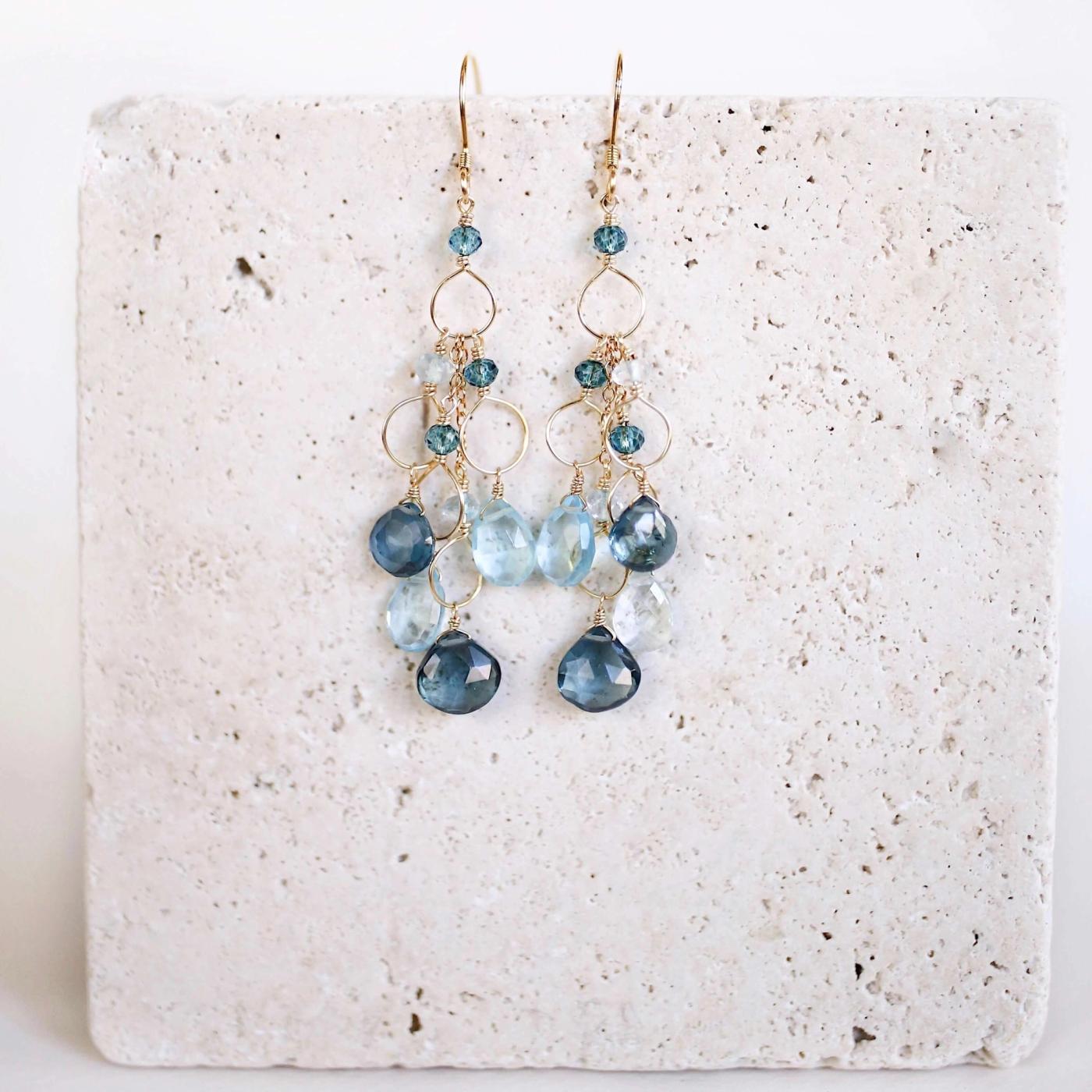
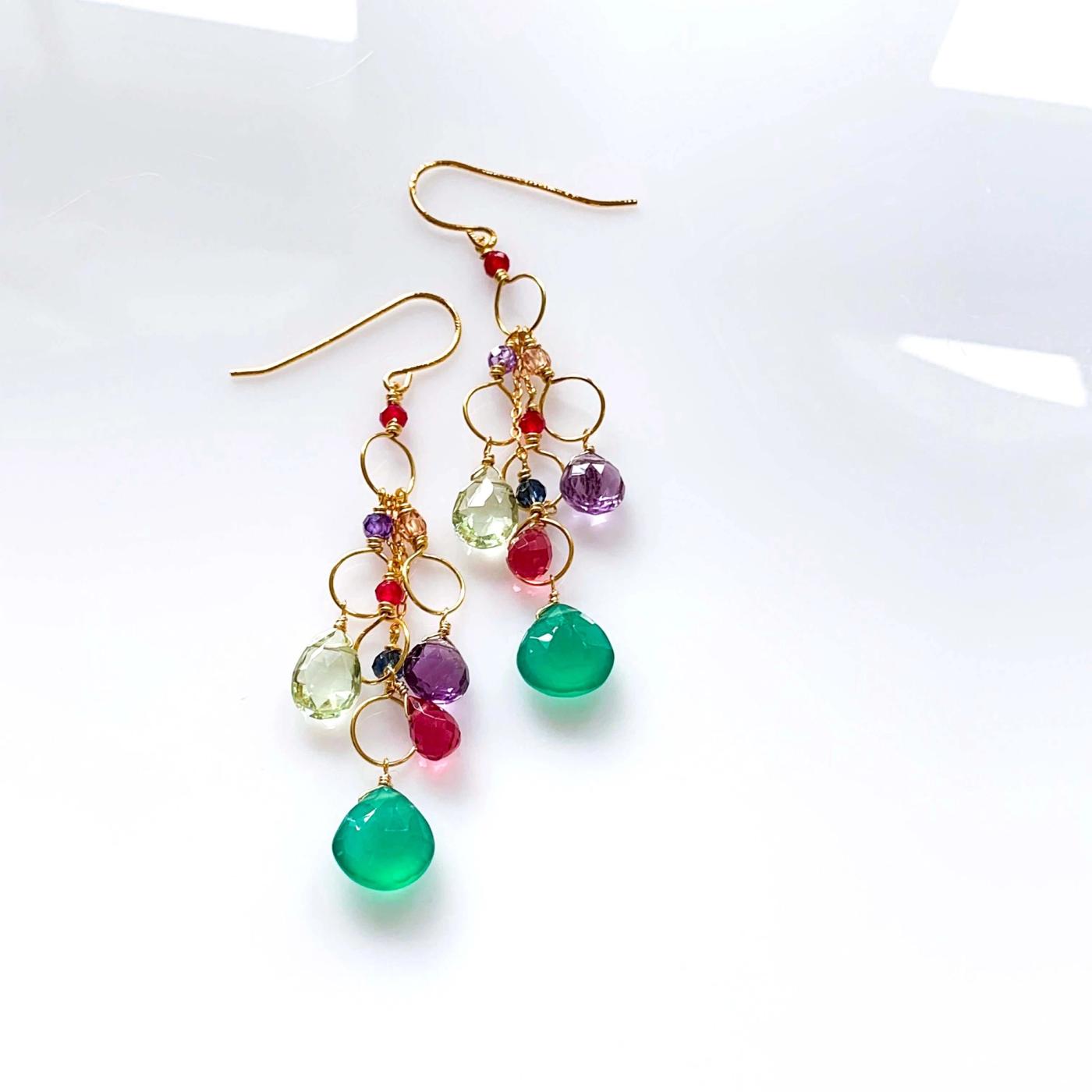
Parken's waterfall earrings are made with real, natural gemstones like iolite, aquamarine quartz, and mixed rainbow gemstone combinations. Because the stones are natural, color and clarity shift slightly piece to piece, which means no two pairs come out perfectly identical.
On metal: Parken's gold pieces are 14k gold plated over .925 sterling silver, also known as gold vermeil, and the silver pieces are rhodium plated over .925 silver. Neither is solid gold or gold filled, and it's worth knowing the difference before you buy, since plated pieces need a slightly different level of care than solid metal (more on that below).
For the stone itself, cooler tones like iolite and aquamarine lean into the "waterfall" idea literally, giving you that soft, watery blue-violet effect as the tiers move. If you want more color play, a rainbow gemstone mix brings warmer and cooler tones into the same cascade, so the color shifts as well as the light.
One simple rule for keeping the whole look cohesive: match metal to what you already wear. Gold with gold, silver with silver. It sounds obvious, but it's the fastest way to make a new pair look like it belongs with the rest of your jewelry instead of fighting it.
How to Style and Care for Waterfall Earrings
Styling these is mostly about getting out of their way. Pull your hair back or into an updo so the tiers actually show. Skip the necklace, or keep it minimal, since anything busy at the neckline competes with what's happening at your ears.
Same logic applies to the rest of your jewelry. A thin bangle or a simple ring is plenty. The earrings are already doing the talking, you don't need your wrist arguing with them.
Care is straightforward, if you keep it in mind. Put the earrings on after makeup and perfume, not before, so the plating isn't getting hit with product directly. Take them off before you shower, swim, or work out. None of Parken's plated pieces are meant to be worn in water, and that one habit probably does more for how long a pair lasts than anything else you could do.
Store them flat, or hang them separately from your other earrings. With multiple tiers, it's easy for a cascade pair to tangle with a neighboring pair in a jewelry box, and untangling fine chain is nobody's favorite way to spend five minutes before you're trying to leave the house.
Frequently asked questions
Are waterfall earrings heavy to wear?
Most waterfall earrings feel lighter than they look because the tiers are made from thin wires and small gemstones rather than solid metal. Parken's styles are hand-wired to keep them comfortable for a full day or evening of wear, though any earring with multiple tiers will feel a bit more present on the ear than a simple stud.
What's the difference between waterfall and chandelier earrings?
Chandelier earrings have a structured frame that branches out, usually making them the boldest and heaviest style in the dangle earring family. Waterfall earrings skip the rigid frame and instead let graduated tiers hang freely, so they move more and feel a bit lighter and less formal.
Can waterfall earrings be worn every day or just for special occasions?
They can work for both, it depends on the design. A pair with two delicate tiers and small stones reads everyday, while a fuller, multi-tier style with sparkle feels more suited to an evening out or a celebration.
How do I keep waterfall earrings from tangling?
Store each pair flat in a lined box or hang them separately rather than tossing them in with other jewelry, since the tiers can catch on chains or hooks. If a tier does tangle, gently work it loose by hand rather than pulling, since the wires are delicate.
Are waterfall earrings good for sensitive ears?
Sterling silver with quality plating, like Parken uses, is generally a better choice than cheap base metals for many people with sensitivities, though we can't guarantee any piece is safe for every sensitive-skin case. If you have known metal allergies, it's worth checking with your dermatologist before trying a new style.
Find Your Waterfall Earrings
So, what are waterfall earrings, in one line: tiered, cascading movement that sits between a simple drop and a full chandelier statement. More shimmer than a stud, less weight than a chandelier, and genuinely different every time you wear them because the stones aren't identical pair to pair.
If that sounds like your kind of earring, go take a look at Parken's waterfall earring collection and see what's currently in stock, stone and metal combinations rotate as new pieces are made. And if you'd rather not check back constantly, join the newsletter for early word on new arrivals in this style.
One thing worth planning around: these are made to order, by hand, in the USA, so give yourself a bit of lead time before the event you're wearing them for.


Leave a comment