Most Popular Gemstones for Necklaces 2026: 7+ Mohs Wins
By Editorial Team
This page benchmarks the gemstones that show up most in necklaces in 2026 by the two things that decide whether a stone works around your neck: how well it resists scratches and whether it carries a birthstone month for gifting. It covers the stones Parken Jewelry works with, from amethyst and aquamarine to pearl and labradorite.
TL;DR
The most popular gemstones for necklaces in 2026 pair a birthstone month with a Mohs hardness of 7 or higher.
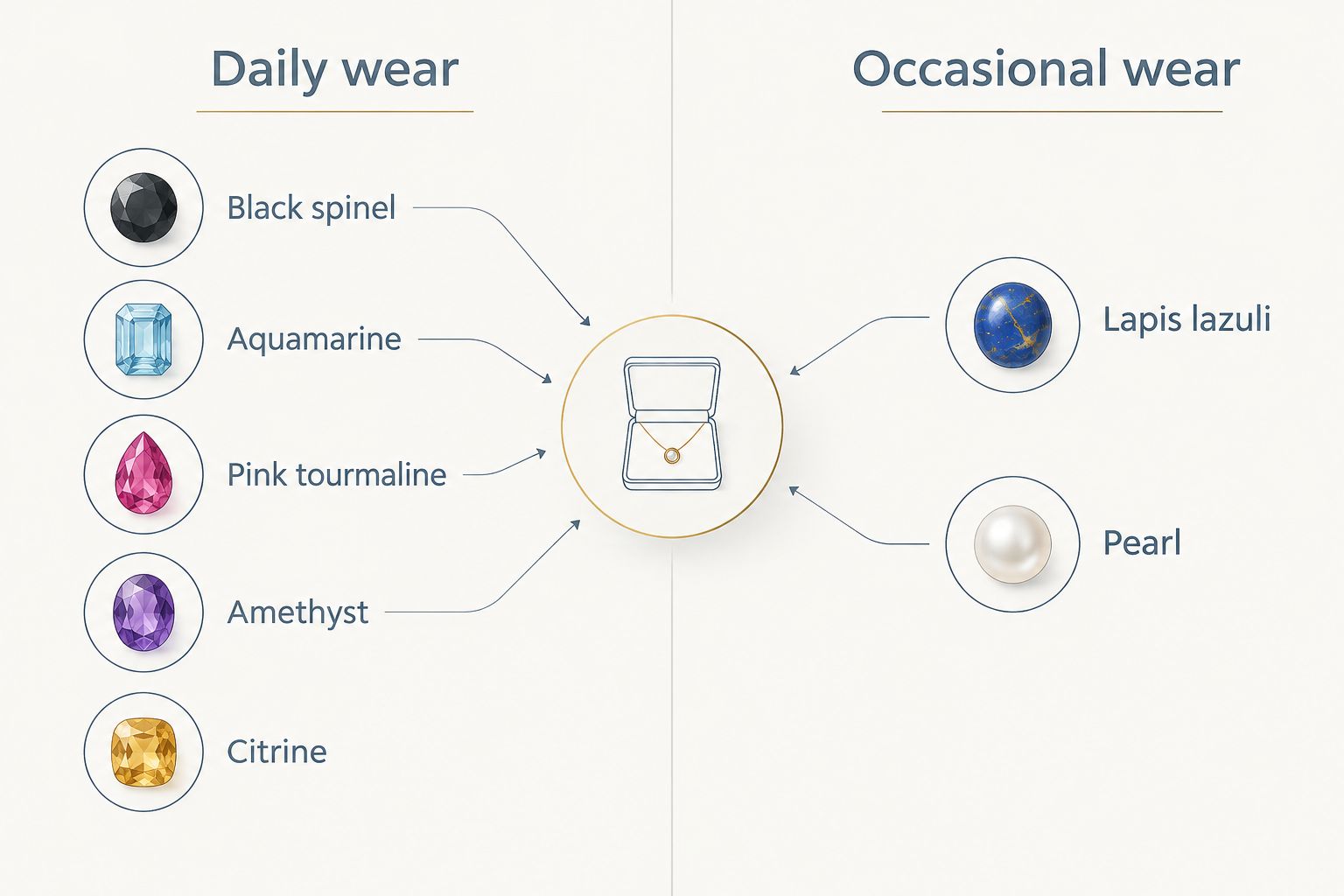
Black spinel, aquamarine, pink tourmaline, garnet, amethyst and citrine clear the 7 yardstick for daily wear.
Pearl, lapis lazuli and labradorite sit below 7 and still work well as necklaces with gentle care.
For a gift, match the birthstone month first, then check hardness against how often she will wear it.
Key numbers
7
Mohs hardness yardstick
Quartz, the mineral in everyday dust
8
Black spinel hardness
2.5–4.5
Pearl hardness range
2016
Spinel joins the August list
Short answer: the gemstones that make the strongest necklace picks in 2026 score 7 or higher on the Mohs hardness scale and carry a birthstone month. Across the 15 stones benchmarked below, hardness runs from 2.5 for pearl up to 8 for black spinel, with quartz at 7 as the line between stones you can wear every day without thinking and stones that want a little more care.
Why this matters
A necklace is often the first piece of fine jewelry someone buys for herself, and the most common gift for a mom, a sister or a best friend. The stone decides how that piece ages. Pick one that scratches easily and the sparkle dulls within a season of daily wear. Pick one with no personal meaning and it becomes a pretty thing in a drawer.
Two checks settle most of the choice:
Hardness — how well the stone resists scratches from everyday dust, zippers and other jewelry.
Meaning — whether the stone ties to a birthday month, a color she loves, or a moment you want her to remember.
The table below puts both side by side so you can compare stones in one glance.
Gemstone benchmarks for necklaces in 2026
Hardness comes from the Mohs scale, where each step up means the stone scratches the one below it. Quartz sits at 7, and household dust carries quartz particles, which is why 7 is the practical yardstick for everyday jewelry.
Gemstone
Color family
Mohs hardness
Birthstone month
Necklace wear rating
Overall yardstick (quartz)
—
7
—
Daily-wear baseline
Black spinel
Black
8
August
Daily wear
Aquamarine
Pale blue
7.5–8
March
Daily wear
Pink tourmaline
Pink
7–7.5
October
Daily wear
Iolite
Violet blue
7–7.5
—
Daily wear
Garnet
Deep red
6.5–7.5
January
Daily wear
Amethyst
Purple
7
February
Daily wear
Citrine
Yellow to orange
7
November
Daily wear
Green amethyst (prasiolite)
Pale green
7
—
Daily wear
Rose quartz
Soft pink
7
—
Daily wear
Smoky quartz
Brown gray
7
—
Daily wear
Peridot
Olive green
6.5–7
August
Daily, with care
Blue chalcedony
Soft blue
6.5–7
—
Daily, with care
Green onyx
Green
6.5–7
—
Daily, with care
Labradorite
Gray with color flash
6–6.5
—
Daily, with care
Lapis lazuli
Deep blue
5–5.5
—
Occasional wear
Pearl
White to blush
2.5–4.5
June
Occasional wear
Winners and trailers
Black spinel leads the benchmark at 8 on the Mohs scale; pearl trails at 2.5–4.5. Aquamarine follows spinel closely at 7.5–8, and pink tourmaline and iolite both reach 7–7.5. Everything in the quartz family — amethyst, citrine, green amethyst, rose quartz and smoky quartz — sits exactly on the 7 yardstick.
Below the line, peridot, blue chalcedony and green onyx land at 6.5–7, close enough for daily wear if you store them apart from harder pieces. Labradorite reaches 6–6.5. Lapis lazuli at 5–5.5 and pearl are the softest stones in the set.
The birthstone column tells a second story. Garnet, amethyst, aquamarine, citrine, pink tourmaline and black spinel each carry a month and clear 7. That makes them the easiest gift picks of 2026: meaningful and hard-wearing at once.
Stones at or above the quartz yardstick go in the daily column; softer stones get saved for occasions.
Methodology and limits
Hardness values follow the Mohs scale as published in standard gemological references such as the Gemological Institute of America's gem encyclopedia. Birthstone months follow the modern U.S. list maintained by Jewelers of America and the American Gem Society, which added spinel to August in 2016.
One named limitation: Mohs hardness measures scratch resistance, not toughness. A stone can resist scratches and still chip along a cleavage plane if it takes a hard knock — labradorite is the classic example. This page also does not report keyword search volume, because keyword tools publish estimates that differ by tool and shift month to month; hardness and birthstone status are stable, checkable facts.
How to use these benchmarks
The numbers only help if they change what you pick. Four ways to put them to work in 2026:
Start with the birthstone, then check hardness. Shopping for a January birthday? Garnet at 6.5–7.5 works for daily wear. For June, pearl carries the meaning but sits at 2.5–4.5, so treat it as a special-occasion piece.
Use 7 as your everyday cutoff. If she wears one necklace every single day and rarely takes it off, choose from the stones at or above the quartz yardstick: spinel, aquamarine, tourmaline, iolite, garnet or any quartz variety.
Let necklaces carry the softer stones. A necklace rests away from your hands, so it takes far fewer knocks than a ring or bracelet. That is why pearl, lapis and labradorite stay beautiful as pendants when they would scuff quickly on a ring.
Layer by hardness. When two stones touch, the harder one scratches the softer one. Pair a soft stone with a chain or a stone of similar hardness — a blue chalcedony bezel necklace at 6.5–7 layers comfortably with labradorite at 6–6.5.
“A necklace stone rated 7 or higher shrugs off the quartz in everyday dust.”
Care by hardness tier
7 and up: wipe with a soft cloth, wash in mild soapy water, dry fully before storing.
6 to 7: same routine, but store in its own pouch so harder stones cannot scratch it.
Below 6: keep away from perfume, lotion and hairspray; put the necklace on last and take it off first.
For gold-plated chains, the same gentle routine protects the finish. Harsh cleaners and ultrasonic machines strip plating faster than daily wear does.
Where the benchmarks meet the Parken Jewelry line
Parken Jewelry handmade gemstone necklaces suit women who want minimalist, layerable pieces with a real stone and a meaning behind it. Most of the stones in the table appear across the collection in bezel settings, which wrap the stone's edge in metal and add protection for softer picks like labradorite.
The honest trade-offs:
Pros: handmade in New York City, stones span the full hardness table, many pieces come in birthstone colors, and the delicate chains layer easily.
Cons: the minimalist scale means small stones, so these are not statement pieces; several chains are gold plated rather than solid gold, so the plating needs gentle care; and softer stones like pearl and lapis need the extra attention listed above.
Parken Jewelry is best for gift buyers who want something personal and wearable, and for anyone building a layered everyday stack. If you want a single large solid-gold heirloom stone, look elsewhere.
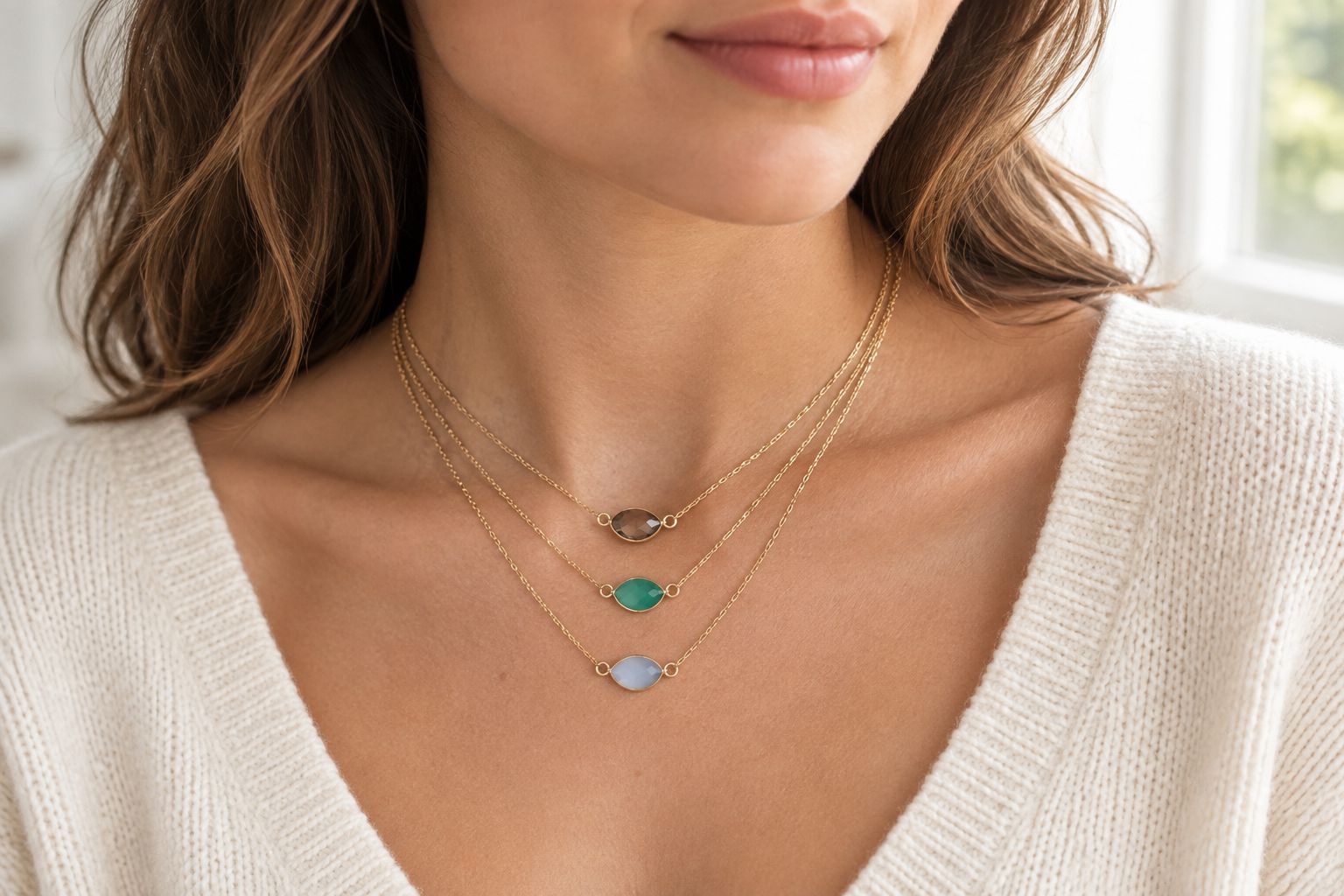
Small bezel-set stones layer at different lengths without tangling or scratching each other.
If you want to shop straight from the table, start with the everyday stones at or above 7 and add one softer piece for occasions. The cards below cover both ends of the benchmark.
A freshwater baroque pearl with subtle luster and a pale sheen.
$145
FAQ
What are the most popular gemstones for necklaces in 2026?
The strongest necklace picks in 2026 are birthstones that score 7 or higher on the Mohs scale: garnet, amethyst, aquamarine, citrine, pink tourmaline and black spinel. Pearl remains a classic for June birthdays but needs gentler wear.
What is the hardest gemstone for an everyday necklace?
Black spinel is the hardest stone in this benchmark at 8 on the Mohs scale. Aquamarine follows at 7.5–8, and both handle daily wear without scratching from everyday dust.
Is a pearl necklace good for everyday wear?
A pearl necklace works for frequent wear if you treat it gently, but pearl sits at only 2.5–4.5 on the Mohs scale. Put it on after perfume and lotion, and store it on its own.
Is labradorite too soft for a necklace?
No, labradorite at 6–6.5 on the Mohs scale works well as a necklace. A bezel setting protects its edges, and a necklace takes far fewer knocks than a ring.
Which gemstone necklace makes the best gift for mom?
Her birthstone is the most personal choice, as long as it suits how often she will wear it. If her month falls on a soft stone like pearl, pair it with a harder everyday piece.
Is amethyst or citrine better for a necklace?
Amethyst and citrine tie at 7 on the Mohs scale because both are quartz, so neither wears better than the other. Choose by color and birthstone: amethyst for February, citrine for November.
How do I clean a gemstone necklace at home?
Wash it in mild soapy water with a soft cloth, rinse, and dry it fully before storing. Skip ultrasonic cleaners and harsh chemicals, which can damage soft stones and gold plating.
One last thing
August is the only month on the modern U.S. birthstone list whose stones span both sides of the 7 yardstick: peridot sits at 6.5–7 and spinel, added in 2016, reaches 8. If you are shopping for an August birthday in 2026, black spinel gives you the meaning and the hardest stone in this whole benchmark.




Leave a comment