Why "Quartz" and "Crystal" Get Confused
You've seen it happen. Two listings, same pendant, one says "crystal necklace" and the other says "quartz necklace," and the photo looks identical. So you assume they're the same stone. Fair assumption. It's just not a correct one.
"Crystal" is a loose word. It gets used for a crystal structure, for cut glass, for the tumbled stones on someone's nightstand labeled "healing crystals." Quartz is something else entirely: one specific mineral family, with its own chemistry and its own varieties. The quartz vs crystal jewelry difference comes down to that mismatch, a broad category word next to a precise one, and it trips up more shoppers than you'd think.
This matters more than it sounds like it should, especially if you're buying a gemstone piece as a gift or something you'll wear for years. The name on the listing affects what's actually in the box. So let's get into composition, durability, price, and care, in that order, and sort out what you're really paying for.
What Is Quartz, Exactly?
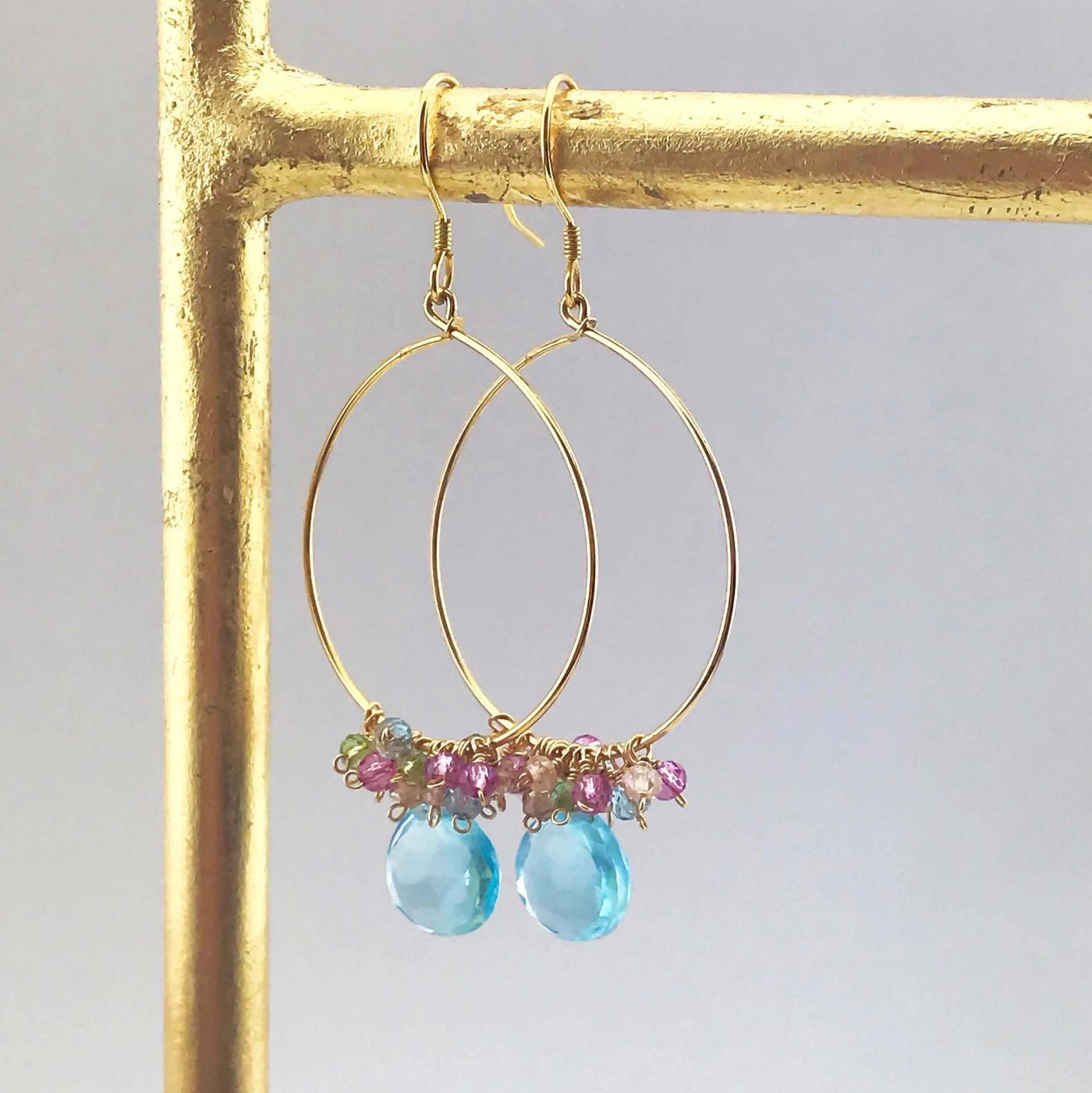
Quartz is a natural mineral, silicon dioxide, and it forms in the ground over time in a huge range of colors depending on trace minerals and the conditions it crystallized under. Smoky quartz gets its brown-gray tone from natural irradiation. Rose quartz gets its soft pink from trace titanium or manganese. Citrine forms naturally yellow, though a lot of commercial citrine is heat-treated amethyst.
Then there's a whole category of quartz sold under other gemstone names: aquamarine quartz, London blue quartz, peridot quartz, opal quartz, pink tourmaline quartz. These are quartz that's been colored, through heat treatment or other processing, to resemble the stone in the name. Worth knowing: most of Parken's pieces named after other gems, like "aquamarine" or "peridot," are actually quartz in that color, not the mineral the name suggests. It's not a trick, it's just how that corner of the gemstone market works, and a good seller will tell you plainly what you're getting.
One more thing about natural quartz: no two pieces look exactly alike. The smoke in one smoky quartz stone might sit deeper than the one next to it. That's not a flaw you're supposed to overlook, it's the actual point of wearing something that came out of the ground instead of off a mold.
What Does "Crystal" Actually Mean in Jewelry?
Technically, quartz IS a crystal. Any mineral with an ordered atomic structure counts as a crystal, scientifically speaking, so the word isn't wrong when applied to quartz. It's just not specific.
In jewelry listings, "crystal" tends to mean one of three things. Sometimes it's shorthand for a natural gemstone crystal, quartz included. Sometimes it's cut glass, the rhinestone and Swarovski-style pieces engineered in a factory for maximum sparkle. And sometimes it's the New Age sense, "healing crystals," which is more about the stone's traditional meaning than its mineral ID.
The real difference between the second and the rest: cut glass crystal is man-made, shaped and faceted by machine for optical sparkle. Natural quartz crystal formed underground, slowly, with no one controlling the outcome. Different origin, different durability, different price, even if both get called "crystal" at checkout.
So here's the plain version. If a listing just says "crystal" with no stone name attached, ask what it actually means. A clear seller will tell you whether you're looking at a natural mineral or faceted glass. If they can't answer, that's information too.
Quartz vs Crystal: Side-by-Side Comparison
Once you line the two up, the quartz vs crystal jewelry difference stops being confusing and starts being pretty obvious.
| Factor |
Natural Quartz |
Glass "Crystal" |
| Composition |
Mined mineral, silicon dioxide, its own geological history |
Man-made faceted glass, or any mineral depending on context |
| Hardness |
About 7 on the Mohs scale, resists daily scratches |
Softer, chips and scratches more easily |
| Color |
Natural trace minerals or treatment, varies stone to stone |
Manufactured, uniform across every piece |
| Price |
Fine-jewelry-adjacent, reflects sourcing and craftsmanship |
Priced as costume fashion, mass-produced |
| Care |
Holds up with basic care over years |
Settings loosen, surface clouds faster |
| Meaning |
Carries traditional associations people wear with intention |
Chosen mainly for sparkle and shape |
A few of those deserve a second look. Hardness matters more than people think: at 7 on the Mohs scale, quartz shrugs off the kind of everyday contact that would leave a glass stone looking dull within a year. And price isn't just markup for the sake of it. Natural quartz pieces, like Parken's rose quartz collection, sit higher because someone sourced an actual stone and set it by hand. Mass-produced glass crystal skips both of those steps, which is exactly why it's priced as fashion jewelry and not meant to last a decade.
The meaning point is the one spreadsheets don't capture. Quartz varieties carry associations people have worn with intention for a long time, smoky quartz for grounding, rose quartz for warmth. Glass crystal doesn't carry that weight. It's decoration, and there's nothing wrong with that, but it's a different purchase than a stone someone picked for what it represents.
How to Tell What You're Actually Wearing
A few checks, before you buy anything.
First, look for a specific stone name. "Smoky quartz pendant" tells you something. "Crystal pendant" tells you nothing. If the title and description never name the actual mineral, that's worth noticing.
Second, look closely at two pieces that are supposed to be identical. If the color and inclusions vary slightly between them, that's actually a good sign, it means you're looking at a natural stone, since machine-made glass comes out uniform every single time. Weirdly, the "imperfection" is the proof of authenticity.
Third, pick it up. Natural quartz feels cool against your skin at first, and it has a bit of weight to it. Glass or acrylic imitations tend to feel lighter and warm up faster in your hand. It's a small thing, but once you've held both, you can tell the difference without looking at a label.
And if none of that answers it: ask. A straightforward question about materials is a reasonable thing to expect an answer to, and any seller worth buying from will give you one.
Styling Natural Quartz Jewelry Day to Day
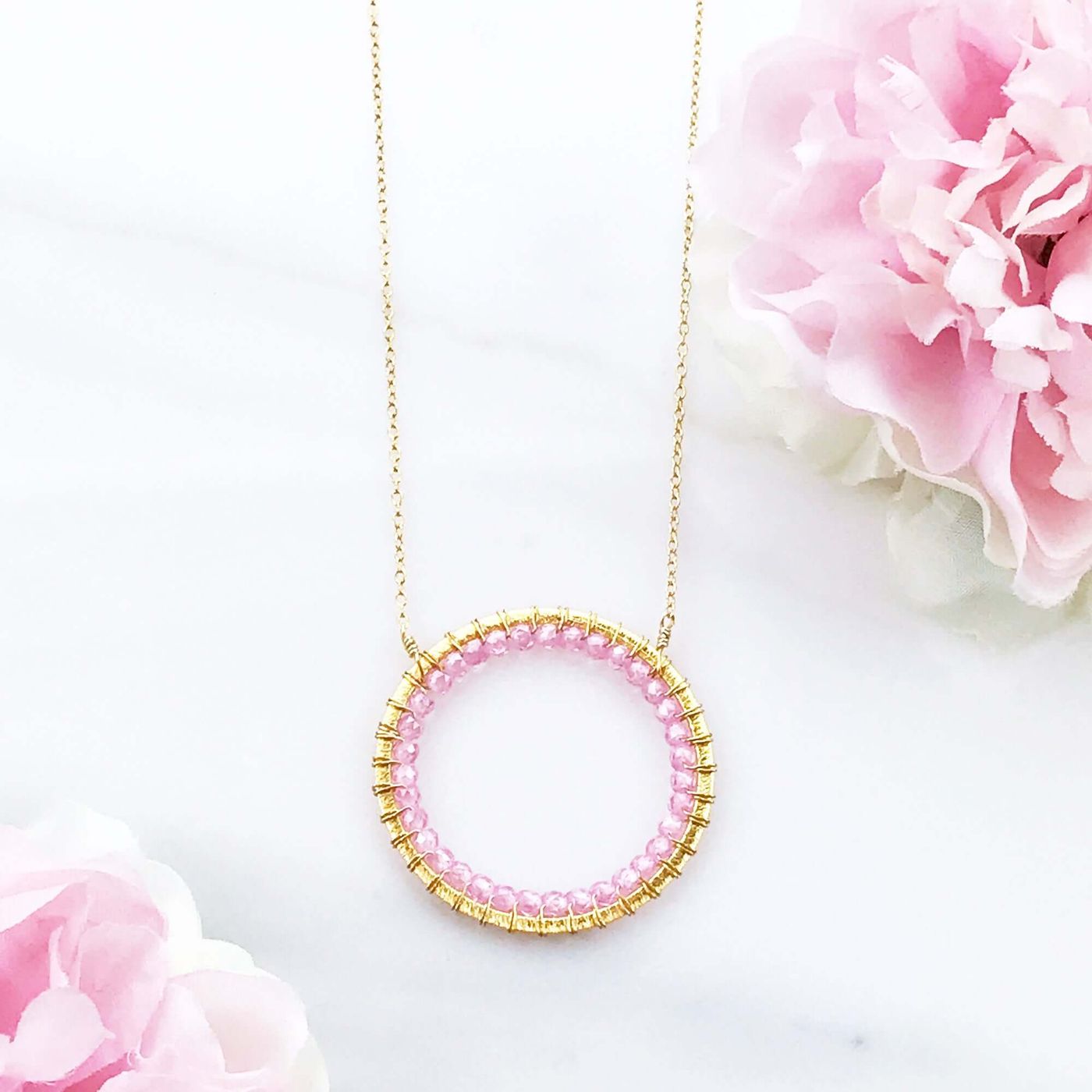
Once you know you're wearing real quartz, the styling question is just about making it look intentional instead of thrown on.
A smoky quartz pendant on an 18 inch chain pairs well with a plain layering chain at 16 inches underneath. The length difference keeps them from tangling, and the plain chain gives the pendant somewhere to land visually instead of competing with it.
Smoky quartz and rose quartz work especially well stacked together, warm brown-gray against soft pink, a combination that reads neutral enough for the office and still looks considered at dinner. Neither stone fights for attention, so the whole stack just looks like it was put together on purpose.
One care note, and it's a short one: keep natural quartz pieces away from water, lotion, and perfume. It protects the plating and keeps the setting looking new for longer, and it takes about five extra seconds a day to remember.
For gifting, this is where the quartz vs crystal jewelry difference really shows up in how a present lands. A natural quartz piece reads as something chosen, not grabbed off a rack of fast-fashion sparkle. For a milestone, that distinction is most of the gift.
Frequently asked questions
Is quartz technically a crystal?
Yes, quartz is a crystal in the scientific sense, since it has an ordered atomic structure that forms naturally underground. The confusion comes from jewelry listings using 'crystal' loosely to mean anything from natural quartz to cut glass, so the word alone does not tell you what the piece is actually made of.
Is quartz jewelry considered real or fake?
Natural quartz jewelry is real gemstone jewelry, not fake, since quartz is a genuine mineral mined from the earth. What varies is the color: some quartz is naturally colored (like smoky or rose quartz) and some is treated to take on colors like aquamarine or peridot, which is still real quartz, just not the mineral the color name suggests.
Does quartz jewelry scratch or chip easily?
Quartz is fairly durable for everyday jewelry, sitting around 7 on the Mohs hardness scale, so it holds up well against normal daily wear. It is still a natural stone, though, so it is best to take pieces off before workouts, cleaning, or swimming to avoid impact or chemical exposure.
Can you shower or swim in quartz jewelry?
We would not recommend it. Plating and natural stones both last longest when kept away from water, chlorine, lotion, and perfume, so it is best to take quartz jewelry off before showering, swimming, or applying products.
Is rose quartz the same stone as pink quartz?
Yes, rose quartz is simply the common name for naturally pink colored quartz. It gets its soft pink tone from trace minerals within the stone, and like other quartz varieties, each piece varies slightly in shade and clarity.
Choosing Real Quartz Over Glass "Crystal"
Here's the short version. All quartz is technically a crystal. Not everything sold as "crystal" is quartz, or even a mineral at all. Once you know to look for the stone's actual name, a bit of natural variation between pieces, and that cool, slightly heavier feel in your hand, you can shop either category and know exactly what you're buying.
If you want to see natural quartz with the stone named plainly, no guessing required, take a look at Parken's smoky quartz collection. And if you'd like new gemstone pieces and styling notes like this landing in your inbox, join the Parken newsletter, no pressure, just the good stuff when it's worth sharing.


Leave a comment