That deep cobalt blue flecked with gold has been catching eyes for about 6,000 years, and it still looks modern on a chain today. Lapis lazuli is one of those rare stones that reads both ancient and current at once, which is probably why it never really goes out of style in minimalist jewelry. This lapis lazuli jewelry guide is for anyone who's drawn to that blue and wants to know what they're actually buying: how to judge quality, which metal brings out its best side, and how to wear it without overthinking it.
The gold flecks running through lapis are pyrite, and they echo warm metal in a way few other stones manage. That's a big part of why "gold lapis necklace" is such a common search. Pair the stone with silver and it's striking in a cooler way. Pair it with gold and the whole piece seems to glow from the inside.
Here's what we'll cover: the stone's history and meaning, how to spot a quality piece, which setting suits it best, a few concrete styling ideas, and the basic care it needs to stay looking like itself for years.
What Is Lapis Lazuli? History, Meaning, and Color
Lapis lazuli isn't technically one mineral. It's a metamorphic rock, mostly made of lazurite, with calcite and pyrite woven through it. That mix is exactly what gives it its personality: the blue comes from lazurite, the soft white veining comes from calcite, and the metallic gold flecks come from pyrite. Most of the world's finest lapis has historically come out of Afghanistan, from mines that have been worked for thousands of years.
Before it was jewelry, it was pigment. Artists ground lapis into ultramarine, the deep blue used in Renaissance paintings and religious art that needed to look expensive, because it was. Long before that, Egyptian pharaohs wore it, and Mesopotamian nobility prized it as a symbol of status and power. It's one of the few gemstones with a resume that includes both royal jewelry boxes and painters' studios.
A lot of people wear lapis for what it's said to represent: wisdom, truth, honest self-expression. That's tradition and folklore, not science, but it's part of why the stone feels meaningful to give or wear on purpose rather than just because it's pretty.
As for what good color looks like: you want a rich, royal to deep blue, with small flecks of gold scattered through it. Stones that look pale, grayish, or chalky are lower grade, usually because there's more calcite than lazurite in the mix. The deeper and more even the blue, the better the stone.
How to Spot Quality Lapis Lazuli
If you're shopping for lapis, there's a short checklist worth running through. Look for a deep, saturated blue as the base color. Check that the pyrite flecks are scattered in small bits, not clumped into solid gold blocks, which usually signals a lower-grade stone. And look for minimal white calcite veining. A little is normal and even expected. A lot means the stone is weaker in color and, often, in value.
One thing worth knowing going in: no two pieces of natural lapis look exactly alike. The pattern of flecks, the exact shade of blue, the amount of veining, all of it varies stone to stone. That's not a flaw to worry about. It's the actual nature of a natural stone, and it's part of why a piece feels more individual than something stamped out identically a thousand times over.
The market does have dyed or reconstituted lapis floating around, pieces made from lower grade fragments glued together and dyed to look more uniform than real lapis ever is. It's a real risk if you're buying somewhere vague about what the stone actually is. The fix is simple: buy from a seller who names the stone honestly and tells you what it's set in. Our lapis lazuli collection uses genuine, natural lapis lazuli, set in gold vermeil or rhodium plated silver, nothing reconstituted, nothing dyed to fake a better grade.
Gold or Silver: Choosing the Right Setting for Lapis
Gold vermeil, which is 14k gold plated over .925 sterling silver, brings out the warmth of lapis in a way that's hard to beat. The gold tone of the setting basically continues the pyrite flecks already running through the stone, so the whole piece feels cohesive instead of like two materials competing for attention. It reads classic, a little regal even, which makes sense given lapis's history.
Rhodium plated silver is the other option, and it's worth considering if you lean toward cooler tones. Silver against that deep blue creates more contrast, a crisper, more modern look. Neither is more "correct," it's really about what you already wear.
That said, going by our own Search Console data, searches for a gold lapis necklace outnumber silver ones by a good margin. So if you're not sure where to start, gold vermeil is the safer, more requested pairing. The lapis lazuli gold pendant necklace is a good example of that combination done simply: one stone, one chain, nothing fighting for the spotlight.
Styling Lapis Lazuli: Necklaces, Bracelets, and Layering
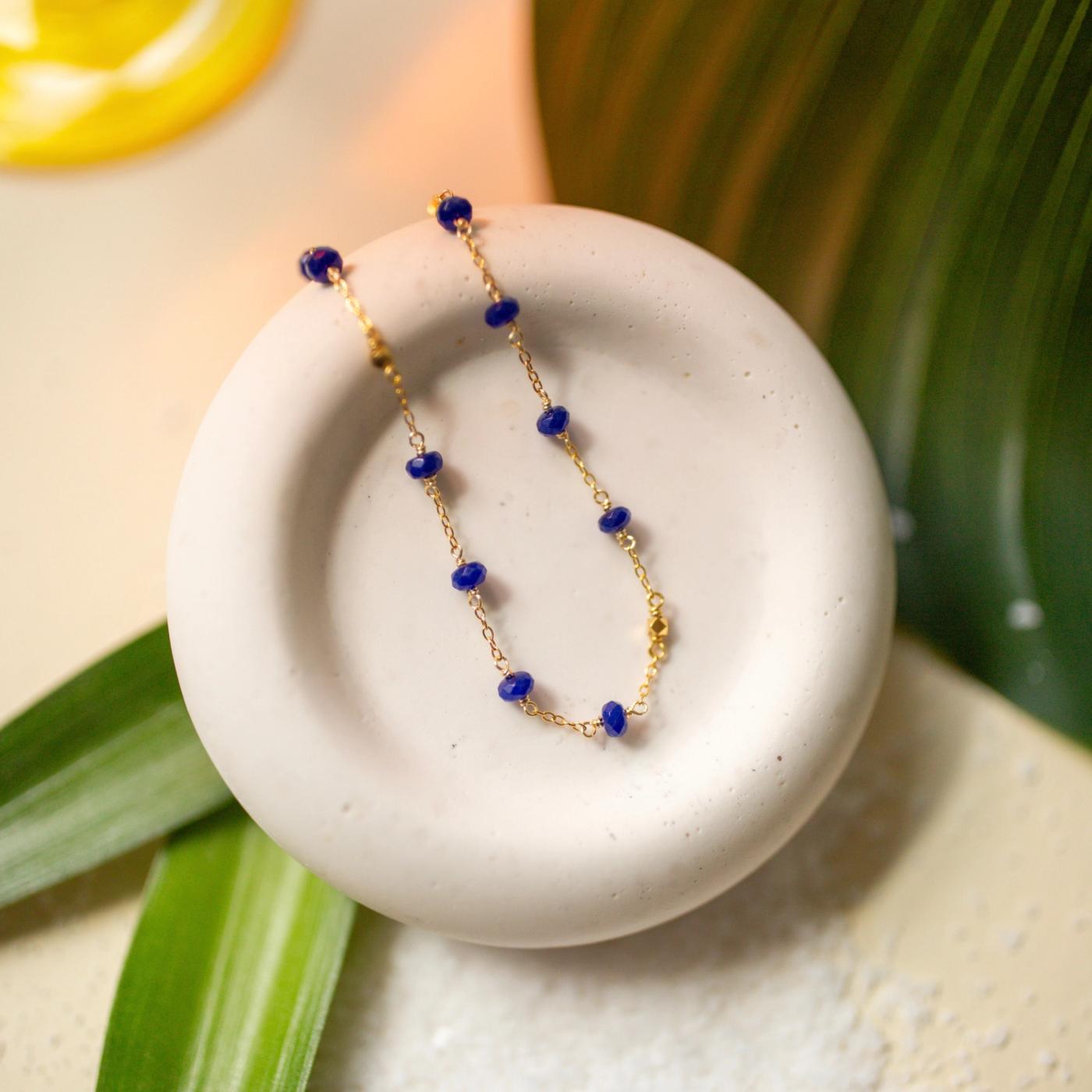
Layering lapis is easier than people expect once you have a formula. Start with a 16 inch lapis pendant as your focal piece. Add an 18 inch plain gold chain behind it, and let roughly two inches of space sit between the two necklaces. That gap keeps the lapis from getting crowded and gives your eye somewhere to land. Browsing a few layering chains in a plain gold finish is the easiest way to find that second piece.
For bracelets, resist the urge to pair lapis with another chunky stone bracelet. Stack it instead with one or two thinner gold bangles. The lapis stays the star of the stack, and the plain bangles just support it rather than competing with it.
Lapis is more versatile with outfits than people assume. It holds its own against neutrals, where the blue becomes the statement, and it also sits comfortably next to jewel tones without clashing, since the gold flecks tie it to whatever warm accessories you're already wearing, a brown bag, gold hoops, that kind of thing.
If you like the idea of lapis mixed with another stone rather than worn alone, the Margarita Chains lapis and chalcedony necklace is worth a look. It gives you that collected, layered look in a single piece, no actual layering required.
Caring for Your Lapis Lazuli Jewelry
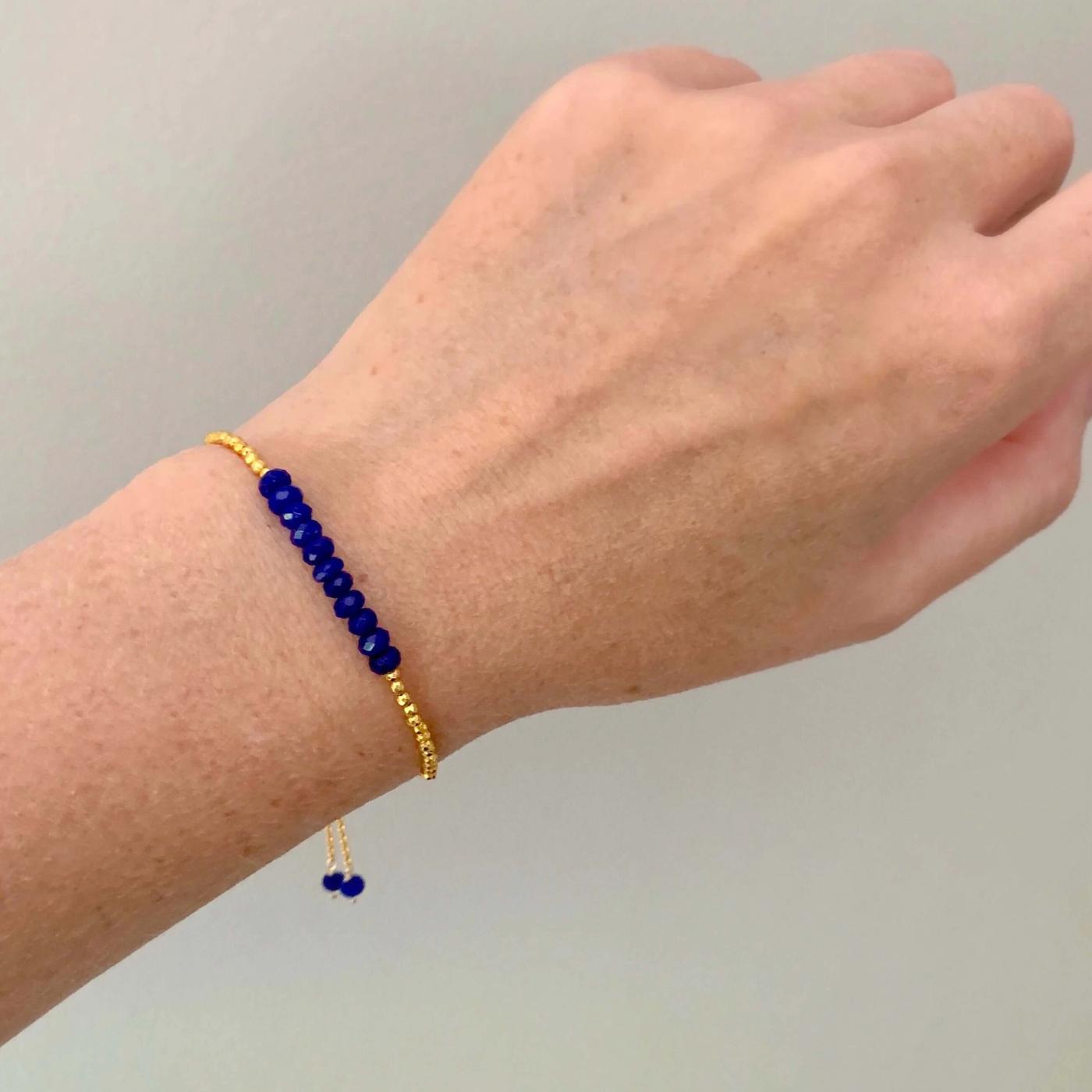
Lapis is on the softer side as gemstones go, sitting around 5 to 5.5 on the Mohs scale, and it's porous. That combination means it doesn't love chemicals. Keep it away from perfume, lotion, and prolonged time in water, all of which can dull the color or weaken the stone over time.
After wearing it, a quick wipe with a soft, dry cloth is really all it needs. Store it separately from your other jewelry too, ideally in its own pouch or compartment, so it doesn't end up scratched by harder stones sharing the same drawer.
The setting needs the same consideration as the stone. Whether it's gold vermeil or rhodium plated silver, plating lasts longest when it's kept away from water and chlorine. So the habit that protects your lapis (take it off before a shower or a swim) is protecting the metal too. Not waterproof, not indestructible, just a piece that rewards a little care with a much longer life.
Gifting Lapis Lazuli: Occasions and Meaning
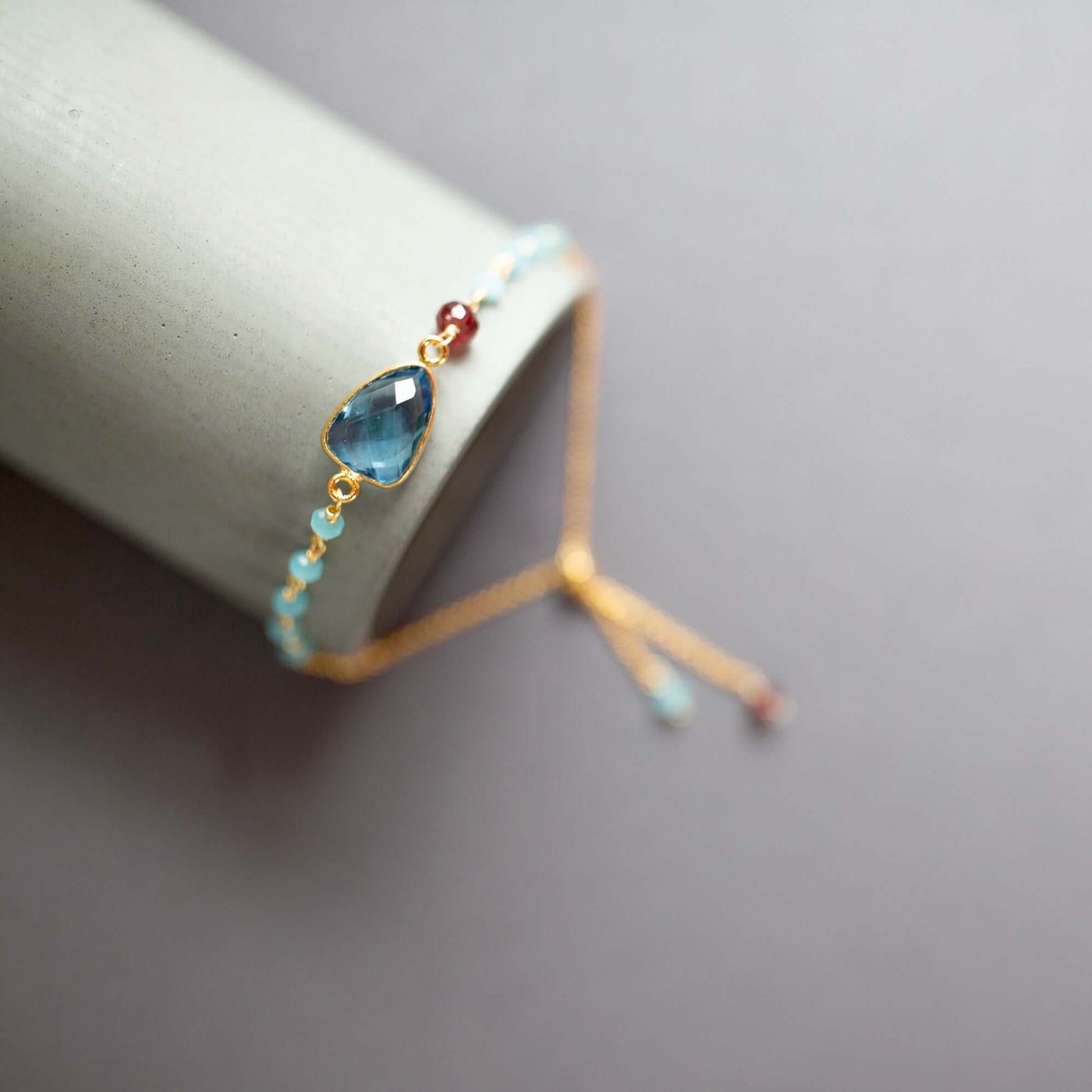
Lapis makes an easy gift for a September birthday, since it's one of that month's traditional birthstones, but it works well beyond that too: milestone birthdays, anniversaries, or just for someone who's always reaching for deep blue jewelry over anything else.
If you'd rather not pick a single piece and hope it lands, the lapis and London blue quartz stacking bracelet set solves that problem for you. It's a ready-made pairing, already stacked and styled, so there's no guesswork about what goes with what.
One practical note for gift givers: pieces are made to order, which usually means about 3 to 14 business days before it ships in the US. Worth building into your timeline if you're buying for a specific date, rather than assuming it'll arrive overnight.
Frequently asked questions
Is lapis lazuli durable enough for everyday jewelry?
Lapis lazuli sits around 5 to 5.5 on the Mohs hardness scale, which is softer than quartz or sapphire, so it's best worn as an everyday statement piece rather than knocked around during rough activities. With a bit of care, like keeping it away from chemicals and storing it separately from harder stones, it holds up well as a daily necklace or bracelet.
What does lapis lazuli symbolize?
Lapis lazuli has long been associated with wisdom, truth, and self-expression, and it was prized by ancient Egyptian and Mesopotamian royalty. Many people today wear it simply for its striking color, while others choose it for the traditional meaning behind it, it's really a personal choice either way.
Can lapis lazuli fade or change color over time?
Natural lapis lazuli is fairly color stable, but prolonged exposure to sunlight, harsh chemicals, or water can dull its finish over time. Wiping it down after wear and storing it away from direct light helps keep that deep blue looking its best for years.
Is lapis lazuli expensive compared to other gemstones?
Lapis lazuli is generally more accessible than stones like sapphire or tanzanite, which is part of why it shows up so often in everyday jewelry. Pricing still depends on the quality of the color and the setting it's placed in, with richer, more evenly colored stones typically costing more.
How can I tell if lapis lazuli jewelry is real?
Genuine lapis lazuli shows a deep blue base with scattered, irregular gold pyrite flecks and sometimes faint white calcite veining, natural variation that's part of the stone's character. Dyed howlite or reconstituted lapis tends to look flatter or more uniformly speckled, so buying from a seller who's upfront about the stone is the simplest way to know what you're getting.
Find Your Lapis Lazuli Piece
If you take one thing from this lapis lazuli jewelry guide, let it be this: look for a rich, deep blue with scattered gold flecks, lean toward gold vermeil if you want the classic warm look, and treat the stone gently so it keeps that color for years. Natural lapis doesn't need much. It just needs a little respect.
Take a look through our lapis lazuli collection to see the current necklaces, pendants, and bracelets, and if you want new lapis styles and gift ideas in your inbox as they land, join our newsletter.


Leave a comment