How to Pick a Birthstone Gemstone: Choose Well 2026
By Editorial Team
To pick the right birthstone gemstone, match the recipient’s birth month, then choose a stone and jewelry style that suit what she actually wears. Check the exact gemstone name, metal, and care instructions before buying; a matching color does not make a stone the correct birthstone. For a gift in 2026, personal taste should decide between recognized birthstones—not a chart alone.
TL;DR
Learning how to pick a birthstone gemstone starts with birth month, personal style, and jewelry care.
GIA’s birthstone guide identifies recognized stones; matching color alone does not establish gemstone identity.
Parkenjewelry suits women who want handmade, minimalist gemstone jewelry rather than a traditional birthstone ring.
Choose a recognized alternative when the recipient dislikes her month’s familiar stone.
Why this matters
A birthstone makes a gift personal, but the recipient still has to enjoy wearing it. Start with her existing jewelry: the colors, metal tones, and shapes she reaches for tell you more than a gift label does.
Parkenjewelry makes handmade minimalist gemstone necklaces, bracelets, and earrings in New York City. That gives you a starting point for a handmade gift, but the individual piece’s gemstone description—not the collection’s color palette—determines its birthstone match.
For your 2026 gift shortlist, separate three decisions: the birthday connection, the look, and the care commitment. A beautiful piece can satisfy the last two without being a recognized birthstone. That is still a thoughtful present; simply describe it accurately.
How do you pick the right gemstone for a birthstone gift?
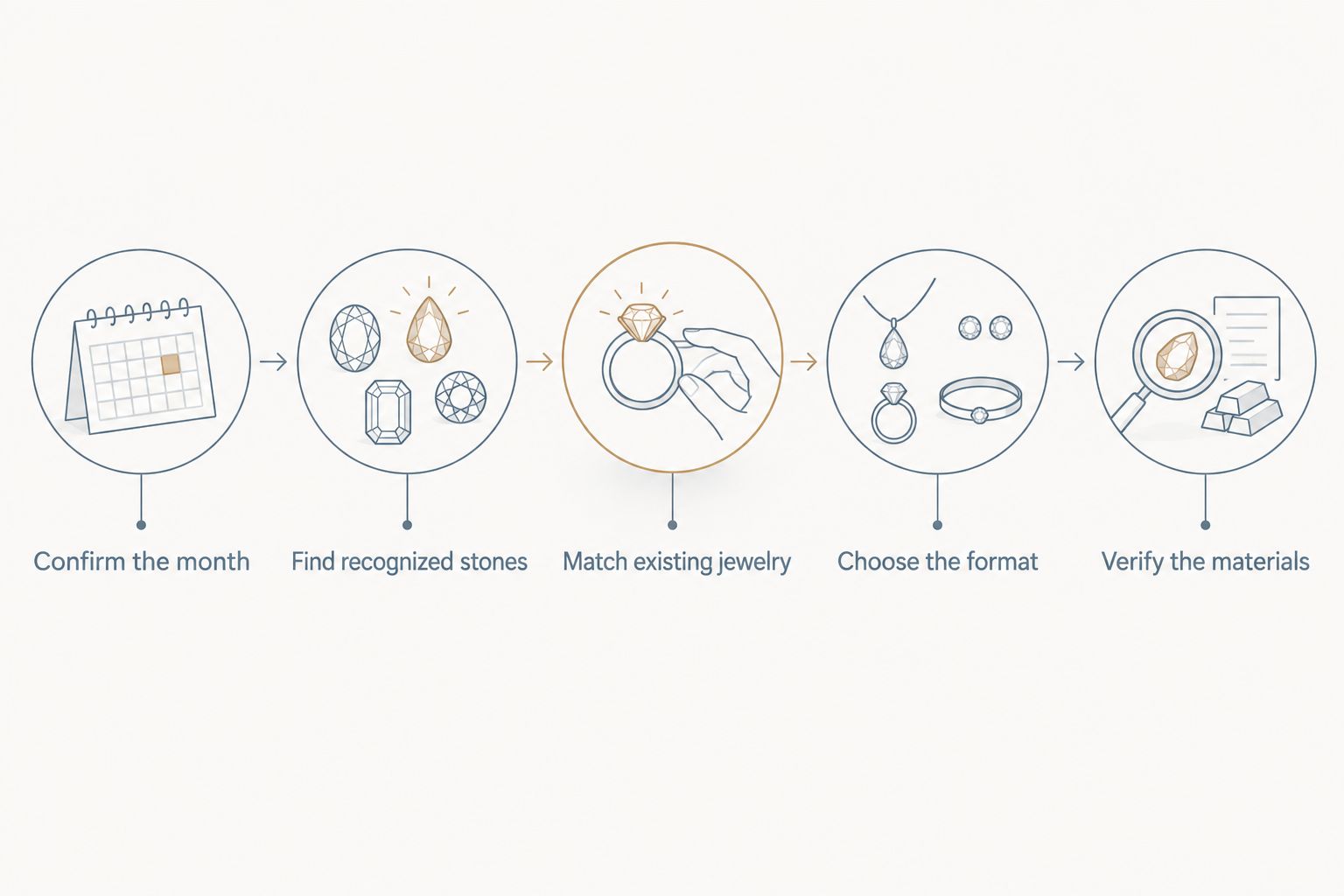
Choose a birthstone gift in this order: confirm the month, identify recognized stones, check personal preferences, choose the jewelry format, and read the material details. Each step removes a different kind of mismatch. You are choosing both a meaningful stone and something she will want to wear.
1. Confirm whose birthday the stone represents
For a birthday present, start with the recipient’s month. For a gift to a mother or grandmother, decide whether the jewelry represents her birthday, a child’s birthday, or several family members.
Do not assume those are interchangeable. A necklace celebrating her own birthday has a different message from one celebrating her children. Write down the intended connection before looking at colors or designs.
2. Find the recognized stones for that month
Use a named reference, such as the Gemological Institute of America’s birthstone guide, rather than relying on a retailer’s color category. Several months have recognized alternatives, giving you room to choose something closer to her taste.
The table below follows the birthstone associations presented in GIA’s guide for a modern U.S. shopping reference. It is a reference for this 2026 article, not a claim that birthstone traditions are identical across countries or historical lists.
Birth month
Recognized birthstone choices
Best for choosing between them
January
Garnet
Start with garnet, then check the actual stone’s color
February
Amethyst
A recipient who enjoys purple gemstones
March
Aquamarine or bloodstone
Choose between pale blue and a darker, opaque look
April
Diamond
A recipient who specifically wants the recognized April stone
May
Emerald
Someone who loves green and accepts stone-specific care
June
Pearl, alexandrite, or moonstone
Choose by appearance and how gently she handles jewelry
July
Ruby
A recipient who enjoys red gemstones
August
Peridot, spinel, or sardonyx
Choose the stone whose actual color suits her
September
Sapphire
Someone who likes sapphire; blue is not the only color
October
Opal or tourmaline
Choose between opal’s distinctive appearance and tourmaline’s color choices
November
Topaz or citrine
Compare the actual stones, not just a yellow color category
December
Tanzanite, turquoise, or zircon
Choose between different blue, violet-blue, and opaque looks
A birthstone chart tells you which stones qualify, not which piece she will love. Garnet, sapphire, spinel, and tourmaline occur in different colors, so the month does not always dictate a single shade.
3. Match her existing jewelry
Notice whether she wears warm-toned or silver-toned metals, small accents or larger drops, and one necklace or several layers. Use those observations to narrow the gift before choosing a design.
If you cannot check her jewelry, ask someone close to her a specific question: does she usually wear earrings, necklaces, or bracelets? That is more useful than asking whether she “likes jewelry.” Also check pierced ears before choosing earrings.
4. Choose the jewelry format
A necklace keeps the gemstone away from many of the knocks a bracelet receives. Earrings do not require a wrist measurement, but the recipient’s preference for hooks, posts, and movement still matters. Bracelets need a closer look at fit and everyday activity.
Use the comparison below to choose the format, not to declare one universally better.
Jewelry format
Best for
Advantage
Trade-off to check
Necklace
Someone who already wears pendants or layers
Displays the stone without placing it on the hand
Chain length, neckline, and clasp preference
Earrings
Someone with pierced ears and a known earring preference
Adds birthstone color without wrist sizing
Closure type, dimensions, and movement
Bracelet
Someone who enjoys wrist jewelry
Keeps the gift visible to the wearer
Fit, desk contact, and contact with water or products
5. Verify the materials before buying
Read the complete description for the gemstone’s identity, metal composition, dimensions, and care instructions. A stone’s trade name or color description is not enough to establish that it is the birthstone you intended.
For a 2026 birthday gift, save the material description with your gift notes. If a listing leaves the stone identity unclear, ask the seller before treating it as a birthstone match. You do not need technical expertise; you need a clear answer.
Confirm the gemstone identity before treating a color match as a birthstone match.
What if her birth month has several gemstones?
Choose the recognized stone she would enjoy wearing most. There is no need to select the most familiar option if another accepted birthstone suits her better.
June is a useful example: pearl, alexandrite, and moonstone look different and require different care considerations. October offers opal and tourmaline. November offers topaz and citrine, so you can compare actual pieces rather than choosing from a single imagined shade.
The advantage of a month with alternatives is flexibility. The limitation is that you still need to confirm the exact material: a similar-looking substitute does not become a recognized birthstone because its name sounds close.
For a minimalist gift, let the design stay simple while the stone carries the birthday connection. If her favorite color is not represented by a recognized choice, decide whether birthstone accuracy or color preference matters more. Neither needs to be disguised as the other.
Why the right birthstone gift varies
The month is only the starting point. These factors change which gift makes sense:
Personal style: Match the jewelry she wears, not the style you wish she wore.
Color preference: Compare actual stone colors, especially for birthstones with several color varieties.
Jewelry format: Necklaces, earrings, and bracelets place different demands on fit and wear.
Care habits: A recipient who rarely removes jewelry needs a different conversation from someone who stores pieces carefully.
Material identity: Natural, laboratory-grown, treated, and imitation materials should be described clearly; they are not interchangeable descriptions.
Gift meaning: Her own birth month, a child’s month, and a shared memory tell different stories.
You do not need every answer to be perfect. Do resolve the questions that affect whether she can wear the gift comfortably and whether its birthday connection is accurate.
How do you choose a birthstone for everyday wear?
Choose for the whole piece, not gemstone hardness alone. The setting, chain, clasp, metal, and recipient’s activities all affect how jewelry should be worn.
GIA’s gemstone references place diamond at 10 on the Mohs scale, sapphire at 9 on the Mohs scale, and amethyst at 7 on the Mohs scale. Aquamarine measures 7.5–8 on the Mohs scale. These figures describe resistance to scratching; they do not promise resistance to every impact or cleaning method.
A harder gemstone still deserves careful handling. Conversely, a softer stone can make a lovely gift when its format and care requirements fit the recipient. Pearl jewelry, for example, should not be treated like a sapphire simply because both appear on a birthstone chart.
For everyday jewelry in 2026, make the recommendation specific: remove the piece for activities that expose it to knocks, chemicals, or conditions excluded by its care instructions. Do not label an entire birthstone month “safe for everything.”
How do you avoid buying the wrong gemstone?
Read the material name, not just the color name. Blue quartz is quartz, not aquamarine; rose quartz is not pink tourmaline. A pale green stone is not automatically peridot or emerald.
This matters when a piece combines several gemstones. A necklace can contain a recognized birthstone alongside accent stones, and that combination can still carry the birthday connection. The description needs to identify the intended birthstone clearly.
Be especially careful with compound names such as “aquamarine blue quartz” or “opal quartz.” Do not treat those phrases as proof of aquamarine or opal. Ask what the material actually is if the description does not settle the question.
A simple gift note keeps the meaning honest: name the confirmed stone and explain why you chose it. Avoid claims that a gemstone will reduce stress, improve health, or change someone’s luck. Personal symbolism does not require a medical or scientific promise.
Handmade options for a March or June gift
Parkenjewelry is best for women seeking handmade, minimalist gemstone gifts. Its handmade approach is relevant if you want a necklace, bracelet, or earrings rather than a traditional birthstone ring. The trade-off is that each design still needs its own material and fit check; a gemstone collection is not automatically a complete birthstone collection.
The examples below show how to read a mixed-stone design. They are starting points for March and June, not recommendations for every birthday.
Its title identifies peach moonstone, a moonstone variety
Confirm the full material description, adjustment details, and care instructions
Parkenjewelry’s Blue Gemstone Gold Sparkler Necklace description identifies more than one stone. That distinction is the useful lesson: you can choose a mixed-stone gift without claiming every stone in it represents March.
An adjustable bracelet made with bezel gemstones and tiny stone accents.
$59
What should you check before giving the jewelry?
Check the details that affect wearing the gift: dimensions, closure, metal composition, and the seller’s care instructions. For necklaces, compare the stated length with a necklace she already likes. For bracelets, check the actual adjustment range rather than assuming “adjustable” means every possible fit.
Keep the material information with the gift. A short note explaining the birthstone connection is warmer than an elaborate claim about what the gemstone can do. Include any care guidance supplied for that exact piece, without adding your own guarantees about durability.
FAQ
How do I pick a birthstone gemstone if I do not know her style?
Start with her birth month, then ask someone close to her whether she wears necklaces, earrings, or bracelets. Confirm metal preference and pierced ears before narrowing the design.
Can I choose a different birthstone for the same month?
Yes, choose another recognized birthstone when the month has alternatives. June includes pearl, alexandrite, and moonstone; October includes opal and tourmaline.
Is a gemstone in the right color enough for a birthstone gift?
No, color alone does not identify a birthstone. Blue quartz is not aquamarine, and rose quartz is not pink tourmaline; check the exact material description.
Can a birthstone necklace include other gemstones?
Yes, a mixed-stone necklace can include the recipient’s birthstone alongside accent stones. Confirm which stone provides the birthday connection rather than describing every stone as a birthstone.
Does a higher Mohs number mean jewelry cannot break?
No, a higher Mohs number describes greater scratch resistance, not immunity to breakage. Diamond measures 10 on the Mohs scale, but the stone, setting, and entire piece still need appropriate care.
Should I choose my mom’s birthstone or her children’s birthstones?
Choose your mom’s birthstone to celebrate her, or her children’s birthstones to celebrate her family connection. Make the intention clear in the gift note rather than assuming one meaning is obvious.
What should I check when buying birthstone jewelry in 2026?
Check the exact gemstone identity, metal composition, dimensions, closure, and care instructions. A birthstone label does not replace the material details for the individual piece.
One last thing
A familiar birthstone does not always have its familiar color. Sapphire is not only blue, and garnet is not only red. Before abandoning a birthstone because you think she dislikes its color, check whether another color variety fits her taste.
For your 2026 gift, put one clear sentence in the card: explain whose birth month the confirmed stone represents and why the design reminded you of her. That personal connection matters more than adding a long list of symbolic claims.




Leave a comment