Someone added a pale blue-green ring to their cart, got it home, and started wondering if it's "real" aquamarine. It's a fair question, and one that comes up constantly, because aquamarine and aquamarine quartz share that same soft, sea-glass color family. So it's an easy mix-up to make. By the end of this guide you'll know exactly what's in your jewelry box, and if you're shopping right now, exactly what you're paying for. Short version, for anyone in a hurry on the aquamarine vs aquamarine quartz question: they're related in color but different minerals entirely, and most of Parken's own pieces use aquamarine quartz. We'll explain why, plainly, so there's nothing murky at checkout.
Why This Question Comes Up So Often
The confusion isn't really anyone's fault. "Aquamarine quartz" sounds like a nickname, something a jeweler might call regular aquamarine to make it sound fancier. It's not. The names are similar, the colors overlap, and most of us were never taught the difference between beryl and quartz in the first place.
Add in the fact that both stones show up in similar settings, gold vermeil, delicate pendants, drop earrings, and the visual line gets even blurrier. If you've ever squinted at two "aquamarine" necklaces side by side and wondered why one costs three times the other, this is usually why. One's likely beryl. The other's likely quartz. Neither is a scam. They're just not the same rock.
What Natural Aquamarine Actually Is
True aquamarine belongs to the beryl family, the same mineral group that produces emerald. What turns beryl blue instead of green is trace iron trapped in its crystal structure during formation. More iron, or different oxidation states of it, shifts the color from a barely-there seafoam to a deeper, more saturated teal-blue.
It's also the official March birthstone, which is part of why people go looking for it specifically around birthdays. On the Mohs hardness scale, aquamarine sits at 7.5 to 8, tough enough to handle daily wear without much drama.
Here's the catch: gem-quality aquamarine with real depth of color is genuinely uncommon. A lot of natural aquamarine on the market leans pale, almost washed out, and the pieces with strong, consistent saturation get priced accordingly. That rarity is the whole reason fine aquamarine jewelry carries a premium, and it's also the reason aquamarine quartz exists as an alternative.
What Aquamarine Quartz Is (and Why It Exists)
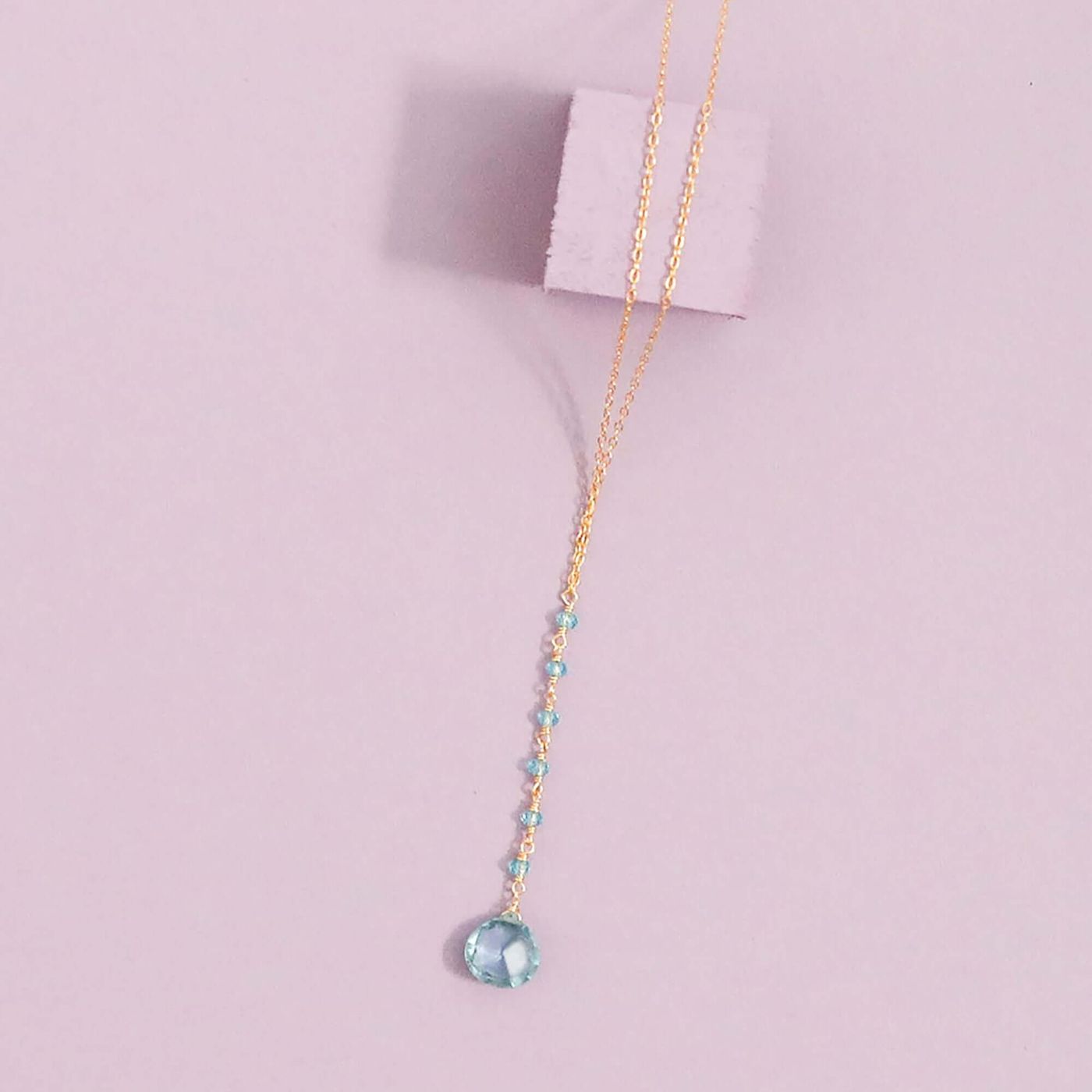
Aquamarine quartz is exactly what it sounds like: natural quartz, sometimes color-enhanced, cut and finished to echo that same pale blue-green that aquamarine is known for. It's not beryl. It's a completely different mineral that happens to land in the same color neighborhood.
Quartz measures around 7 on the Mohs scale, a touch softer than beryl, but still sturdy enough for regular wear if you treat it the way you'd treat any fine jewelry (more on that below). The real draw is price. Because quartz is far more abundant than gem-grade beryl, it lets jewelers offer that same soft aqua color without the cost that comes with genuine rarity.
And here's the part we think gets lost in the aquamarine vs aquamarine quartz conversation: quartz isn't "lesser" just because it's common. Like any natural stone, no two pieces of aquamarine quartz look perfectly identical, the same variation we celebrate across every gemstone we use. That's not a flaw to apologize for. It's what makes a natural stone a natural stone.
Aquamarine vs Aquamarine Quartz, Side by Side
| Factor |
Aquamarine |
Aquamarine Quartz |
| Mineral family |
Beryl |
Quartz |
| Color source |
Trace iron, natural variation |
Natural quartz, sometimes color-enhanced |
| Hardness (Mohs) |
7.5 to 8 |
About 7 |
| Price tendency |
Higher, due to rarity |
More accessible |
| Availability |
Harder to source consistently at gem quality |
Widely available |
The hardness gap is small but it's real. Half a point to a full point on the Mohs scale means aquamarine resists surface scratches slightly better over years of wear. In practice, with normal care, most people won't notice a difference day to day.
The bigger practical difference is price and consistency. Aquamarine's color comes from nature's inconsistency, which is part of its charm but also what makes it expensive to source in matched, saturated batches. Aquamarine quartz tends to look more uniform piece to piece, and because it's easier to get hold of, it also keeps made-to-order production timelines shorter.
What Parken Jewelry Actually Sells (and Why)
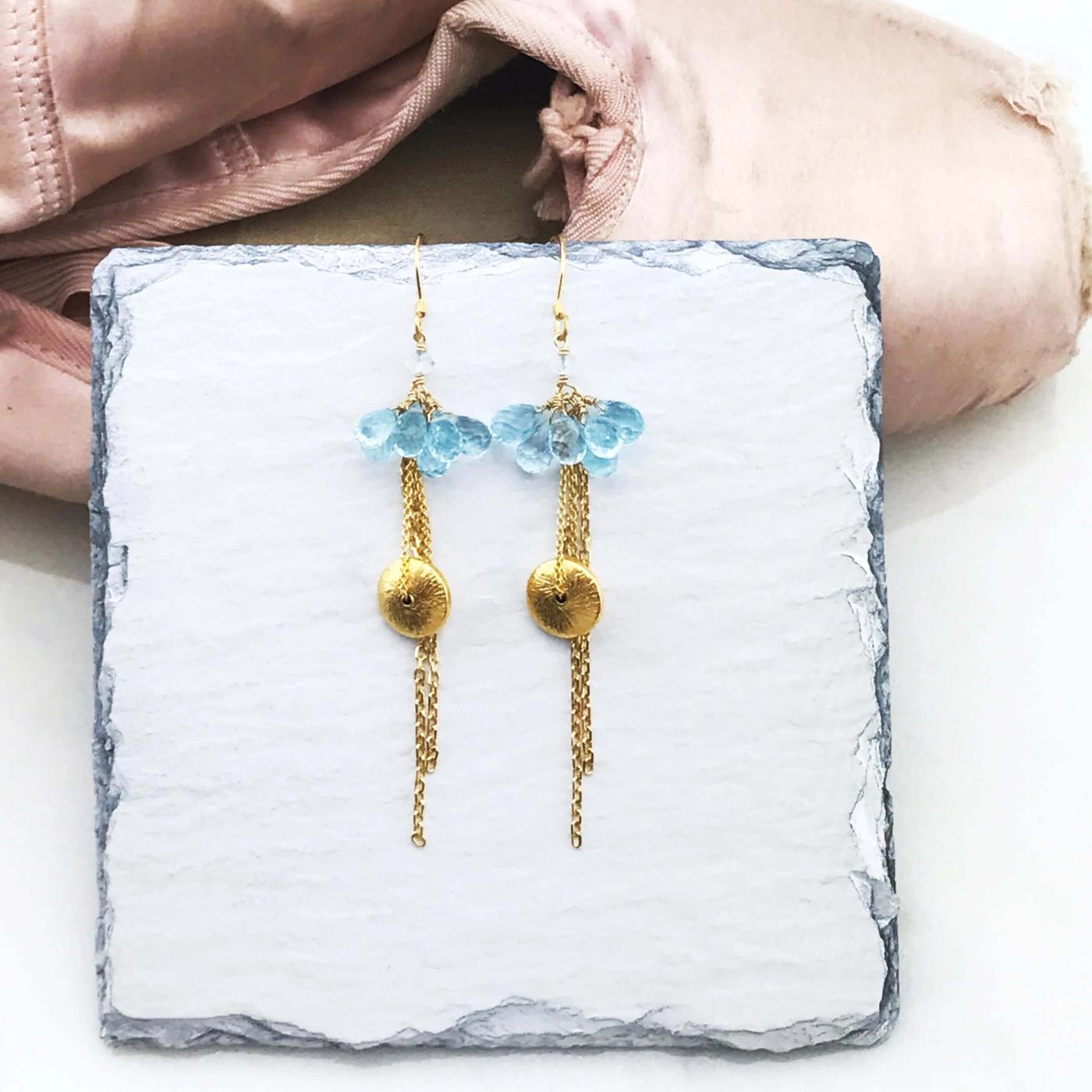
Let's be direct about it: our aquamarine pieces are made with natural aquamarine quartz, not beryl aquamarine. Every product description says so. We're not interested in letting a similar name do the explaining for us.
The trade-off is straightforward, and we think it's a good one. Aquamarine quartz lets us offer that soft, sunlit aqua color set in gold vermeil or sterling silver, within our usual $48 to $250 range, without tacking on the premium that fine beryl aquamarine commands. You're getting a real, natural stone. It's just a different mineral than the rarer gem-grade version, and there's nothing misleading about calling it aquamarine quartz right there on the label.
If you're ready to look, the aquamarine quartz collection has our current necklaces, earrings, and bracelets, including the aquamarine quartz gold y pendant and the aquamarine gold earrings, both good entry points if you're new to the stone.
Styling and Caring for Aquamarine Quartz Jewelry
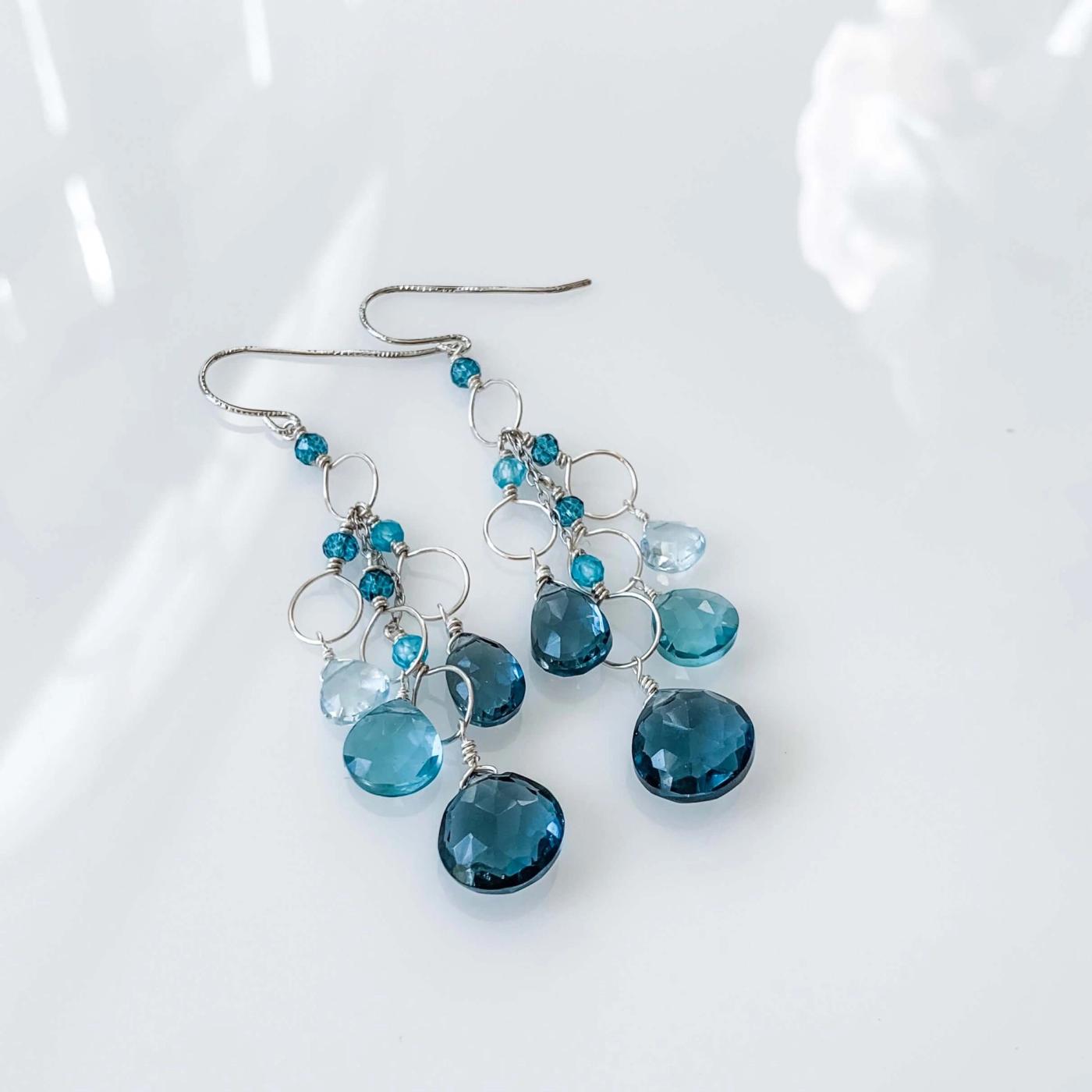
Aquamarine quartz plays well with both metals, but the mood shifts depending on which one you pick. Gold vermeil warms the color up, giving it a sunlit, golden-hour feel. Sterling silver cools it down, leaning icier and more modern. Either pairs nicely layered with pearls or smoky quartz, both of which sit quietly behind the aqua tone instead of competing with it.
For earrings specifically, keep it simple: a drop earring in aquamarine gold earrings paired with one clean layered necklace, rather than a full stack of chains, so the stone stays the thing you actually notice. The same logic applies to bracelets, where a single gold bracelet with aquamarine quartz reads better solo or with one or two plain gold bands than buried in a busy stack.
Care-wise, treat it gently. Keep aquamarine quartz jewelry away from water, lotion, perfume, and chlorine. None of those will destroy it on contact, but repeated exposure dulls the stone's polish and wears down the plating faster than it should. Store pieces separately, too, so a harder stone or a clasp doesn't scratch the setting while it's sitting in a drawer.
Frequently asked questions
Is aquamarine quartz fake aquamarine?
No, it's not fake, it's a genuinely different natural stone. Aquamarine quartz is real quartz styled and sometimes treated to share aquamarine's soft blue-green color, while true aquamarine is a variety of beryl. Both are real gemstones, they just come from different mineral families.
Does Parken Jewelry sell real aquamarine?
Most of Parken's aquamarine-colored pieces are made with natural aquamarine quartz, not beryl aquamarine, which is how we keep that soft aqua color in our everyday price range. If a product page doesn't say which stone a piece uses, ask us before you order and we'll tell you.
Which is more valuable, aquamarine or aquamarine quartz?
Natural beryl aquamarine is generally the rarer and more valuable of the two, especially in deep, saturated color. Aquamarine quartz is more widely available and more affordable, which makes it a popular choice for everyday jewelry rather than investment pieces.
Can aquamarine quartz get wet?
We recommend keeping any Parken piece, including aquamarine quartz, away from water, lotion, perfume, and chlorine to protect both the stone's polish and the plating on the setting. It's not labeled waterproof, so treat it the way you would any fine jewelry you want to last.
What is the actual March birthstone, aquamarine or aquamarine quartz?
The traditional March birthstone is natural aquamarine, the beryl gemstone. Aquamarine quartz shares its color but is a different mineral, so if you're buying strictly for the birthstone tradition, that's worth keeping in mind.
Which One Should You Buy?
If budget and everyday wearability are what matter most to you, aquamarine quartz is the easy answer. You get the color, the sparkle, the soft blue-green that made you stop scrolling in the first place, without an investment-piece price tag attached.
If you're shopping specifically because you want the actual March birthstone in its traditional form, be honest with yourself about that goal. Beryl aquamarine is a different stone, and it's worth knowing that going in rather than assuming the two are interchangeable.
Either way, now you've got the real answer to aquamarine vs aquamarine quartz, and you can shop accordingly instead of guessing. Browse our aquamarine quartz pieces when you're ready, or join our newsletter to hear about new arrivals and restocks first.


Leave a comment