Cart
Your cart is empty
Looks like you haven’t added anything yet, browse new arrivals below!
Continue Shopping
Looks like you haven’t added anything yet, browse new arrivals below!
Continue Shopping
So, what is rose quartz, exactly? At its simplest, it's a variety of quartz tinted pale to medium pink by trace amounts of titanium, iron, or manganese. No dye, no treatment required. Just quartz, colored from the inside by whatever minerals happened to be nearby when it formed.
It's probably the most recognizable pink gemstone out there, and for good reason. Large deposits turn up in Brazil, Madagascar, and South Africa, which is part of why it's stayed so accessible and so beloved for generations. It's not rare in the way some gemstones are rare, but that's never really been the point of it.
Because it's a natural stone, color intensity and clarity shift from piece to piece. One pendant might lean closer to blush, another a touch deeper and rosier. That's not a flaw. It's just what real stone does. Over the next few sections we'll get into how rose quartz actually forms, what it's traditionally believed to mean, how it stacks up against other pink gems, and how to wear it without overthinking it.
Rose quartz doesn't usually grow as those pointed, glassy crystals you picture when you hear "quartz." Instead, it forms in large mineral veins and pegmatites, cooling slowly into massive chunks without defined crystal faces. That's just how this particular variety likes to form, and it's why so much rose quartz jewelry uses cut and polished stone rather than natural crystal points.
The pink color comes from microscopic mineral inclusions and trace elements, mainly titanium, iron, or manganese, woven through the quartz as it formed. Those trace amounts are doing all the work. Strip them out and you'd just have clear quartz.
One thing worth knowing before you shop: true rose quartz is usually cloudy or milky rather than glassy clear. If a piece doesn't look perfectly transparent, that's expected, not a sign of lower quality. A lot of people see that soft, slightly hazy quality and assume something's off. It isn't. That's the stone being itself.
It's also worth knowing the difference between that and the dyed or synthetic pink quartz sold cheaply online. Dyed stone tends to look suspiciously uniform, almost too perfectly pink, with color that can sit right at the surface rather than through the stone. Natural rose quartz earns its color honestly, which is part of why it varies piece to piece in the first place.
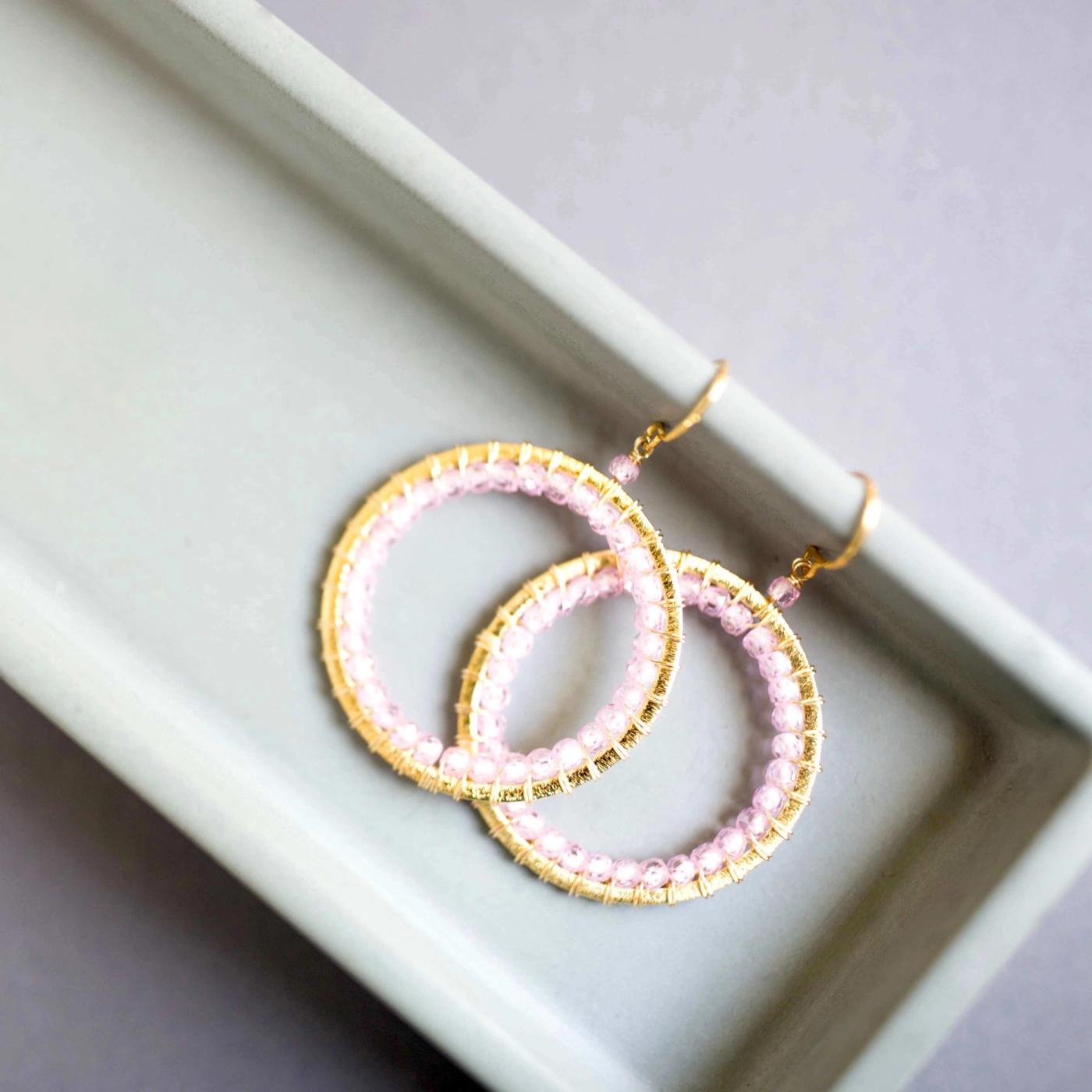
The color range runs from a very pale blush, almost powder pink, up to a deeper rose. Some pieces carry a faint lavender undertone, others lean slightly peach. None of it is wrong. It's just the natural spread you get with a stone colored by trace minerals instead of a dye lot.
Translucency varies too. Some rose quartz is nearly opaque and milky, some lets more light through. Occasionally you'll spot faint silky lines running through the stone, a phenomenon called asterism, caused by tiny fibrous inclusions. It's subtle, and it's one more reminder you're holding something that came out of the ground, not off an assembly line.
If you're buying rose quartz as a gift, here's the thing to keep in mind: two pieces that are technically "matching" might not look identical side by side, and that's normal for natural stone, not a defect to send back. A stud earring pair will be chosen to look balanced as a set, but a necklace and a bracelet bought separately may carry a slightly different shade of pink. That's the nature of the material.
It also means every rose quartz halo necklace we make is genuinely one of a kind. Each stone is cut and set individually as part of our made to order process, so you're not pulling a piece off a shelf full of identical copies. You're getting the one that came out of that particular setting.
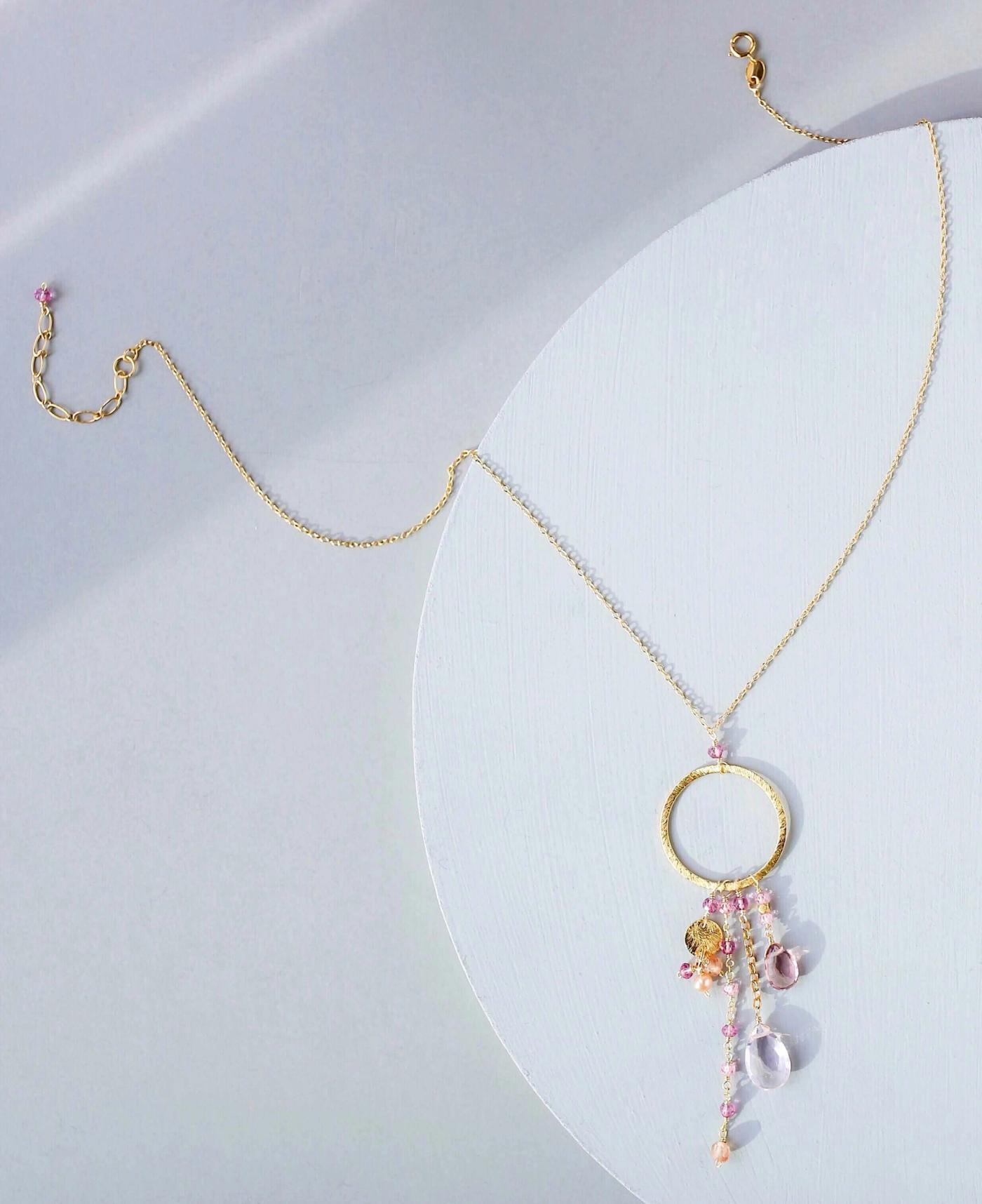
Rose quartz has long been associated with love, self-care, and emotional warmth, the kind of stone many people reach for when they want a piece that feels personal rather than purely decorative. We'll frame that as tradition, not fact: nobody's claiming the stone does anything scientifically. But the association has stuck for a reason.
It's been a popular gift for anniversaries, new relationships, Mother's Day, and plenty of quiet self-gifting too. There's something fitting about a soft pink stone marking a soft moment. If you're shopping for someone (or for yourself) around one of those occasions, rose quartz tends to feel right without trying too hard. You can browse options built specifically with that in mind over in gifts for her.
Rose quartz isn't the only pink stone in the building, and it helps to know how it differs before you pick one.
Pink tourmaline quartz runs brighter and more saturated than rose quartz, with a crisper, more candy-pink tone. Rose quartz, by comparison, is softer and more muted, and typically cloudier rather than glassy. If you've seen both side by side, the difference is obvious: one reads as quiet and romantic, the other reads as a brighter pop of color.
Rhodolite garnet is a different animal altogether. It leans more reddish-purple than true pink, and it's usually far more transparent, with noticeably more sparkle and fire. Where rose quartz is soft and matte-ish, rhodolite catches light hard.
So the choice really comes down to the look you want. Rose quartz for a soft, romantic, everyday feel. Pink tourmaline quartz if you want that same pink family but brighter and more saturated. Rhodolite garnet if you want more sparkle and a deeper, jewel-toned pink. All three are real, natural gemstones in our collection, so this isn't a quality decision. It's a color and personality one.
Rose quartz sits in the quartz family, which makes it a reasonably hard, durable stone, well suited to everyday wear. Still, "durable" doesn't mean indestructible, and a little gentle handling goes a long way.
Keep it away from water, lotion, perfume, and chlorine where you can. That's less about the quartz itself and more about protecting the gold vermeil or rhodium plating around it, since those finishes hold up best when they're not constantly exposed to moisture and chemicals. Same goes for swimming or showering in it. Don't.
When you're not wearing a piece, store it flat or hang it separately rather than tossing it in a drawer with everything else. Settings and prongs can scratch other jewelry (and get scratched themselves) if things are piled together.
Plated metal needs a bit of ongoing care to stay tarnish resistant over the long haul. That's just honest. It's not high-maintenance jewelry, but it rewards a little attention, the same way any fine piece does.
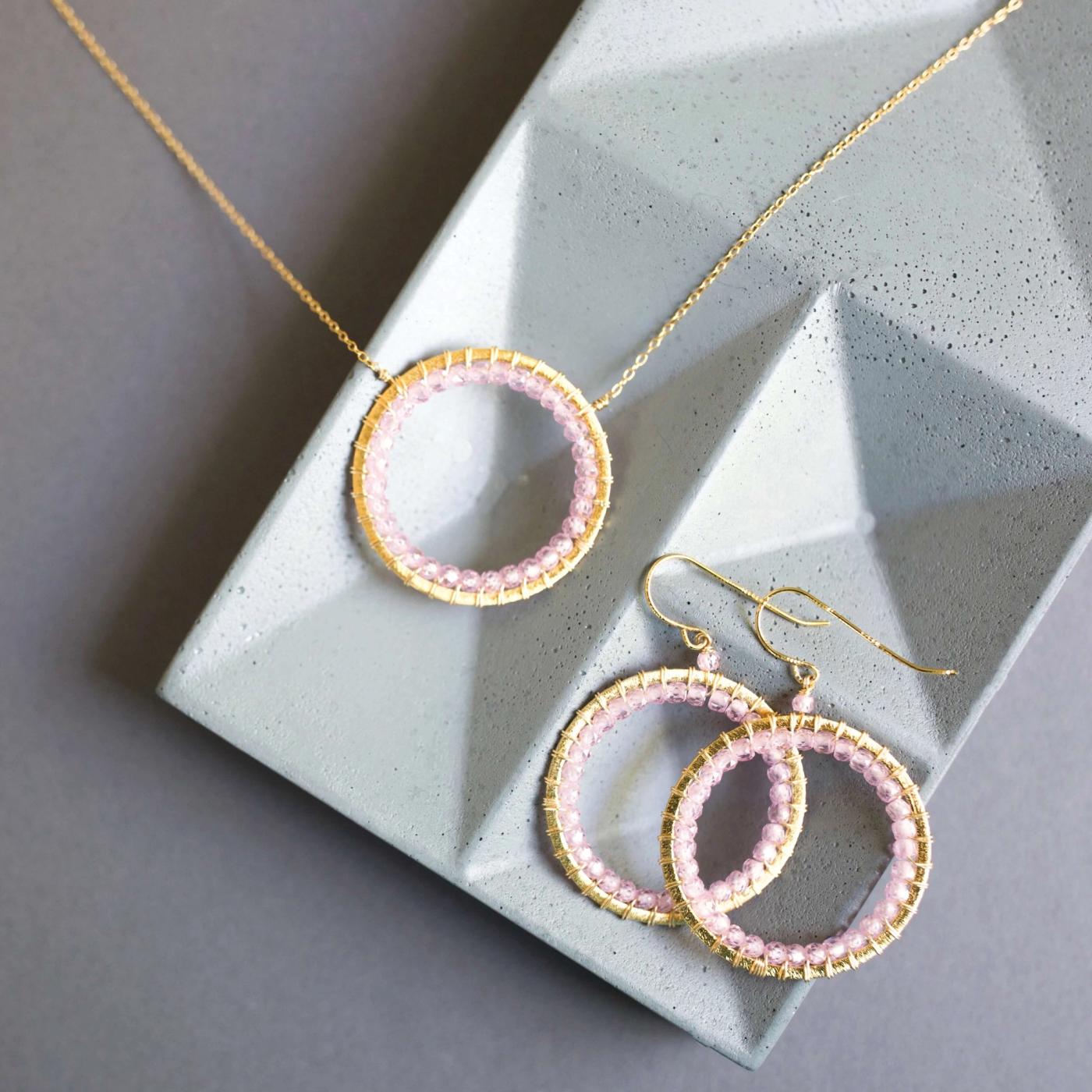
Layering is where rose quartz earns its keep. Try an 18-inch rose quartz pendant with a plain 16-inch chain layered underneath. The shorter chain sits higher and keeps things from crowding, so the pendant stays the focal point instead of getting lost in a tangle.
For earrings, rose quartz halo studs are the easy choice, a soft pop of pink that works whether you're heading to the office or out for dinner. They don't demand attention, they just quietly add warmth.
On the wrist, a rose quartz bracelet stacked with one plain gold or silver band gives you color without tipping into "too much." Our rose quartz gold bracelet works well this way: one statement stone, one neutral partner, done.
Metal choice changes the mood more than people expect. Gold vermeil warms up rose quartz's pink tones, leaning the whole piece toward blush and rose gold territory. Rhodium plating does the opposite, giving a cooler, more modern contrast against the same pink stone. Neither is more "correct." It's just which version of the color you're after.
Yes, rose quartz is the name for naturally pink quartz, colored by trace minerals rather than dye. The terms are used interchangeably, though some sellers use 'pink quartz' loosely for dyed or treated stones, so it's worth asking whether a piece is natural.
Natural rose quartz is quite stable, but like most gemstones its color can fade slightly with prolonged, direct sunlight exposure over years. Keeping jewelry in a pouch or box when not worn, away from a sunny windowsill, helps it hold its color longest.
We'd recommend taking it off first. Water, chlorine, and lotions can dull both the stone's polish and the plating on the metal around it over time, so keeping rose quartz pieces dry helps them look their best for longer.
Rose quartz is one of the more affordable natural gemstones because it's found in large deposits worldwide, which is part of why it shows up in so many accessible jewelry designs. At Parken, rose quartz pieces fall within the brand's usual $48 to $250 range, with price driven mainly by the setting and metal rather than the stone itself.
Both work beautifully: gold vermeil brings out rose quartz's warm, blush pink tones, while rhodium-plated silver gives it a cooler, more contemporary contrast. The right choice really comes down to whether you lean warm or cool in your everyday jewelry.
Rose quartz is a soft, genuinely meaningful stone, and once you know what makes it tick, the natural variation stops looking like a flaw and starts looking like the whole point. No two pieces are exactly alike, and that's by design, not accident.
If you're ready to see the range for yourself, from pendants to studs to stacking bracelets, take a look through our rose quartz jewelry. Each piece is made to order by hand in the USA, so what you're getting is genuinely its own.
And if you'd rather browse at your own pace, join our newsletter for new rose quartz styles and gifting ideas as they land. No pressure, just a heads up when something good comes along.

Subscribe to our email list to get early access to new arrivals and exclusive offers.
Leave a comment