Cart
Your cart is empty
Looks like you haven’t added anything yet, browse new arrivals below!
Continue Shopping
Looks like you haven’t added anything yet, browse new arrivals below!
Continue Shopping
The pendant necklace might be the single most forgiving piece of jewelry you own. One chain, one focal point, and it works whether you're at your desk by 9am or at dinner by 8pm. No fuss, no second-guessing.
But "just put it on" only gets you so far. Figuring out how to wear a pendant necklace well, meaning the right length, the right metal, the right stone for your everyday rotation, is what separates a piece that looks intentional from one that just sort of sits there. This guide walks through length, neckline matching, metal and stone pairing, layering without the tangled-chain mess, and how to dress a pendant up or down depending on where you're headed.
One more thing before we get into it: Parken's pendants are handmade to order in the USA, using real gemstones. That means proportions and stone color can vary slightly from piece to piece. It's not a flaw, it's just what happens when something is made by hand instead of stamped out by the thousand.
A good pendant does the work of three accessories. It's a conversation starter at dinner, a subtle signal of personal style at the office, and a gift that means something when it's handed over in a little box. Earrings get hidden by hair. Bracelets slide under a sleeve. A pendant just sits there, right at the collarbone, doing its job.
The tricky part isn't the pendant itself, it's everything around it: the chain length, the neckline you're pairing it with, whether the metal matches your other jewelry. Get those right and the piece basically styles itself.
Length is the decision that matters most, and it's the one people skip.
Here's the general range: 16 inches sits right at the collarbone, clean and close. 18 inches drops just below it, which is the length most people reach for without thinking too hard. Anything from 20 to 24 inches lands around the sternum or lower, and starts to feel more relaxed, more layered-in.
As a rule of thumb, shorter chains (16 to 18 inches) read as polished and pair naturally with collars or crew necks. Longer chains (20 inches and up) want some open space, so they work best with V-necks or as part of a layered look.
Frame matters too. If you're petite, a 16 to 18 inch chain usually looks more balanced, since anything longer can swallow a smaller frame. Taller frames can carry 20 inches or more without it looking like an afterthought.
If you're genuinely unsure, skip the guesswork. Grab a necklace you already own, hold it up in the mirror, and measure it. That's a better gauge than any size chart, because it shows you exactly where it'll sit on your own neck, not a model's. Browsing the full range of necklace styles is also a decent way to get a feel for how different lengths actually look once there's a pendant attached.
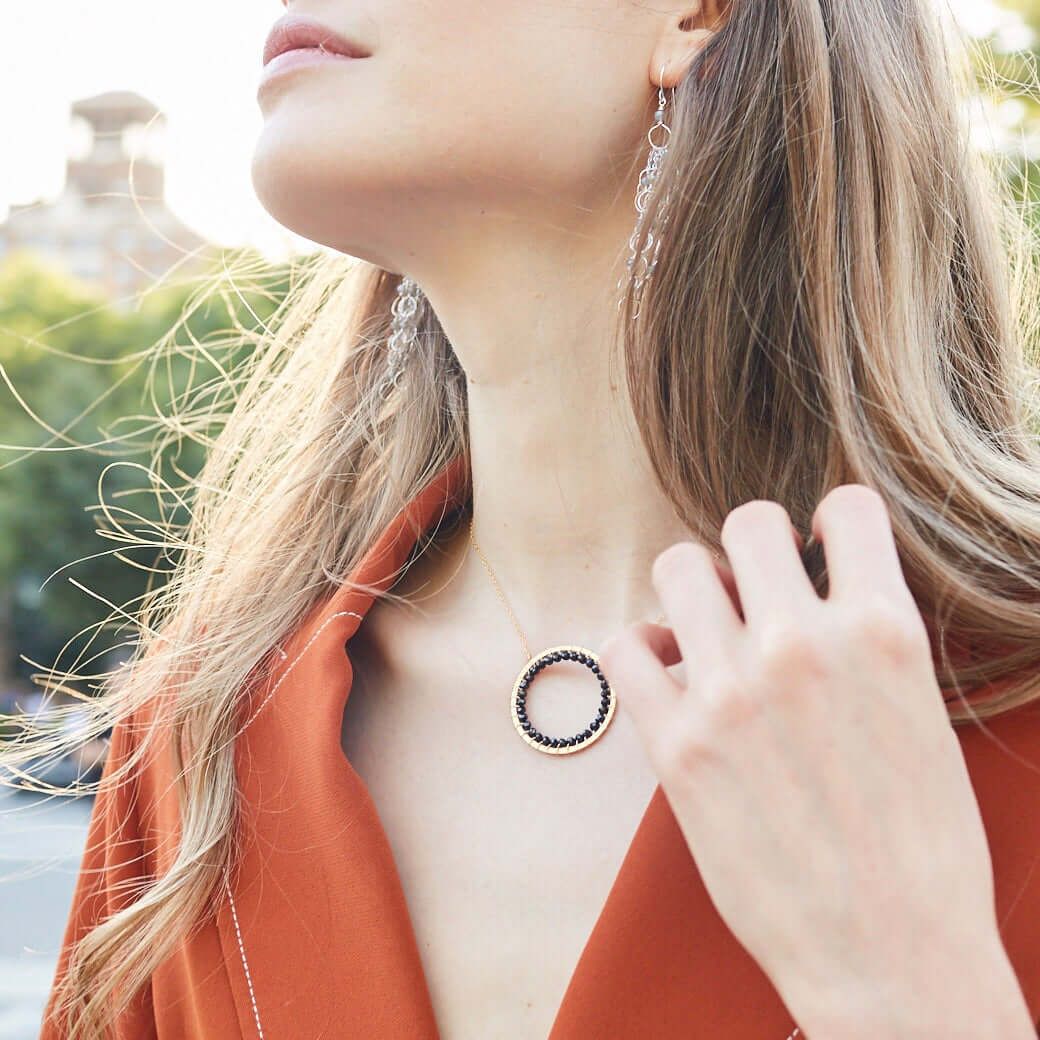
Length and neckline go hand in hand, and this is where a lot of people get it backwards.
Crew necks and turtlenecks need a longer chain, somewhere around 18 to 20 inches, so the pendant lands on bare skin instead of getting stuck on top of fabric. Nothing kills a nice pendant faster than it resting on a crew neck collar instead of your skin.
V-necks and scoop necks are the easy win. A pendant that echoes that shape, like a y-necklace, follows the line of the neckline and makes the whole thing look elongated and deliberate rather than accidental.
Button-downs are their own category. Keep the chain short enough that the pendant sits above the first button. Otherwise it disappears into the collar or, worse, gets tangled in it.
And strapless or off-shoulder tops? That's your moment. No fabric competing for attention, so a slightly bolder pendant actually gets to be seen.
Metal tone changes the entire feel of a pendant, even before you factor in the stone.
Gold vermeil (14k gold plated over sterling silver) reads warm, and it's built to resist tarnish with normal wear. Rhodium plated silver reads cooler, more like white gold, with that crisp, polished look. Neither is "better," it's really about what you already wear. If your watch and your everyday rings lean gold, a gold pendant will feel like it belongs. Same logic in silver.
Stone choice works the same way. For daily wear, neutral stones like smoky quartz, labradorite, or pearl blend into almost anything, which is why they end up being the pieces people reach for without thinking. For something with more presence, saturated stones like amethyst or London blue quartz bring a real pop of color, the kind of pendant that gets noticed.
Worth saying plainly: because these are natural stones, no two pendants are identical. Color depth and pattern shift slightly from piece to piece. That's not a compromise, it's actually what makes a handmade pendant feel like yours instead of something pulled off a factory line.
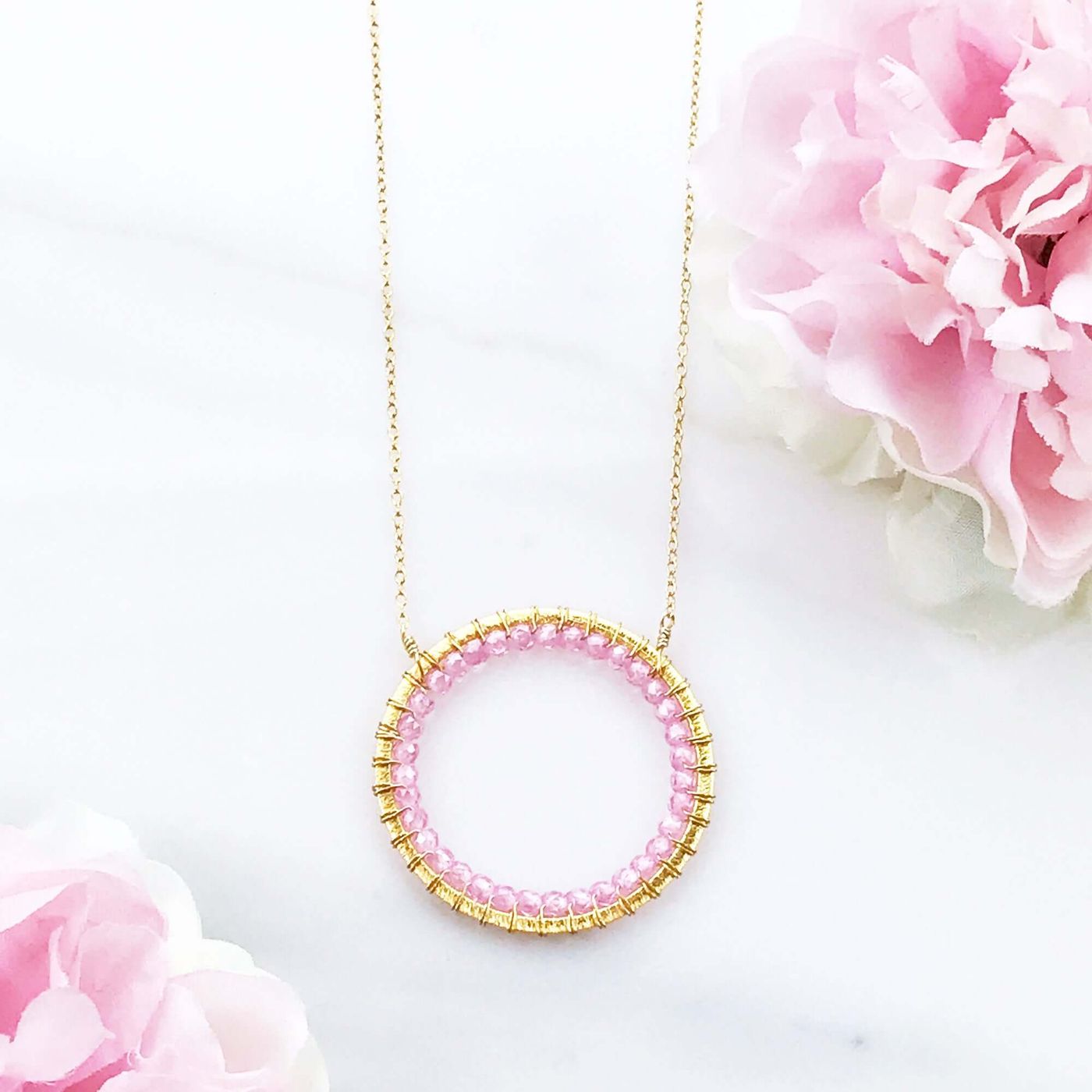
Layering is where most people give up too early, usually after a few mornings of fighting with tangled chains.
Here's a formula that actually works: start with a 16 inch chain, add an 18 inch pendant on top, and leave roughly two inches of length between each layer. That spacing is what keeps them from overlapping and knotting together every time you move.
Mix textures instead of repeating the same style three times. A plain chain, a halo pendant, and a y-pendant together look curated. Three similar round pendants together just look busy.
If chains keep sliding toward each other no matter what you do, try the clasp trick: attach a small jump ring or connector near the clasp of the longer piece. It gives the shorter chain something to catch on, so it stays put instead of drifting forward all day.
And for everyday wear, stop at two or three pendants. A fuller stack looks great, but it's an evening-out look, not a Tuesday-at-your-desk look. Check out layering chains built specifically to pair with an existing pendant if you want to start building a stack without starting from scratch.
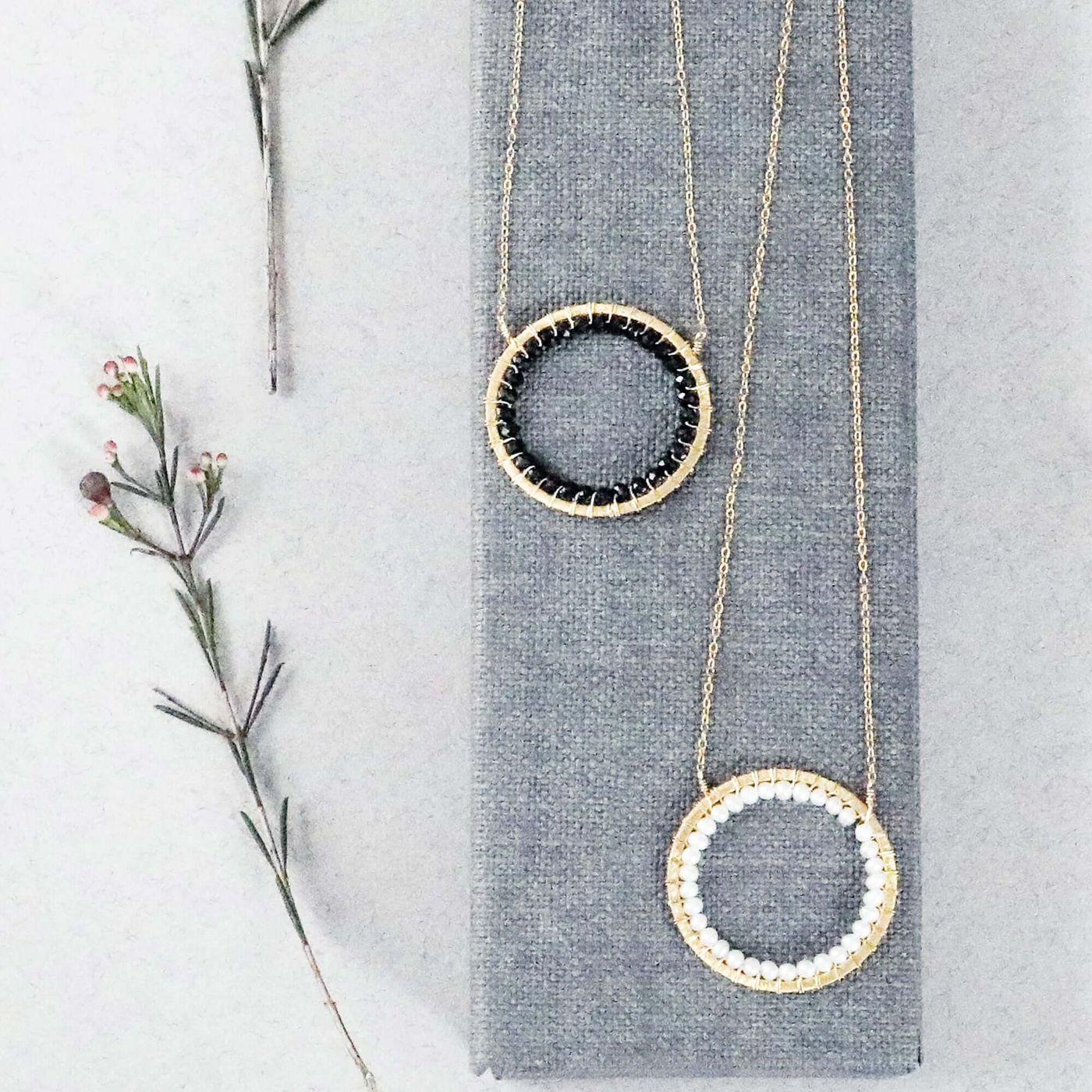
How to wear a pendant necklace really depends on where you're wearing it.
For work, keep it simple. One minimalist pendant at 16 to 18 inches sits cleanly against a blazer collar without competing with it. This is not the place for three layered chains.
For everyday and weekends, loosen up. Two pendants at different lengths with jeans and a t-shirt reads effortless, a little undone in the best way.
For special occasions, go the opposite direction: one statement pendant, something like a halo style or a cluster design, paired with an updo and an open neckline. Let it be the one thing people notice.
It's also worth mentioning that a pendant necklace is one of the more popular gifts for milestones, graduations, birthdays, anniversaries, because it works both ways: worn alone right out of the box, or added to an existing layer years later. Few gifts grow with someone quite like that.
Small habits make a real difference in how long plated jewelry keeps its finish. Put the necklace on last, after lotion, perfume, and hairspray, not before. Those products are the main culprits behind plating wearing thin faster than it should.
Storage matters too. Keep pendants flat, or hang them separately so chains don't knot together with everything else in your jewelry box.
None of this is complicated, but it matters more with handmade pieces. Each pendant took real time and real hands to make, so a little care on your end just protects that work.
For a petite frame, a 16 to 18 inch chain usually looks the most balanced, since the pendant sits at or just below the collarbone instead of disappearing down the chest. If you want to layer, add a slightly longer second pendant rather than two necklaces of the same length so each one stays visible.
Yes, a pendant necklace is one of the easiest pieces to wear daily, especially a simple style in a neutral stone like labradorite, smoky quartz, or pearl. Just put it on after lotion, perfume, and hairspray, since those can dull plating faster over time.
A pendant can flip if the chain is too loose or the clasp is positioned off to one side, so check that the clasp sits centered at the back of your neck. A slightly shorter chain that sits closer to the collarbone also tends to flip less than a long, loose one.
A good starting formula is a 16 inch chain paired with an 18 inch pendant, leaving about two inches of space so neither piece overlaps the other. From there you can add a third piece at 20 inches or longer if you want a fuller layered look.
It helps to keep metal tones consistent with whatever you wear most, whether that is gold vermeil or rhodium plated silver, so your pendant feels intentional rather than mismatched. Stones do not need to match exactly since natural gemstones vary piece to piece, which is part of what makes handmade pendants feel personal.
The formula really comes down to three things: the right length for your neckline, a metal that matches what you already wear, and layering with intention instead of just piling chains on and hoping for the best.
If you're ready to start, browse the pendant collection for a first piece or something to add to a stack you've already got going. And if you just want styling ideas and a heads-up on new arrivals before anyone else sees them, join the newsletter. No pressure either way, just good jewelry when you're ready for it.

Subscribe to our email list to get early access to new arrivals and exclusive offers.
Leave a comment