Cart
Your cart is empty
Looks like you haven’t added anything yet, browse new arrivals below!
Continue Shopping
Looks like you haven’t added anything yet, browse new arrivals below!
Continue Shopping
To clean gemstone jewelry at home, wipe the stone and metal gently with a soft cloth; use a lightly damp cloth with mild soap only when you know the stone and setting can tolerate it. In 2026, the safest rule is still to avoid soaking an unfamiliar piece, then dry it fully before putting it away. Pearls and other delicate stones need a different approach from quartz.
A necklace or pair of earrings is more than its gemstone. The chain, setting and any other stones also come into contact with whatever you use to clean it. In 2026, choose a method the most delicate part can tolerate, not the method used for the hardest stone.
That matters especially for mixed-stone pieces and gifts whose materials you do not know. If you are also deciding whether to leave jewelry on around water, read the separate guide to showering with gold-filled jewelry. Showering and careful cleaning are different questions: a piece does not need to sit in water to be cleaned.
Follow these steps for routine cleaning when the stone and metal are known and the piece has no loose parts. If you cannot identify a stone, stop after the dry-cloth step and ask a jeweler before using soap or water.
This is a controlled wipe, not a bath. It lets you see how each part responds and keeps the cleaning cloth from snagging a setting. For 2026 care, that distinction is more useful than a single cleaning recipe for every gemstone.
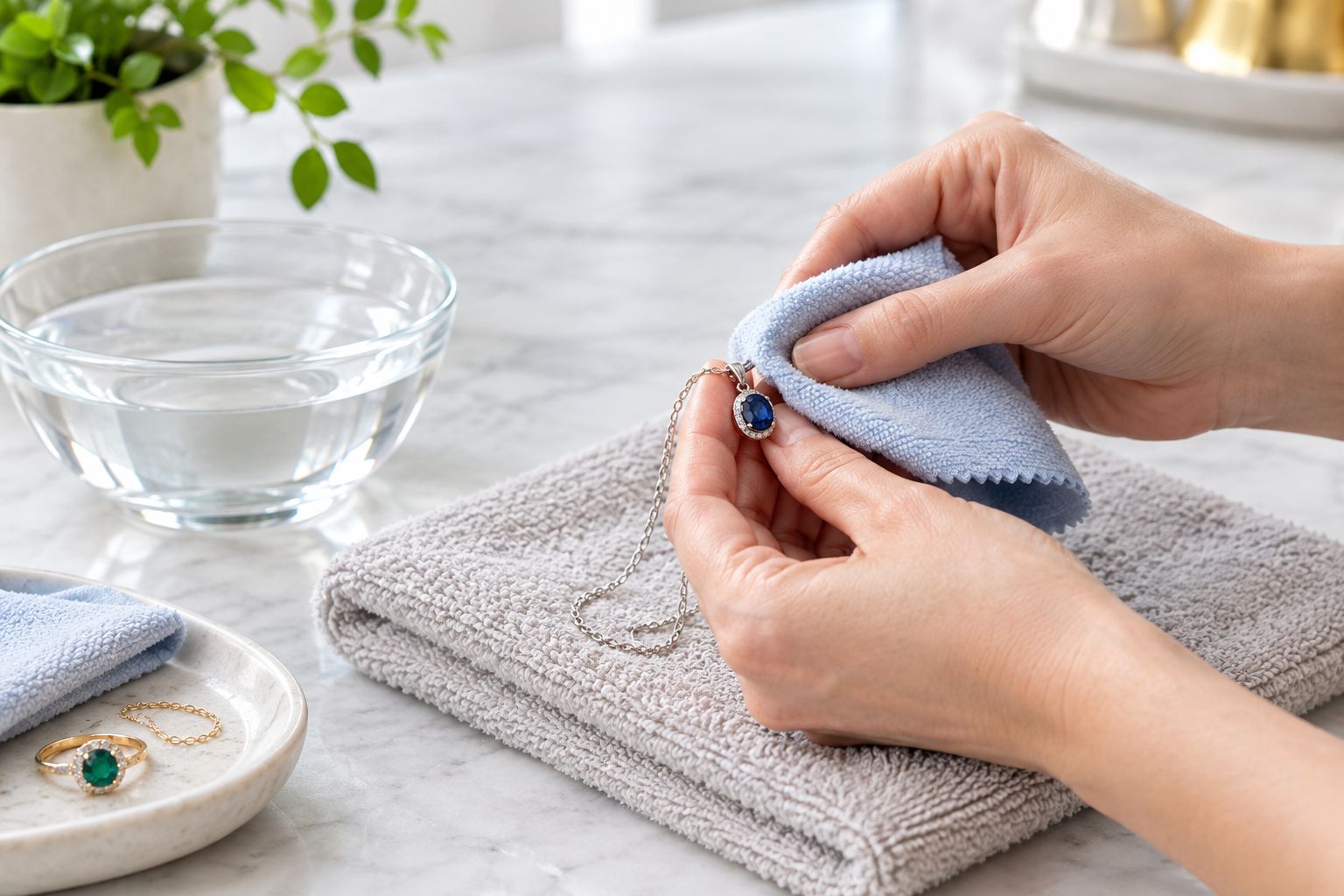
If dirt remains after a gentle wipe, do not scrub harder. A jeweler can check whether buildup is trapped beneath the setting and whether the piece is secure enough for another cleaning method.
The table gives you a starting point for stones named in Parken Jewelry’s jewelry selection. It does not establish the full care requirements of an individual piece; a setting, treatment or second stone can change what is safe.
| Stone | Best starting method | Main caution |
|---|---|---|
| Quartz, including rose quartz and amethyst | Soft cloth; lightly damp cloth with mild soap when the whole piece tolerates water | Check the setting and any other stones before adding water |
| Labradorite | Soft cloth first; use water sparingly | Avoid abrasive rubbing and sudden temperature changes |
| Pearl | Soft, lightly damp cloth after wear | Do not soak or scrub |
Best for a simple routine: a soft cloth. It gives you a first cleaning step without committing an unknown stone or setting to water. Its limit is that it will not remove every residue trapped around a setting.
Best for known, water-tolerant pieces: a lightly damp cloth with mild soap. It gives you more cleaning contact without immersion. Its limit is that the method is only as safe as the most sensitive material in the piece.
Start by wiping quartz with a soft cloth. If the complete piece can tolerate water, use a lightly damp cloth and mild soap for residue, wipe off the soap and dry the setting. Do not treat a quartz pendant as permission to soak its chain or setting.
Rose quartz and amethyst are varieties of quartz. Both measure 7 on the Mohs hardness scale, a measure of scratch resistance, according to the Gemological Institute of America (GIA). That number does not tell you whether a plated metal surface, a second stone or a particular setting should be scrubbed, steamed or immersed.
For a handmade piece, light pressure matters as much as the cloth you choose. Hold the setting steady, wipe the exposed stone and clean the metal separately. If a soft cloth catches on a prong or edge, stop; the snag deserves attention before more cleaning.
Use a soft cloth and gentle pressure on labradorite. If the piece needs more than a dry wipe, use a lightly damp cloth only after checking the other materials, then dry it promptly. Avoid a hard brush, abrasive paste and sudden shifts between hot and cold water.
GIA lists labradorite at 6 to 6.5 on the Mohs hardness scale. That describes scratch resistance, not a safe cleaning time. A stone can resist one kind of contact and still have a setting or surface that calls for a gentler routine.
Parken Jewelry includes labradorite among its gemstone jewelry. If you are cleaning a labradorite piece you wear often, inspect its edges and setting under good light before you wipe it. Dirt can sit close to the metal; pressing harder is not the way to reach it.
Wipe pearls with a soft, lightly damp cloth and let them dry before storage. Do not soak pearls or scrub them with a brush. Keep soap, abrasive cleaners, steam and ultrasonic cleaning out of a routine pearl wipe-down.
GIA places pearl at 2.5 to 4.5 on the Mohs hardness scale. Its surface calls for gentler handling than quartz. The difference is why a mixed-stone necklace or set needs the cleaning method suited to its most delicate component.
For example, Parken Jewelry offers pearl gossamer earrings. When cleaning pearl earrings, hold each earring securely, wipe the pearls gently and dry the metal rather than dropping the pair into a bowl. If a pearl is loose, leave cleaning to a jeweler until the setting is checked.
A gemstone name alone cannot settle every care decision. In 2026, check these parts of the whole piece before you move from a dry cloth to water or soap:
The trade-off is straightforward: a dry cloth is the gentlest first step but has limited reach. Soap and water can remove more surface residue on an appropriate piece, yet they introduce contact that a delicate stone, thread or setting might not tolerate. You do not need to choose the stronger method merely because a mark remains.
Do not use an ultrasonic cleaner on an unidentified or mixed-stone piece. Ask a qualified jeweler to assess every stone, treatment and setting first. An ultrasonic cleaner is not a substitute for identifying what you own.
This is particularly relevant when a piece includes pearls or when you cannot confirm whether its stones have been treated. For home care, the soft-cloth method gives you control over pressure and where moisture touches the jewelry. An ultrasonic machine does not give you that same stone-by-stone control.
Skip vinegar and toothpaste for gemstone jewelry. Neither is needed for the cloth-and-mild-soap routine, and toothpaste introduces abrasive contact. Use a soft cloth first; for a known, suitable piece, use a lightly damp cloth with mild soap instead.
Do not try to polish away a mark by increasing pressure. If the surface still looks dull after gentle cleaning, the issue needs identification before another substance goes on it. The visible mark might not be removable surface dirt.
Pat the stone, setting and metal with a clean, soft cloth. Look closely at joins, the back of a setting and the clasp, then leave the piece out until it is fully dry. Do not pull a chain through the cloth to speed the process.
For pearl jewelry, drying is part of the gentle wipe, not a reason to apply heat. For a necklace with several stones, check each setting individually. In 2026, the most reliable home-care habit remains simple: clean with the least contact that does the job, then check the whole piece before storage.
What is the safest way to clean gemstone jewelry at home?
Start with a clean, soft cloth and gentle pressure. Add a lightly damp cloth with mild soap only when you know every stone and the setting can tolerate it.
Can I soak gemstone jewelry in soapy water?
Do not soak an unidentified or mixed-stone piece. A controlled wipe keeps water and soap away from parts you have not confirmed are suitable for immersion.
How do I clean rose quartz jewelry?
Wipe rose quartz gently with a soft cloth. If the complete piece can tolerate water, use a lightly damp cloth with mild soap, remove the residue and dry the setting.
How do I clean pearl earrings at home?
Wipe pearl earrings gently with a soft, lightly damp cloth and let them dry before storage. Do not soak or scrub the pearls.
Is an ultrasonic cleaner safe for all gemstones?
No, an ultrasonic cleaner is not suitable for every gemstone or setting. Have a qualified jeweler assess the complete piece before using one.
Can I use toothpaste to clean gemstone jewelry?
No; skip toothpaste and its abrasive rubbing. Start with a soft cloth, then use a lightly damp cloth with mild soap only if the whole piece is suitable.
Should I clean a gemstone if its setting feels loose?
No; stop cleaning and have the setting checked by a jeweler. Rubbing or rinsing a loose stone risks making the problem worse.
Clean for the most delicate part, not the hardest stone. That rule is easy to miss when a necklace has a familiar quartz stone beside an unfamiliar accent, or when the stone looks sturdy but the setting catches your cloth. Parken Jewelry’s handmade gemstone jewelry is best for women who want minimalist pieces and are willing to give each one stone-specific care. Keep the 2026 routine simple: identify, wipe, check and dry.

Subscribe to our email list to get early access to new arrivals and exclusive offers.
Leave a comment