Cart
Your cart is empty
Looks like you haven’t added anything yet, browse new arrivals below!
Continue Shopping
Looks like you haven’t added anything yet, browse new arrivals below!
Continue Shopping
What a Gemstone Bracelet Really Means
A gemstone bracelet is just jewelry strung with natural stones, but those stones have carried symbolic weight across cultures for centuries. Not a medical claim, not a guarantee of anything. Just meaning, the kind humans have been assigning to rocks since long before anyone wrote it down.
Gemstone bracelet meaning really splits into two layers. There's traditional stone lore: what a culture historically said a stone represented, passed down through folklore, trade routes, and a lot of storytelling. Then there's personal meaning: what the stone represents to you, or to whoever you're giving it to. Both are real. Neither needs the other's permission.
This guide covers both sides. We'll go through what different stones traditionally symbolize, which hand people wear them on (and whether that actually matters), how to stack a few together for layered meaning, and when it's smart to just take the thing off.
Most gemstone symbolism falls into a handful of buckets: protection, calm, love, confidence, luck, grounding. Someone picks a stone because they want a bit more of one of those in their life, or because they're marking that they already found it.
Worth saying plainly: these are traditional associations and folklore, not proven effects. Many people believe a stone supports calm or confidence. That's different from claiming it does. Treat the lore the way you'd treat a birthstone chart, as meaning with history behind it, not a lab result.
A lot of the symbolism tracks with color more than the specific mineral. Blue stones read as calming almost universally. Pink stones land as loving or soft. Warm oranges and yellows feel energizing, the kind of stone you reach for on a low-energy day. So even before you learn what a specific stone is "supposed" to do, your gut has probably already guessed, just from looking at it.
Plenty of practical reasons sit underneath the symbolism. A birthday. A graduation. A first day at a new job. Someone going through a rough stretch who needs a small, tangible thing to hold onto. Sometimes it's none of that: someone just likes how the stone catches light on their wrist.
Gifting is where gemstone bracelet meaning does the most work. Moms, brides, and friends shopping for someone else often land on a specific stone because of what it represents to them as the giver, not just what matches the recipient's style. A mother picks rose quartz for a daughter starting a new relationship. A friend picks citrine for someone who needs a push toward optimism. The stone becomes the message.
And sometimes meaning isn't the point at all. Plenty of people wear a gemstone bracelet purely because the color works with everything else in their jewelry box. Both reasons hold up. You don't owe anyone a backstory for your bracelet.
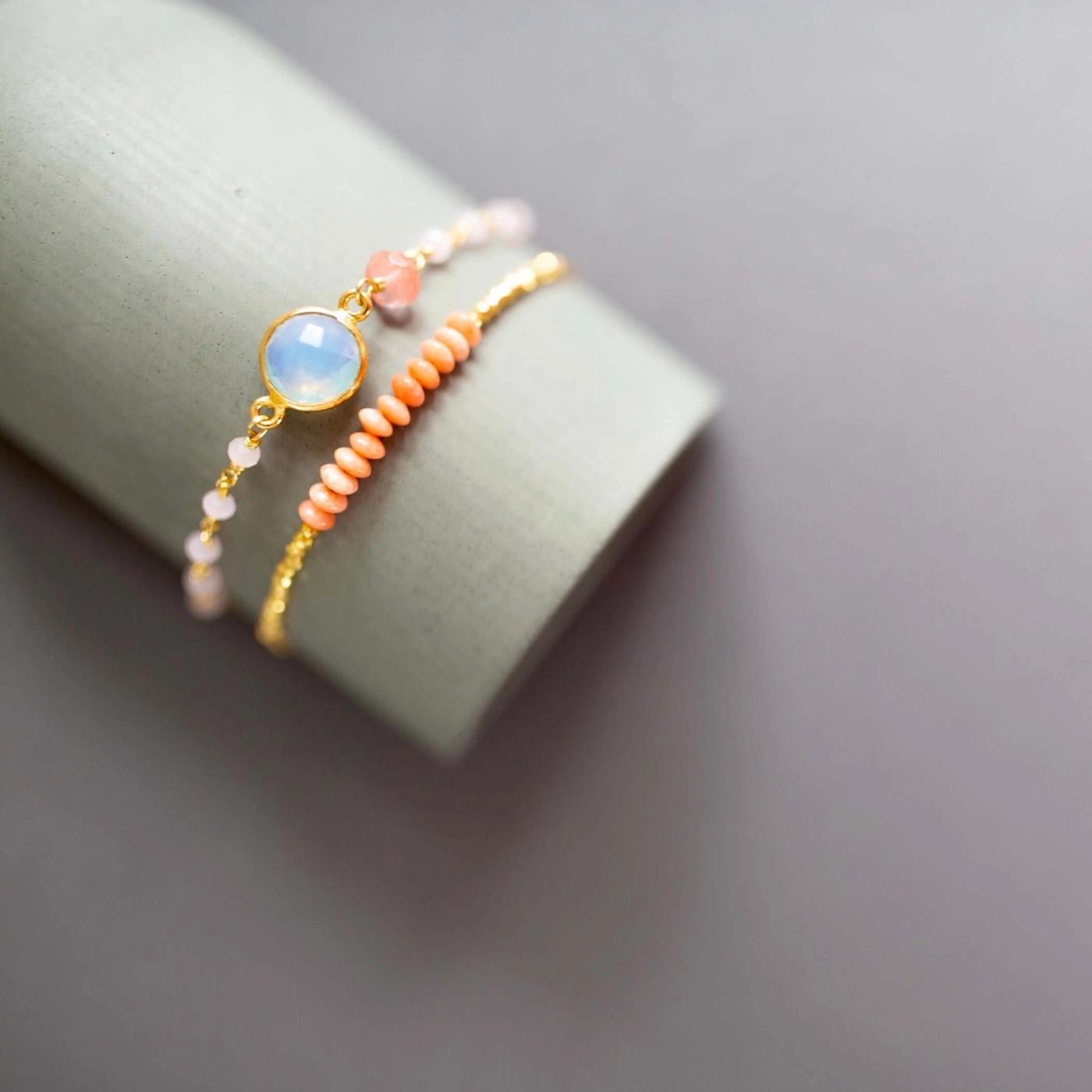
Here's what shows up most often in the lore, stone by stone.
Labradorite gets linked to intuition and change. It's a popular pick for a "new chapter" gift, someone starting a job, moving cities, closing one era and opening another. The stone's flash, that shift of blue and gold depending on the light, fits the symbolism almost too neatly. Browse the labradorite collection if that's the story you're telling.
Amethyst has long been associated with calm and clarity. It's one of the more wearable purples out there, which is probably why it shows up so often in everyday pieces rather than just statement jewelry. The amethyst collection leans into that everyday-wear angle.
Rose quartz is tied to love and self-compassion in just about every tradition that mentions it. Common choice for a new relationship, but just as common as a self-gift, something you buy for you, not for anyone else's approval. Worth a look in the rose quartz collection.
Garnet and rhodolite garnet carry folklore around strength and passion, usually tied to that deep red that reads as bold no matter what it's paired with. Less "quiet calm," more "I meant to wear this." See the garnet collection for the range.
Citrine gets associated with warmth and optimism. It's the sunny-toned stone people reach for in a stack when everything else is cooler tones, a little jolt of yellow in the mix. Check the citrine collection if you want that effect.
Black spinel is linked to grounding and protection. It's also just useful: a deep, versatile neutral that lets brighter stones do the talking next to it without competing. The black spinel collection is a solid place to start a stack.
One honest note here, because it matters: most of Parken's colorful "aquamarine," "tourmaline," "opal," "peridot," and "London blue" pieces are quartz varieties named for that color, not the rarer mineral itself. Aquamarine quartz, pink tourmaline quartz, opal quartz, that kind of thing. Still real, still natural stone, just not the mineral the name might suggest if you're picturing true beryl aquamarine or precious opal. Good to know before you build a gift around a specific stone's supposed rarity.
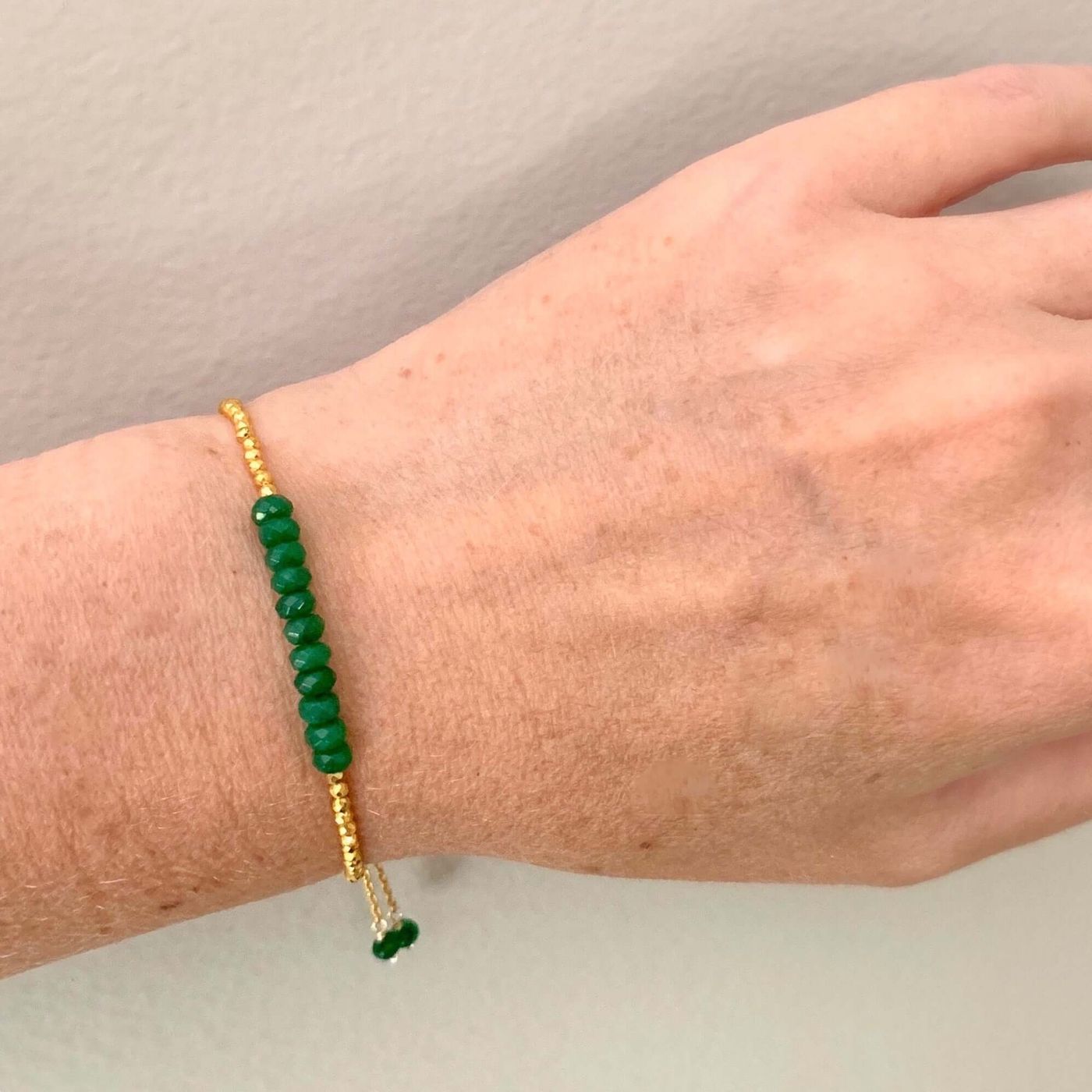
Folklore says the left hand is for receiving, for intention, the hand closer to the heart in some traditions. The right hand is for giving, for action, putting energy out into the world. It's a nice framework. It's also not universal, and different cultures have told this story differently for centuries, so don't treat it as a rule you're breaking if you wear your bracelet "wrong."
Here's the more practical version: most people end up choosing their non-dominant hand, mostly because it takes less of a beating. Less friction against desks, bags, doorframes. Gentler on clasps and stone settings, which matters more for daily wear than any symbolic hand-assignment does.
Some people wear different stones on each wrist, one for calm, one for confidence, say, to combine meanings rather than pick one. That's styling, not doctrine. Do what feels right on your own wrist.
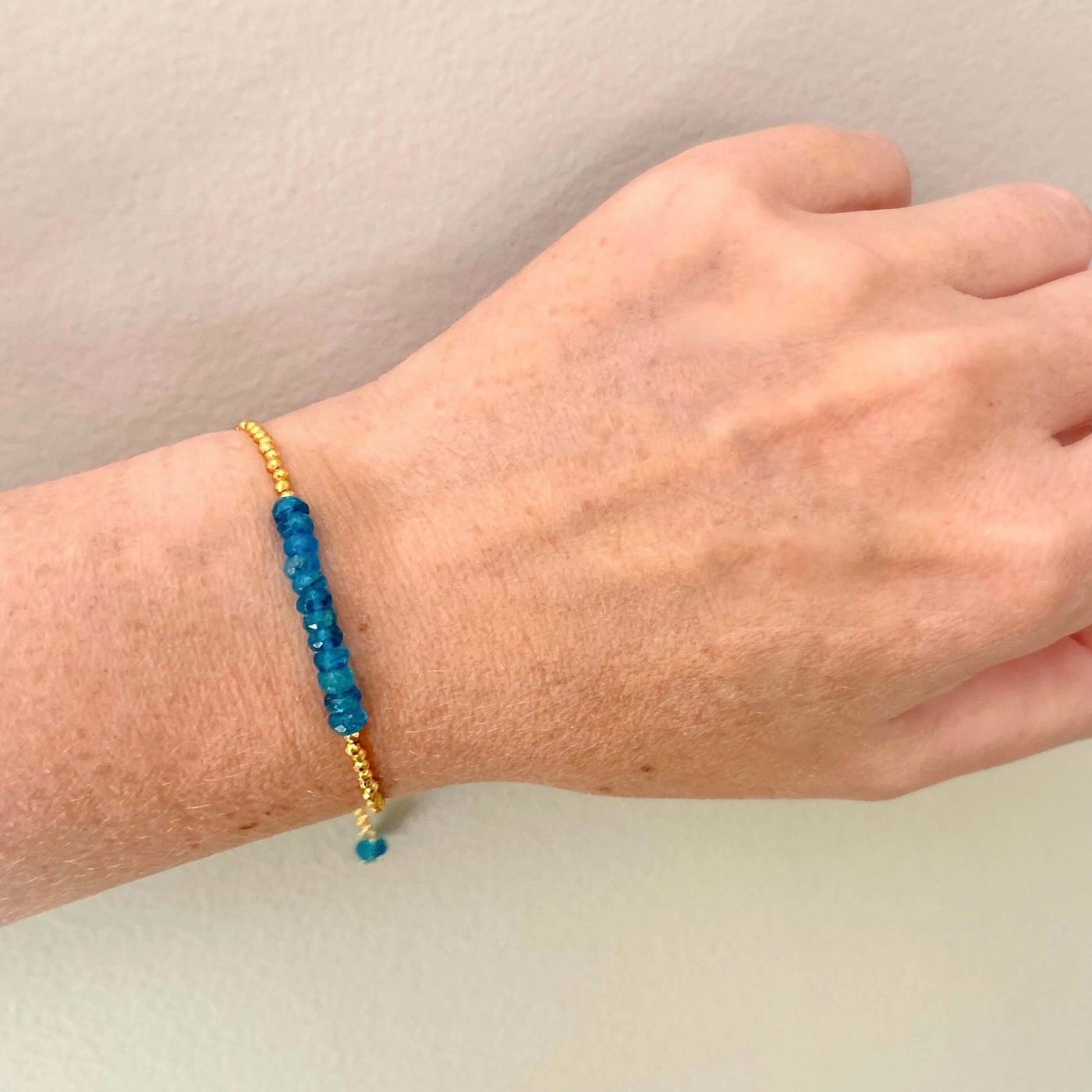
The easiest formula: two to three adjustable stacking bracelets, different stones, built to sit together on one wrist. Pick stones for what they mean to you individually, and let the combination tell a fuller story than any single one could.
Metal tone is the other decision. Stick to one tone, gold or silver, for something clean and cohesive. Or mix them deliberately for contrast, which reads more collected-over-time than matchy. Neither is more correct. It's a mood call.
Our adjustable stacking bracelets make this easier than it sounds, since you're not stuck matching exact wrist sizing across three separate pieces. Build the combo first, worry about fit later.
One honest thing worth knowing going in: natural stones vary slightly bead to bead. Color, veining, opacity, it's never perfectly uniform. That's not a flaw to overlook, it's actually what makes a personal stack feel like yours and nobody else's.
Some of this is just care. Take it off before swimming, showering, workouts, or applying lotion and perfume. Plating and stone finish hold up best kept dry, and we're not going to tell you it's waterproof or shower-safe, because it isn't. Five minutes of taking it off becomes a habit fast, and it's the single biggest thing that keeps a piece looking new for years instead of months.
Then there's the situational stuff. Some people skip a statement gemstone bracelet in very formal or strict professional settings and swap in something more minimal instead. Not a rule, just a read-the-room choice, same as you'd make with any bold accessory.
Neither of these is superstition you have to obey. It's just practical care and knowing your setting, the same logic you'd apply to any piece of jewelry you actually want to keep.
Yes, most gemstone bracelets are made for everyday wear. To help the plating and stones last, it helps to take it off before swimming, showering, or applying lotion and perfume, since moisture and chemicals are the main things that wear plating down over time.
Color is a big part of how people read a stone's meaning: blue tones are often linked to calm, pink tones to love, and warm tones like citrine to optimism and energy. These are traditional associations people enjoy rather than proven effects, so choosing by color you simply love is just as valid.
There is no fixed number, but two to three adjustable bracelets usually hits the sweet spot between a noticeable stack and overcrowding the wrist. Mixing a couple of stone colors with one consistent metal tone tends to look the most intentional.
Gemstone meanings come from centuries of folklore and tradition rather than scientific proof, so we would not call them a guaranteed effect. Many people still find real value in wearing a stone that reminds them of an intention, a person, or a moment, which is a meaningful reason on its own.
A birthstone bracelet uses the specific stone traditionally tied to a birth month, while a gemstone bracelet can feature any natural stone chosen for its color, look, or symbolic meaning. Someone might choose a gemstone bracelet for what the stone represents rather than for when they were born.
Gemstone bracelet meaning is part tradition, part whatever you decide it is. Someone who wears labradorite because the lore says "new beginnings" and someone who wears it because it looks incredible with everything they own are both wearing it for a good reason. Neither needs to justify themselves to the other.
If you want to find the stone that matches your own story, browse the gemstone bracelet collection and see what catches your eye first. That reaction usually tells you more than any lore chart does. And if you'd rather keep discovering new stones and styles at your own pace, join the Parken newsletter, no pressure, just first look at what's new.

Subscribe to our email list to get early access to new arrivals and exclusive offers.
Leave a comment