Cart
Your cart is empty
Looks like you haven’t added anything yet, browse new arrivals below!
Continue Shopping
Looks like you haven’t added anything yet, browse new arrivals below!
Continue Shopping
So you've seen the term "bezel necklace" on a product page and want to know what makes it different from every other pendant setting out there. Fair question. What is a bezel necklace, really? It's one of the oldest, simplest ways to set a stone, and it's having a moment again because it just looks clean.
A bezel necklace is a pendant where a thin rim of metal wraps all the way around the edge of the gemstone, holding it in place instead of relying on prongs or claws. Think of it like a tiny picture frame built just for that one stone.
The effect is a smooth, rounded silhouette: a clean halo of metal tracing the outline of the gem, with no sharp points sticking out anywhere. It reads modern and a little architectural, even though the technique itself is far from new. Jewelers have used bezel settings for centuries, mostly because they protect a stone's edges while keeping the overall design quiet and minimal.
This guide is meant to help you compare necklace settings before you buy, not to talk you into one specific style. Once you understand how a bezel actually works, it's easier to tell whether it's the right fit for how you wear jewelry day to day.
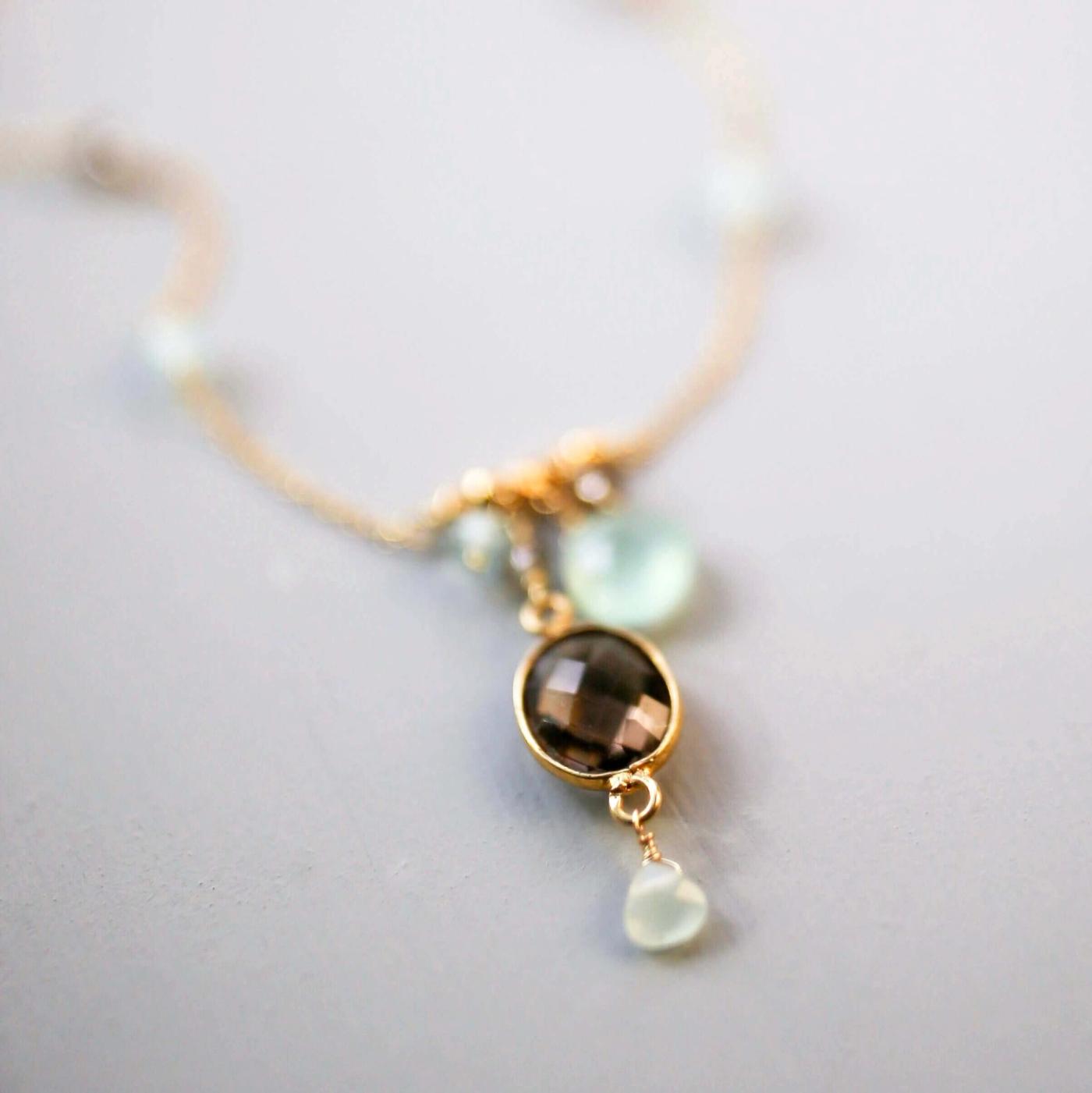
The construction is pretty straightforward once you see it up close. A jeweler shapes a thin strip of metal around the stone's girdle (the widest part of the gem), solders it into a continuous rim, then presses or burnishes that rim down so it hugs the stone snugly on every side. No gaps, no gaps to catch on anything.
Because the metal sits flush against the stone instead of rising up around it, the whole pendant has a low profile. The stone sits close to the chain, and there's nothing raised to snag on a sweater, hair, or a scarf. If you've ever caught a prong on fabric and winced, you'll get why that matters.
Full-edge coverage also means the stone's edges are shielded from the small knocks that happen during a normal day: bumping a doorframe, setting your bag down, reaching for a coffee cup. That's a real practical difference between a piece meant for everyday wear and one meant to come out for special occasions only.
Every one of Parken's bezel necklaces is made to order by hand in the USA, which means the bezel is individually shaped and finished around that specific stone rather than stamped out to a generic size. Since natural stones vary slightly, that hand finishing step actually matters.
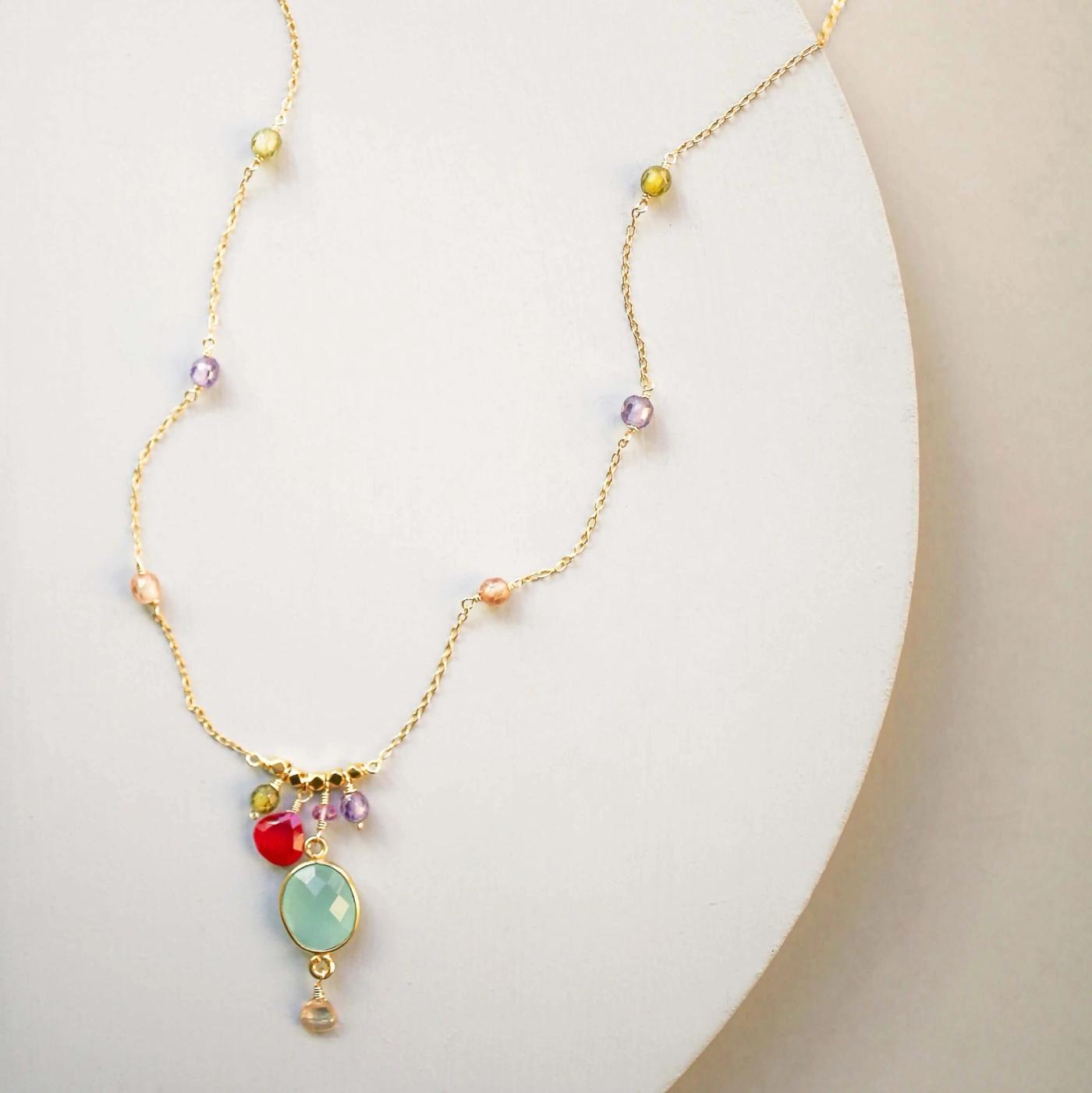
Once you start comparing settings side by side, the differences get easier to spot.
Prong settings hold a stone with small metal claws, usually four or six of them, leaving most of the stone's surface exposed to light. That's why prong-set stones tend to sparkle more. A bezel covers the stone's edge completely, trading a bit of that sparkle for a more secure, subtle look.
Halo settings are a different thing entirely: a center stone surrounded by a ring of smaller accent stones or detailed metalwork, built to maximize shine. A bezel necklace, by contrast, is a single rim around one stone with no extra sparkle ring. If you're weighing the two, Parken's halo pendants show that fuller, more detailed look clearly.
Cluster and fringe styles go a third direction, grouping several small stones together for texture and movement rather than focusing on one. A bezel necklace usually has one clean focal stone and nothing competing with it.
As a rule of thumb: go bezel for a minimal, structured look, halo for extra shine, cluster for texture and movement. None of them is objectively better, they just do different jobs on a neckline.
Durability is the real selling point here. An enclosed edge is a lot less likely to snag on clothing or chip against something hard than an open prong setting. If you're the type who doesn't take jewelry off between the gym bag and the grocery run and the end of a long day, that matters more than it sounds like it should.
They're versatile, too. The smooth, geometric shape slides easily between casual and work outfits without ever reading as a special-occasion statement piece. A bezel pendant looks just as at home with a blazer as it does with a plain tee.
Here's the honest trade-off, though: a bezel does cover a bit more of the stone's surface than a prong would, so slightly less light passes through it. If sparkle and brilliance are your top priority, that's worth knowing before you buy, not after.
Because Parken's gemstones are natural, with their own variations in color and pattern, every bezel-set pendant ends up genuinely one of a kind. No two smoky quartz or labradorite stones look quite the same under the same light.
Layering a bezel pendant is easier than people expect once you have a formula. Try a 16 inch bezel pendant as your front layer, with an 18 to 20 inch chain sitting behind it. That leaves roughly two inches of visible chain between the two, enough to see both pieces without them crowding each other. A layering chain in a simple design works well here since it won't compete with the pendant.
Keep the rest of the look restrained. One bold bezel pendant paired with one or two delicate layering chains usually looks better than stacking multiple statement pieces, since the stone stays the clear focal point instead of getting lost in the mix.
Metal choice shifts the mood more than people expect. Gold vermeil bezels read warmer and glow against warm-tone clothing like camel, olive, or burgundy. Rhodium-plated silver bezels look crisp and cool against blues, grays, and black. If you're not sure which you lean toward, it's worth browsing gold necklaces and silver necklaces side by side before deciding.
The nice part is you don't need two different necklaces for two different parts of your day. A single bezel necklace can go from a work blazer in the morning to a going-out top at night, no swapping required.
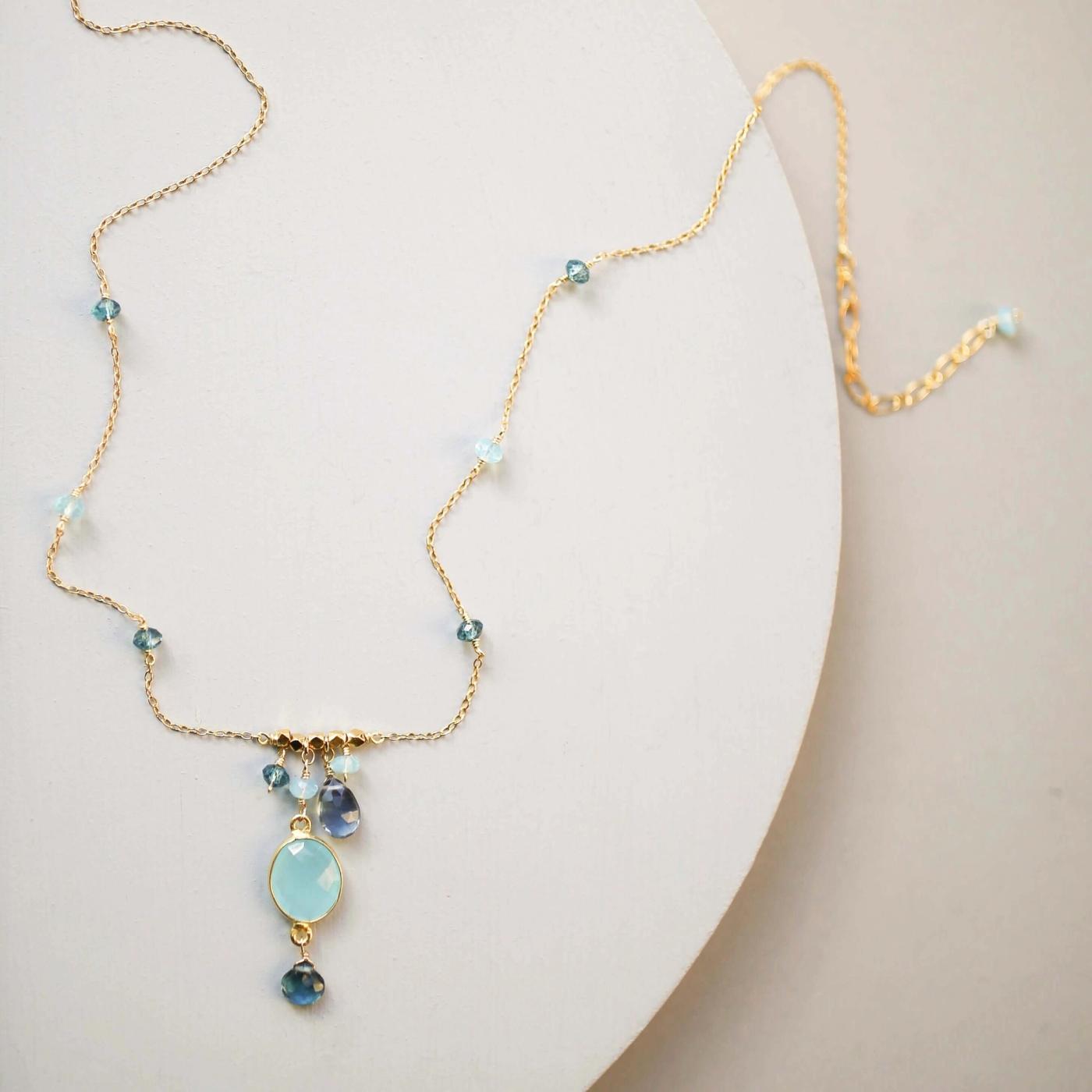
A few things to check before you add one to your cart: metal (gold vermeil or rhodium-plated silver), the stone itself, chain length, and whether you're buying a single pendant or a piece meant to anchor a layered set.
On materials, here's exactly what you're getting with Parken: gold pieces are 14k gold plated over fine .925 sterling silver, and silver pieces are rhodium plated over .925 silver. Both are built to resist tarnish with normal care, though neither is solid gold, and it's worth knowing that going in.
Popular bezel stone options include smoky quartz, labradorite, blue chalcedony, and aqua chalcedony. Each one brings its own color depth and pattern, since these are natural stones rather than lab-made glass. A smoky quartz bezel might lean warm and golden-brown in one piece and deeper charcoal in the next.
One honest care note: keep plated pieces away from water, lotion, and perfume. None of that is unique to bezel settings, but it's the single biggest thing that determines how long the finish stays looking new.
Generally yes. A bezel wraps metal fully around the stone's edge, so there's no raised prong to catch on clothing or bend out of shape, which makes bezel settings a sturdy choice for jewelry you wear daily. Prong settings expose more of the stone for extra sparkle but offer less edge protection.
The bezel setting itself is fixed to the stone and isn't adjustable, but the chain length is a separate piece and often comes in a specific length listed on the product page. If you need a different chain length, it's best to check the product details or reach out before ordering, since Parken's pieces are made to order and can't be changed once production starts.
Bezel settings work beautifully with translucent and opaque stones alike, which is why you'll see them used for smoky quartz, labradorite, blue chalcedony, and aqua chalcedony. Because these are natural stones, each one has its own color depth and pattern, so no two bezel pendants look exactly alike.
Sterling silver and quality plating are generally a better choice than cheap base metals for many people with sensitivities, and Parken's bezel necklaces are made with 14k gold plating or rhodium plating over fine .925 Italian silver. That said, everyone's skin reacts differently, so if you have a known metal allergy it's worth checking with your dermatologist first.
Wipe the piece gently with a soft, dry cloth after wearing and store it away from moisture when not in use. Keep it away from water, lotion, perfume, and chlorine, since these can wear down the plating faster over time, and the setting isn't made for swimming or showering.
A bezel necklace, in short, is a minimal, durable way to wear a single real gemstone every day without babying it.
If that sounds like your kind of everyday jewelry, take a look through Parken's bezel necklace collection and see which stone and metal combination catches your eye. And if you'd rather wait and see what's coming next, join the newsletter for new bezel styles and styling tips as they launch.

Subscribe to our email list to get early access to new arrivals and exclusive offers.
Leave a comment