Cart
Your cart is empty
Looks like you haven’t added anything yet, browse new arrivals below!
Continue Shopping
Looks like you haven’t added anything yet, browse new arrivals below!
Continue Shopping
Someone asks for "that pendant" and means the whole necklace. Someone else says "necklace" when they're really pointing at one tiny charm hanging in the middle of it. It's a fair mix-up.
Here's the actual distinction. A pendant is a single piece, a stone, a charm, a coin, that hangs from a chain. A necklace is the full thing worn around your neck, chain included. So every pendant lives on a necklace. But plenty of necklaces don't have a pendant at all, they're just a chain, a row of bezel-set stones, or a strand of pearls with nothing dangling from the center.
Once you see the pendant vs necklace difference laid out like that, choosing gets a lot easier. This isn't jewelry trivia for its own sake. It's the difference between picking a piece that reads as a focal point and one that works as a flexible base you can layer, gift, or wear every single day without thinking twice. We'll walk through the structure, how each one styles, and which one fits a given outfit, gift, or moment.
Structurally, a pendant is one hanging element attached to a chain by a small loop or bail, think a single gemstone, an initial, a coin. A necklace is everything, the whole worn piece. It might include a pendant. It might not. A chain on its own is a necklace. A strand of pearls is a necklace. Neither one has a "pendant" in the technical sense.
That structural gap shows up in how each one actually looks on. A pendant necklace pulls your eye to one spot, usually right at the collarbone. A plain chain, a bezel chain, a Y-necklace, or a strand of pearls spreads the interest evenly along the neckline instead of parking it in one place.
It also changes how each behaves in a stack. A single pendant works best as the anchor, the boldest or longest piece in the mix, with everything else built around it. Plain chains and cluster necklaces are made to sit close together without any one of them fighting for attention. Try stacking two pendants of similar size and you'll see the problem immediately, they compete instead of complementing.
Versatility is another real difference, and it's one people don't think about until they're buying. A well-designed pendant can sometimes move to a different chain for an entirely new look. A one-piece necklace, like a strand or a cocktail chain, is fixed as it is. What you buy is what you wear.
And then there's what each one says. Pendants tend to read as personal, a birthstone, an initial, a symbol that means something specific to the person wearing it. Plain necklaces read more minimal, more everyday, less "this represents something" and more "this just looks good with everything."
| What you're comparing | Pendant necklace | Plain or strand necklace |
|---|---|---|
| Structure | Hanging element plus chain | Chain or strand, no hanging piece |
| Visual focus | One central point | Spread evenly along the neckline |
| Best use in a stack | Anchor piece | Base layer |
| Can swap pieces | Often yes | No, it's one fixed piece |
| Reads as | Personal, meaningful | Minimal, everyday |
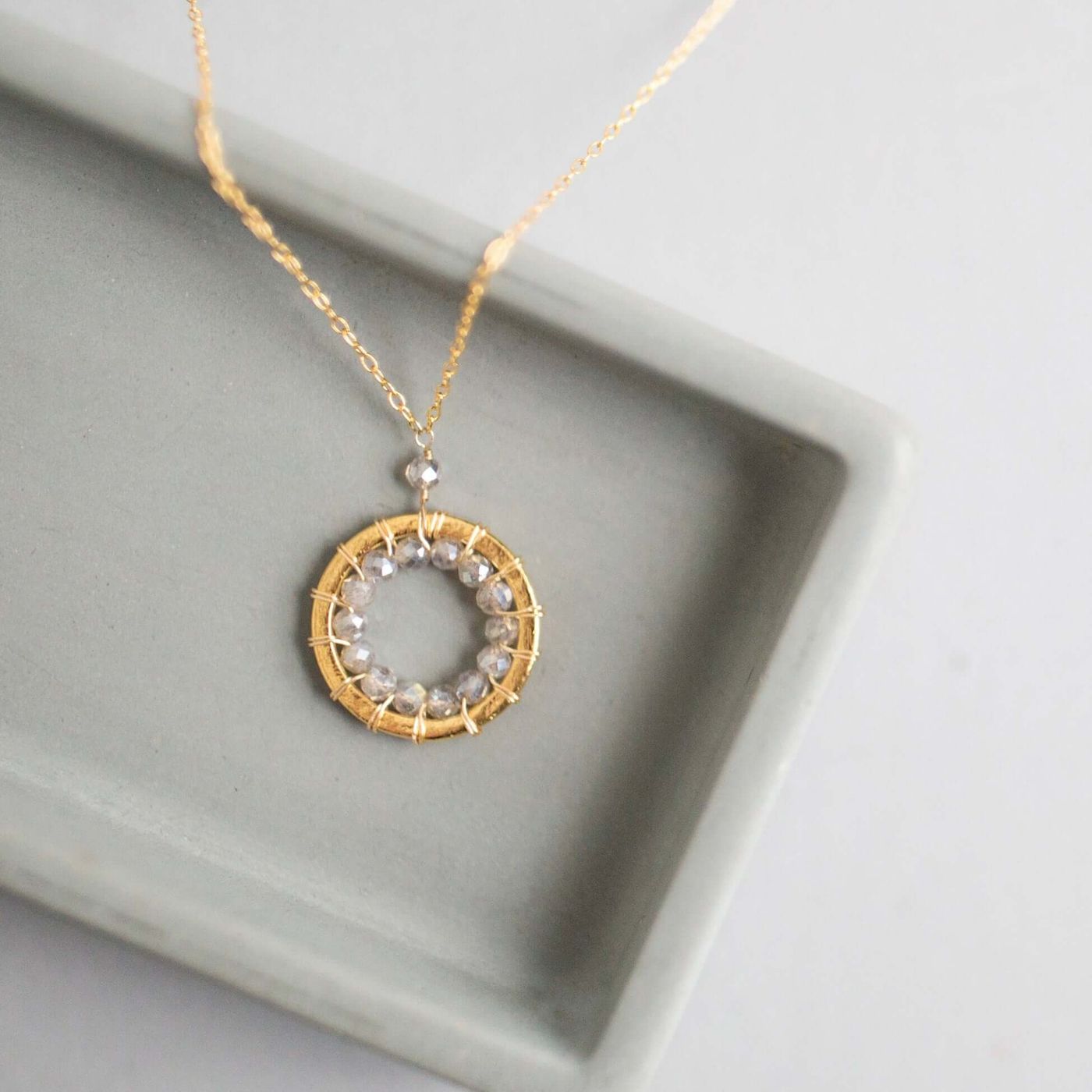
Length matters more than people expect. A pendant generally looks best at 16 to 18 inches, so it sits right at or just above the collarbone instead of disappearing under a crew neck or turtleneck. Go longer than that and you risk burying the one detail you bought the piece for.
If you're layering, add a second plain chain that's 2 to 3 inches shorter or longer than the pendant. That gap keeps the pendant as the clear focal point instead of competing for attention with another statement piece at the same length.
Our halo pendants are a good example of this in action, a single gemstone ringed in smaller stones, built to be the one thing your eye lands on. The yoga pendants do something similar with a softer, more rounded stone shape. Either way, the whole design assumes it's working alone at the center of the look, not sharing space with something equally loud.
One thing we like about a good pendant: it does double duty. Wear it solo for every day, then add a chain or two for evening. No need to buy a second piece just to dress it up.
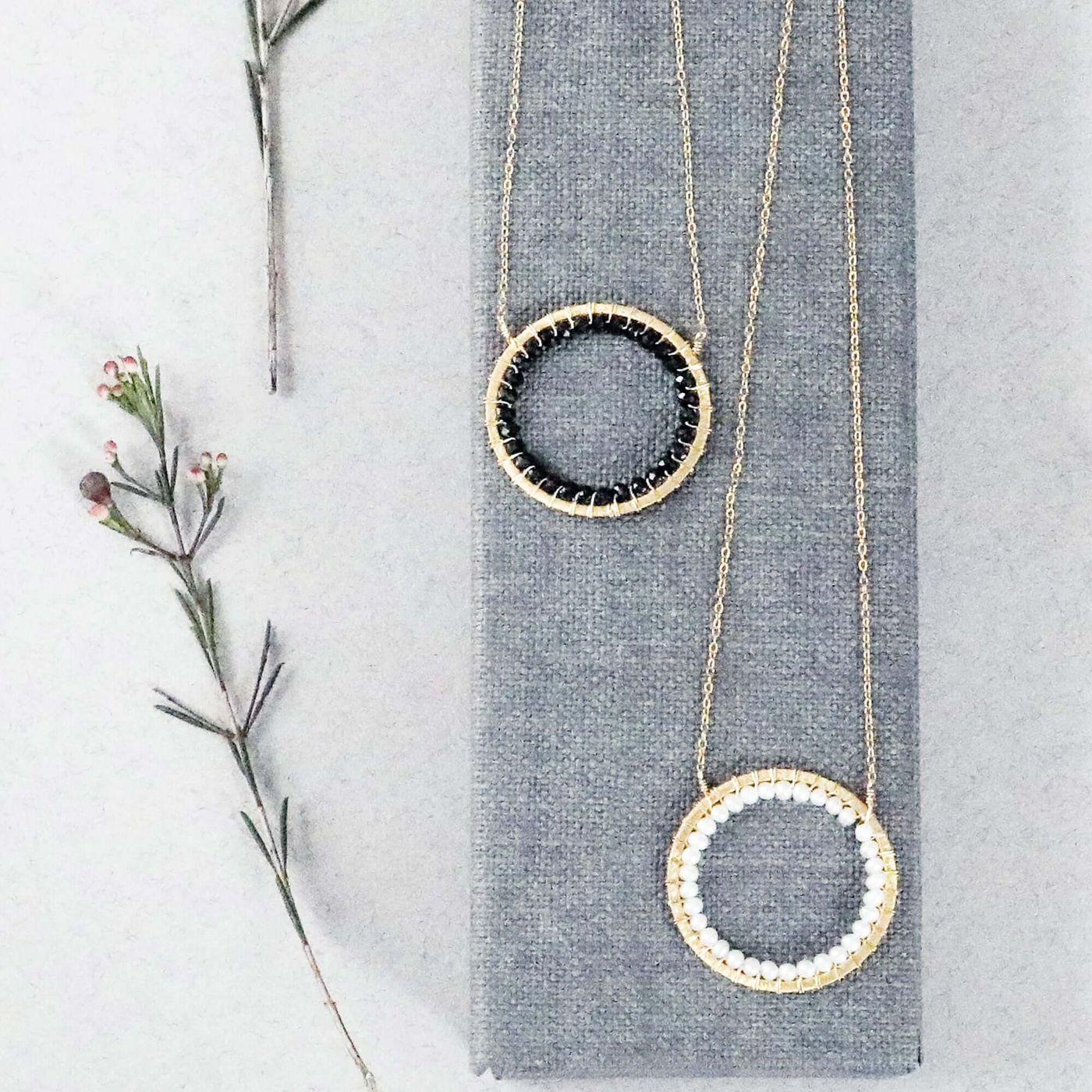
Chain-only and strand necklaces, bezel chains, pearl strands, cluster necklaces, are the workhorses of any layered look. They have even weight all the way around and no single heavy point, which makes them the natural base layer under something bolder.
A formula that works almost every time: start with a 14 to 16 inch choker-length chain closest to your neck, add an 18 inch piece on top of that, then finish with a longer 20-plus inch pendant or station necklace as the outermost layer. Our layering chains collection is built around exactly this kind of stacking, nothing fights for space because nothing is trying to be the main event.
A plain necklace also just works better on its own sometimes. High necklines, busy prints, anything already visually loud, a single clean chain holds its own without adding competition. Same goes for days you want understated over statement.
Pearls deserve their own mention here. A pearl necklace is the classic example of a plain necklace that never reads as plain, somehow. Polished, finished, complete, no pendant required.
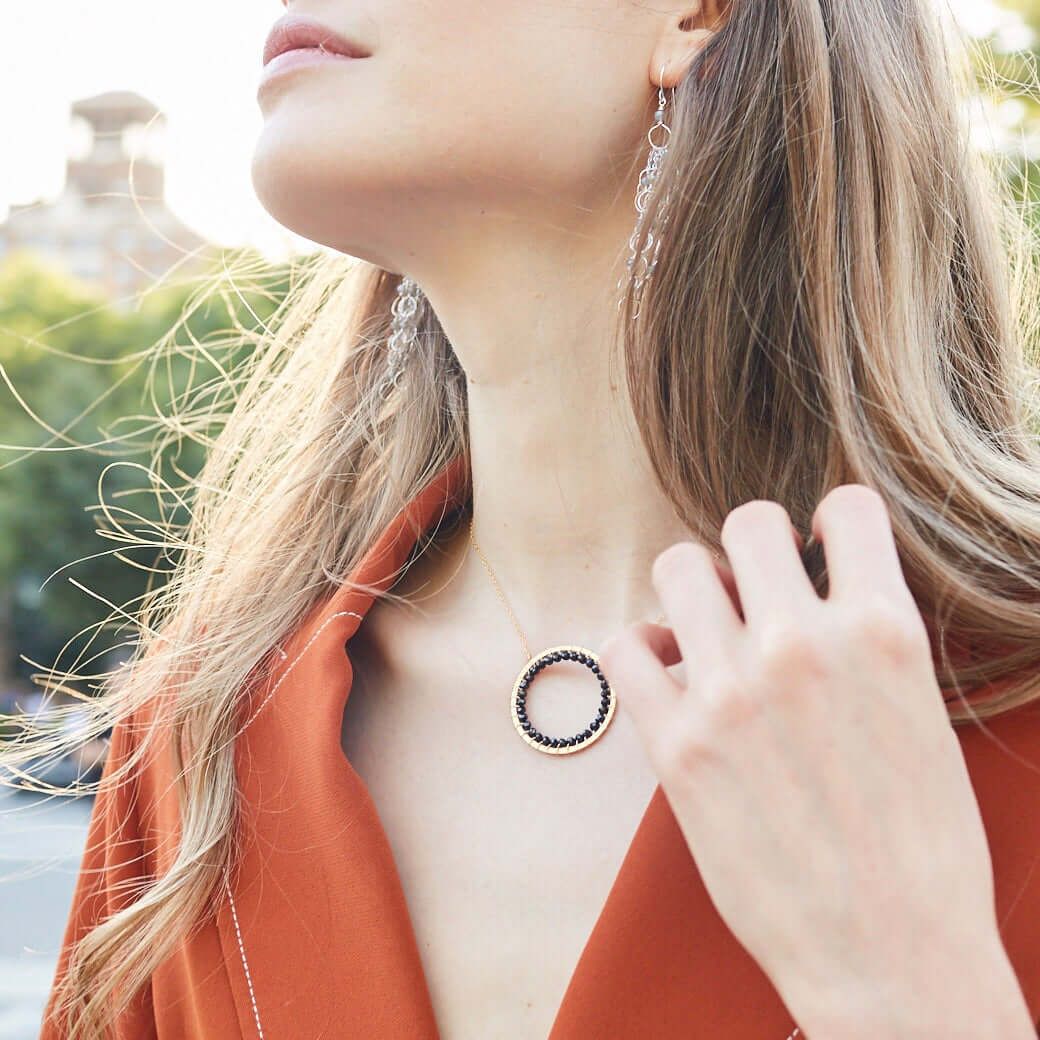
A plain chain is beautiful. It is not, however, going to carry someone's birthstone or initial. That's where a pendant earns its keep as a gift: one stone, one symbol, and suddenly the piece means something specific to the person wearing it instead of just looking nice on anyone.
Birthdays, graduations, Mother's Day, a daughter's first "real" piece of jewelry, these are the moments where a pendant makes sense in a way a plain necklace usually doesn't. You're not just picking a shape, you're picking a stone that's theirs, a color they actually wear, a detail that says you paid attention. Browse gifts for her if you're shopping with a specific person in mind and want that kind of personal landing point.
It's also just easier to personalize. A strand necklace is what it is, fixed length, fixed stones. A pendant lets the stone itself carry the whole decision, swap the gem and you've swapped the entire feel of the gift. Jewelry works best as a kind of personal signature. A pendant is usually the fastest way to make that happen.
Pendant or plain chain, the care rules don't change. Keep plated pieces away from water, lotion, perfume, and chlorine, that's what protects the finish over time.
Parken necklaces and pendants are 14k gold plated over sterling silver, or rhodium plated over sterling silver, not solid gold. That's a feature, not a shortcut, it's what keeps the price accessible without cutting corners on the silver underneath. But it does mean gentle care goes a long way toward keeping the finish looking new.
One small habit worth building: store pendants flat, or hang them separately from other pieces. A tangled chain wrapped around a delicate bail is one of the easiest ways to stress a loop it wasn't built to handle.
Not quite. A pendant is usually a single, often larger focal piece like a gemstone or coin that defines the necklace, while a charm is typically smaller and meant to be collected or added alongside others on a chain or bracelet. Both hang from a chain, but a pendant is usually the main event, and a charm is more of an accent.
Yes, plenty of necklaces are designed to be worn on their own with no hanging pendant at all, like a chain, a pearl strand, or a cluster necklace. These work well as a base layer for stacking or as a simple, polished piece on their own.
A length of 16 to 18 inches usually lets a pendant sit right at or just above the collarbone, which is where it reads best and doesn't disappear under a neckline. If you plan to layer it with other necklaces, choose the longest piece in the stack so the pendant stays the visual anchor.
Yes, a pendant is often the best piece to anchor a layered look since it gives the eye one clear focal point while shorter chains fill in behind it. We'd suggest keeping about two inches of length between each piece so the pendant and the chains underneath don't tangle or overlap.
A pendant is usually the stronger gift choice because a single gemstone or symbol can be matched to someone's birthstone, favorite color, or a specific milestone, which gives the gift more personal meaning. A plain chain or strand necklace is a lovely gift too, but it leans more toward everyday versatility than a meaningful centerpiece.
If you want a focal point with meaning behind it, go with a pendant. If you want a flexible base you can build a stack around, go with a plain necklace. That's really the whole decision.
Most people end up happiest starting with one versatile pendant and one or two plain chains. That combination covers daily wear on its own and gives you a layered look any time you want more. You're not choosing one path forever, you're just deciding what to reach for first.
If you want to see what a focal point actually looks like in person, go browse the pendant collection and find a gemstone that feels like you, or like whoever you're shopping for. And if you're not ready to buy anything yet, join our newsletter for a low-pressure way to keep an eye on new pieces as they come in.

Subscribe to our email list to get early access to new arrivals and exclusive offers.
Leave a comment