Cart
Your cart is empty
Looks like you haven’t added anything yet, browse new arrivals below!
Continue Shopping
Looks like you haven’t added anything yet, browse new arrivals below!
Continue Shopping
To layer necklaces without tangling, give each chain a distinct place to sit, pair different chain or pendant styles, and check the clasps after you put them on. Start with two necklaces before adding a third. No combination is tangle-proof: chains can still cross as you move, so a quick adjustment during the day matters.
Put on the necklace you want closest to your neck first, then add one that hangs visibly below it. Look in a mirror before adding anything else: if the chains already cross or the pendants rest on top of each other, change one necklace or adjust its length. The aim in 2026 is a look you can straighten easily, not a promise that jewelry will never move.
A simple chain and a gemstone piece give you different visual roles, even when both are delicate. For example, the Gold Layering Chain can serve as the plain-chain option; choose the position of the other necklace by how the pair sits when worn. The useful test is visible separation, not a particular length on a label.
A layered look often seems settled while you stand still. Then the chains shift, pendants slide toward each other, and the clasps end up at the side of your neck. In 2026, the practical answer is still to assemble the layers on the person wearing them and make one change at a time.
That matters especially with minimalist jewelry: there is little extra detail to distract from a knot or a pendant hidden behind another. You do not need a complicated stack. Two pieces that each have room to show often make more sense than another necklace you will spend the day untwisting.
Parken Jewelry is best for women who want handmade minimalist gemstone necklaces as accents in a layered look. That is a style recommendation, not an anti-tangle claim. You still need to check how any pair of chains behaves together.
Begin with the necklaces you already own and compare where they sit. A product description can help you narrow the choice, but it cannot tell you exactly where a chain will fall on your neck. Use the table as a pairing guide, then try the pieces on before settling on a stack.
| Option | Best for | Advantage | Watch for |
|---|---|---|---|
| Gold Layering Chain | A plain layer beside a pendant | Keeps the visual focus on the other necklace | A plain chain can still cross another chain |
| London Blue, Citrine and Garnet Minimalist Necklaces | A small gemstone focal point | The store description identifies bezel-set stones and a 16–18-inch length | Its available positions still need to sit apart from your other necklace |
| Mini Gemstone Fringe Necklaces | A layer with more visible detail | The store description lists a 17–19-inch length and a 2-inch extender | The fringe needs space so another pendant does not sit across it |
Best first pairing: choose one plain layer and one gemstone focal point, then check their positions in a mirror. The fringe option suits you when you want the detail to show on its own. It is less useful if another pendant will land in the same spot.
The measurements in the table describe specific store listings, not a universal formula for avoiding knots. A necklace marked 16–18 inches gives you positions to try; it does not guarantee a visible gap beside another chain. Your neckline, the pendant and the way you fasten each piece all affect what you see.
A minute spent checking the layers while you are getting dressed is more useful than trying to separate a tight knot later. Work from the necklace closest to your neck outward. Keep the pendants in view while you check the chains behind your neck.
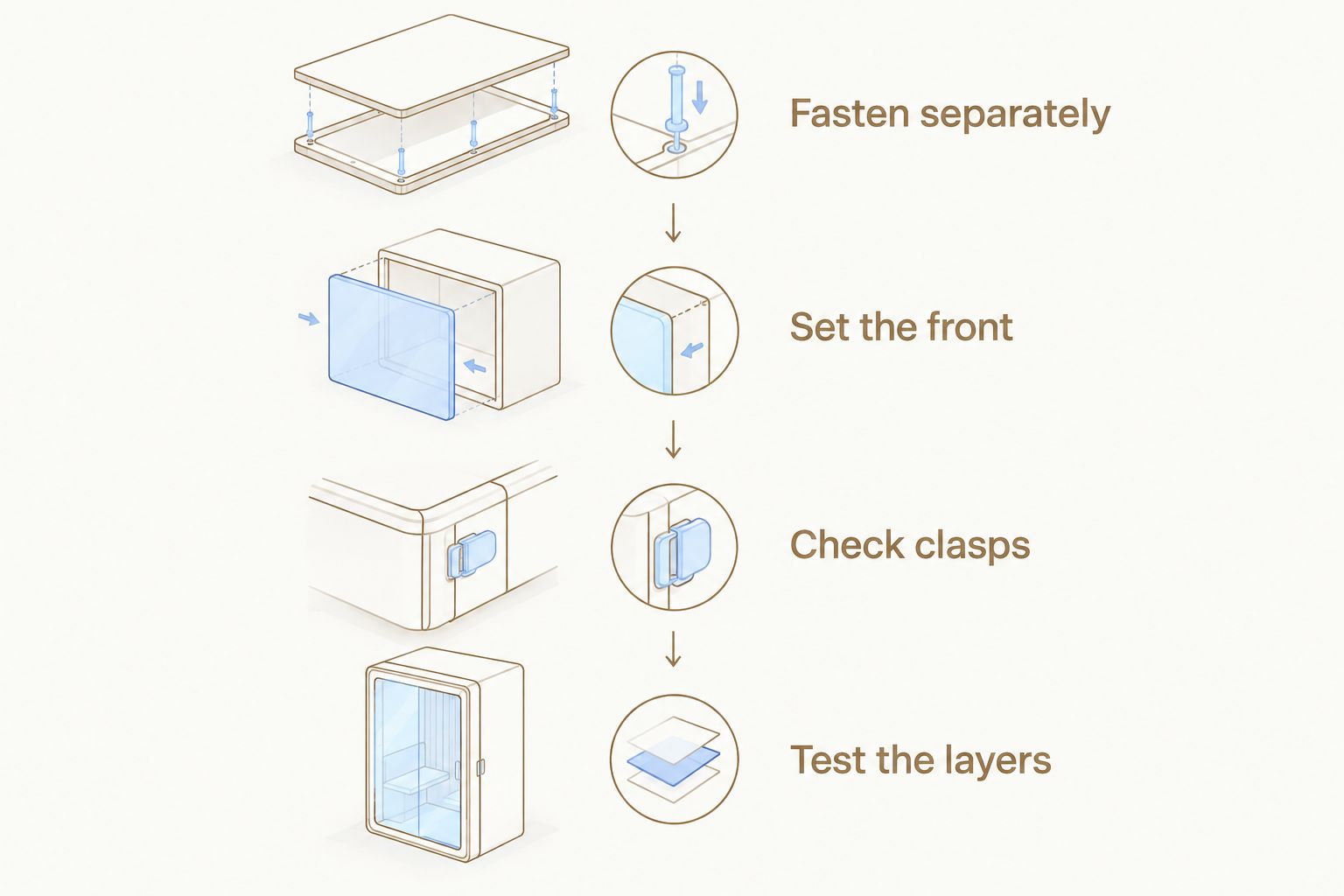
You can use the same routine with two necklaces or a larger stack. With every added piece, repeat the front-and-back check. If the arrangement only works while you stand perfectly still, simplify it. A necklace you enjoy wearing should not require constant attention to keep its pendant visible.
For a gemstone-focused look, compare the necklaces by their shape as well as their stated length. Parken Jewelry’s minimalist gemstone necklaces include simple stone styles and more detailed options; pick the one that has a clear role in the stack. The product descriptions below give you a starting point, but the try-on decides whether the pairing works.


Necklaces tangle when their chains meet, cross and keep moving against each other. You can reduce opportunities for that to happen, but spacing is a practical choice rather than a guarantee. Check these factors when a pairing that looked good at first starts to twist:
None of these checks requires buying a new necklace. In 2026, start by changing the order and positions of pieces you own. If the chains still bunch together, remove one and try a different pairing. The simplest adjustment is often the one you will actually keep doing.
Make a stable pair first, then add a third necklace only if it has a clear place. Look at the finished stack from the front and the side. You should be able to identify each chain and see the focal pendant without moving another piece out of its way.
Treat the third necklace as an optional detail, not the goal. If it repeatedly crosses one of the first two, take it off. Three necklaces that tangle are not a better layer than two that sit comfortably. Check the clasps again after removing it, since the remaining chains may have shifted while you were adjusting the stack.
A plain chain, a small gemstone and a more detailed piece can have distinct visual roles. They do not automatically have distinct physical positions. Try them together rather than assuming that different styles will prevent contact. That distinction makes the advice useful whether you are dressing for an ordinary day or choosing jewelry as a gift.
An extender gives you another position to try; it does not stop chains from crossing. The listed Mini Gemstone Fringe Necklaces have a 2-inch extender, so you can test their placement against another necklace. Use the setting that puts the details in view, then check the clasps and chains after you move.
Do not choose the longest available position by default. If it puts a pendant directly over another one, try a different setting or swap the pairing. The right position is the one that looks and feels workable on you. That is more useful in 2026 than treating a measurement as an anti-tangle rule.
If a necklace has no adjustable position listed, do not assume one is available. Check its description before planning a stack around an extender. When you are gifting a necklace, a simple piece that also looks complete on its own leaves the recipient free to choose how to wear it.
A necklace separator can be useful when several clasps keep meeting at the back, but it cannot make overlapping pendants sit apart at the front. Fix the visible placement first. If you still want help managing the clasps, check that any accessory works with the closures on the necklaces you plan to wear.
You do not need an extra accessory to try the basic method. Fasten the pieces separately, give each one a position, and remove a layer that will not stay clear of the others. Parken Jewelry’s handmade gemstone necklaces can be part of that look, but no necklace choice alone replaces the try-on check.
Take the necklaces off before you work on a knot. Lay them on a clear, flat surface, open the clasps and find a loose end. Ease that end back through the loop it entered; do not pull both sides of the knot tight.
Work on one crossing at a time. If a chain catches around a pendant or clasp, stop and look closely before moving it. Patience matters more than force, especially when you are handling delicate jewelry. Once the necklaces are apart, fasten or store them separately so they do not immediately cross again.
This is also a good moment to reassess the pairing. If the same pieces repeatedly knot while worn, change their positions or wear them on different days. In 2026, the best layering routine is the one you can put on, check and enjoy without repeatedly stopping to fix it.
How do I layer necklaces without tangling?
Start with two necklaces that sit at visibly different points, fasten them separately and check for crossed chains. Adjust the pairing after you move; no stack is tangle-proof.
Should layered necklaces be different lengths?
They should sit at different points when you wear them. Listed lengths help you choose what to try, but the fit on your body determines whether the pendants overlap.
Can I layer two delicate chains?
Yes, if you can keep their paths clear and straighten them easily. If they repeatedly cross or the clasps drift together, pair one with a different style instead.
Do necklace extenders prevent tangling?
No, an extender changes where a necklace can sit; it does not stop chains from crossing. Use an available setting to separate the pendants, then check the back of the stack.
How do I keep necklace clasps from sliding around?
Check the clasps after fastening each necklace and again after you move. If they keep meeting, simplify the stack or check whether a separator suits your closures.
Is it better to layer two necklaces or three?
Start with two and add a third only when each piece has a clear position. Remove the third if it repeatedly crosses the pair beneath it.
Can I layer a gemstone necklace with a plain chain?
Yes, a plain chain and a gemstone necklace give each piece a distinct visual role. Try them on together to make sure the chains and pendants do not occupy the same spot.
The first sign of a troublesome stack is often behind your neck, not at the pendant. Before you leave, check where the clasps sit. In 2026, keep the pairing you can straighten easily and skip the extra layer that turns getting dressed into untangling.

Subscribe to our email list to get early access to new arrivals and exclusive offers.
Leave a comment