Cart
Your cart is empty
Looks like you haven’t added anything yet, browse new arrivals below!
Continue Shopping
Looks like you haven’t added anything yet, browse new arrivals below!
Continue Shopping
Iolite is the gem-quality form of cordierite, a mineral that occurs naturally in a violet-blue that can shift toward smoky gray or clear depending on how the light hits it. It's a quiet, moody color. Not quite blue, not quite purple, somewhere in between.
A lot of people first meet iolite under a different name: water sapphire. That nickname comes from the gem's sapphire-like blue and its watery clarity, and it's also exactly why so many shoppers end up asking how rare iolite actually is. If it looks like sapphire and gets compared to sapphire, it's natural to wonder whether it's priced and sourced like sapphire too. Spoiler: it isn't, and that's good news for your wallet.
Iolite is one of the gemstones we work with at Parken, set into handmade pieces from our iolite collection. So we get asked about it a fair amount, usually some version of "is this a cheap sapphire or an actual rare stone?" The honest answer is both, kind of. Let's get into why.
Here's the nuance that usually gets lost: cordierite, the mineral itself, isn't scarce. It shows up in metamorphic rock in a handful of regions around the world. What's genuinely hard to find is cordierite that's clean enough, saturated enough in color, and large enough to cut into a nice gem. That gap between "the mineral exists" and "the gem-quality material exists" is where iolite's rarity reputation comes from.
So how rare is iolite in practice? Fine iolite over a few carats, with a deep, even violet-blue and no cloudiness, is genuinely tough to source. Jewelers who work with it will tell you that the good rough gets snapped up fast. But iolite is still more available, across the board, than top-tier sapphire or tanzanite. That relative availability is a big part of why iolite stays affordable while looking every bit as rich on the hand or at the ear.
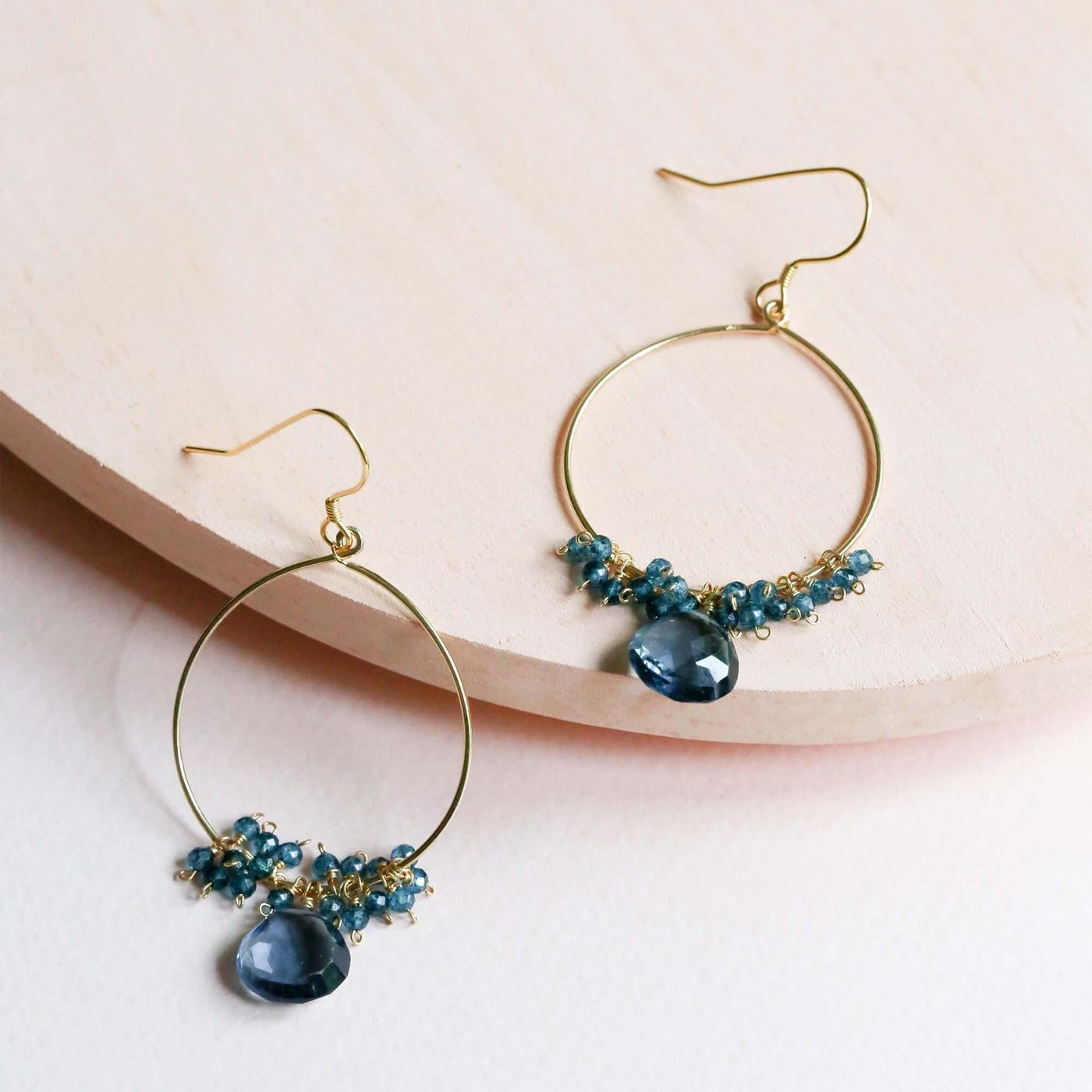
Not all iolite is created equal, and the reason comes down to a quirk called pleochroism. Cut the same rough crystal from three different angles and you'll see three different colors: violet-blue from one face, pale straw yellow from another, nearly clear from a third. It's a strange thing to witness in person.
That quirk makes cutting iolite a bit of a gamble. A cutter has to orient the stone so the finished gem shows its best blue face up, and that often means sacrificing size or yield from the rough. A lot of material gets cut away or set aside because the color didn't land right. That waste is part of what keeps the finest pieces scarce.
Where it comes from matters too. Most of the world's iolite is mined in India, with additional sources in Sri Lanka, Madagascar, Tanzania, and Norway. That's not a huge number of producing regions compared to some other gems, and supply from any one of them can tighten depending on mining conditions in a given year.
The stones most collectors chase have a deep, saturated violet-blue with little to no gray or brown creeping in. Add size and clarity to that wishlist and the pool gets small fast: a small, included iolite is easy to find, but a bigger stone that's both eye-clean and richly colored takes real searching.
Since iolite so often gets compared to its blue and violet cousins, it's worth laying the three side by side.
Blue sapphire sits at the top of this group. It's rarer than iolite in fine qualities, and that rarity shows up directly in price, with top sapphires reaching far higher per-carat values than iolite ever does. Tanzanite tells a similar story from a different angle: it comes from essentially one mining area near Mount Kilimanjaro in Tanzania, and that single-source supply is a big part of why tanzanite commands a premium over iolite.
Iolite, by comparison, is the accessible member of the violet-blue family. It shares that cool, saturated color range with sapphire and tanzanite but comes from more mining regions and a more available supply of rough. That's not a knock on iolite. It's just a different value tier, the kind of gem you can wear generously instead of saving for one special piece. If you're drawn to that whole cool-toned palette rather than one specific stone, it's worth browsing blue gemstone jewelry to see how iolite sits next to its relatives.
Rarity and price are connected, but not in the simple way people assume. Iolite's relative abundance, compared to sapphire or tanzanite, is exactly why it stays affordable even though well-colored, clean material is genuinely hard to track down. You're not paying a scarcity tax the way you would with a comparable sapphire.
Price isn't only about how rare a stone is, either. Color, cut quality, and how a gem actually wears day to day shape its appeal just as much as supply numbers do. A well-cut iolite with rich color can out-charm a bigger, duller stone of a "rarer" gem any day.
So if you're wondering whether an affordable price tag means you're getting a lesser stone, you're not. It just reflects where iolite sits on the supply curve relative to sapphire and tanzanite, not a compromise on what you're actually wearing.
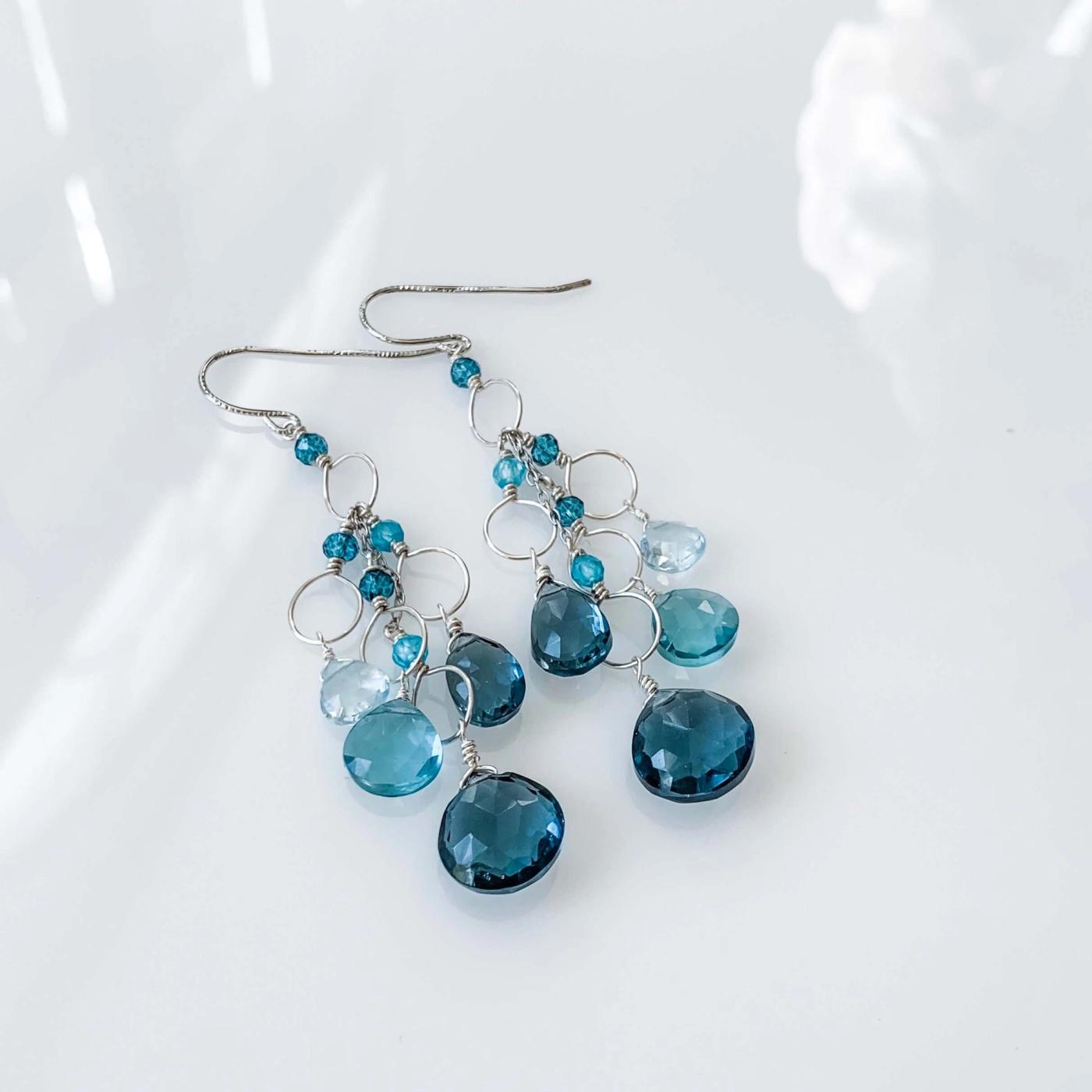
This balance, uncommon enough to feel special, available enough to stay affordable, is part of why we like working with iolite at Parken. Every piece we make is made to order by hand in the USA, which means we're not buying stones in bulk and marking them up to cover mass production. You're paying for the stone and the craftsmanship, not a middleman's margin. You can read more about how that process works on our about page.
Because iolite is a natural stone, no two pieces match exactly. One might lean slightly more blue, another a touch more violet. We think that's part of the charm, not a flaw to apologize for. It means the piece you get really is yours.
Color-wise, iolite is an easy one to style. That violet-blue sits well against both gold vermeil and sterling silver, and it layers naturally with other cool-toned stones without fighting for attention. There's something nice about wearing a color this uncommon as a daily habit instead of saving it for one big occasion. A stone this quietly rare deserves to be lived in, not locked away.
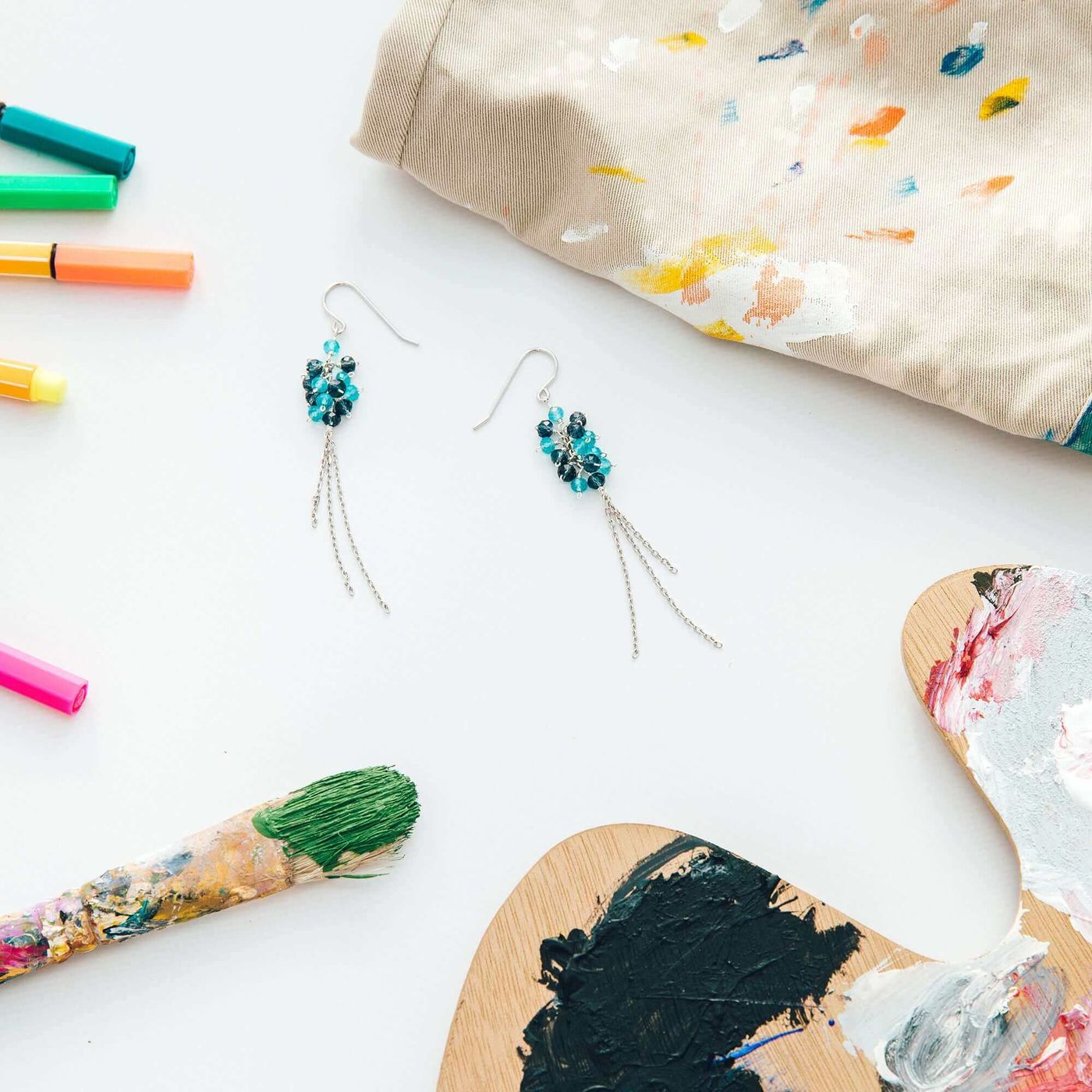
A few things to check before you buy. Look for consistent, saturated violet-blue color across the face of the stone. Avoid anything that looks washed out, overly gray, or muddy, since that usually signals a lower-grade stone or a cut that didn't account for iolite's pleochroism.
Speaking of which: because iolite shows different colors depending on viewing angle, a well-cut stone should be oriented so its best blue shows face up, not hidden at an angle you'll never actually see when you're wearing it.
Care-wise, treat iolite jewelry the way you'd treat any natural stone set in plated metal. Keep it away from water, lotion, and perfume, and take it off before you shower or swim. That's what protects the setting and keeps the piece looking its best for years.
If you want to see the color range in person, our iolite Kensington necklace, iolite yoga pendant, and iolite and gold earrings all show the stone set a bit differently, which is a good way to get a feel for how the color shifts from piece to piece.
Iolite falls under the semi-precious category, a term that really just reflects market tradition rather than quality. It can still show rich, saturated color and genuine rarity in its finest grades, it's simply more available than the four classic precious stones (diamond, ruby, sapphire, emerald).
Iolite is often nicknamed 'water sapphire' because of its clear, violet-blue color, even though it's a completely different mineral (cordierite, not corundum). You may also see it called dichroite, a reference to the way it shifts color depending on the angle it's viewed from.
No, fine blue sapphire is rarer and significantly more expensive than iolite. Iolite is uncommon in large, clean, well-colored stones, but it's mined in more regions and in greater supply than top-quality sapphire, which is part of why it's a more accessible choice.
Genuine iolite shows pleochroism, meaning it looks violet-blue from one angle and pale yellow or clear from another, a trait synthetic or imitation stones typically don't replicate. If you're buying jewelry rather than loose stones, choosing a brand that's transparent about using real, natural gemstones is the simplest way to be sure.
Iolite is better thought of as a beautiful, wearable stone than a financial investment, since its value is tied to color and clarity rather than market speculation. We'd say its real worth is in how often you'll actually reach for it, an uncommon violet-blue that works with everyday layering.
So, how rare is iolite? Uncommon enough in fine quality to feel like a genuine find, common enough in overall supply to stay far more affordable than sapphire or tanzanite. That combination is rare in its own right. Most gems are either easy to get and unremarkable, or remarkable and priced accordingly. Iolite splits the difference.
If you want to see what that looks like in person, browse our iolite collection and see the color range for yourself across necklaces, pendants, and earrings. And if you'd like first look at new pieces as they're made, join our newsletter, we send it out to people who'd rather hear about new stones before they sell out than scroll for them later.
Iolite isn't a stone you see on everyone. For a quiet, uncommon signature color, that's exactly the point.

Subscribe to our email list to get early access to new arrivals and exclusive offers.
Leave a comment