Cart
Your cart is empty
Looks like you haven’t added anything yet, browse new arrivals below!
Continue Shopping
Looks like you haven’t added anything yet, browse new arrivals below!
Continue Shopping
Green and gorgeous, but not the same stone. If you've been shopping for emerald jewelry and kept landing on something called "green amethyst," you're not losing your mind, and you're not the only one. The two get confused constantly, and in a green amethyst vs emerald comparison, the differences matter a lot more than the color similarity suggests.
Here's the root of the confusion: green amethyst isn't a variety of emerald, and it's not beryl at all. It's quartz. The gem trade calls it prasiolite, a naturally green form of quartz that happens to share amethyst's crystal family. So the name "green amethyst" is really a marketing term, not a mineralogy term, and it throws people off from the start.
Add to that the fact that both stones land in a similar cool, leafy green family, and you've got a recipe for mixed-up search results. Someone typing "emerald necklace" into Google scrolls past plenty of green amethyst pieces that look close enough at a glance. They're not trying to be misled. The colors genuinely overlap.
This guide walks through how to tell them apart: color, durability, price, and which one actually fits your budget and your daily life. One quick note before we get into it: Parken's green amethyst pieces are real, natural quartz. Not lab-grown, not dyed glass dressed up to look the part.
Green amethyst tends to sit on the softer end of green. Think pale sage, cool mint, sometimes a faint gray undertone. It's a gentle color, and it's usually pretty consistent from stone to stone.
Emerald goes the other direction. Fine emerald reads as a deep forest green, sometimes with a blue cast, and the saturation is the whole point of its appeal. But almost every natural emerald carries visible inclusions, what gemologists call jardin (French for garden), because the internal fractures and mineral traces look like tiny gardens under magnification. That's not a flaw to be hidden. It's practically a signature of the real thing.
Which flips the usual logic on its head: with emerald, imperfection is a good sign. Green amethyst, meanwhile, tends to look cleaner and more transparent to the naked eye, with few or no visible inclusions.
So here's a practical tip if you're standing in front of a green stone trying to figure out what it is. If it looks nearly flawless and the price feels low, it's far more likely to be green amethyst, or possibly glass, than it is to be emerald. Clean and cheap and green almost never means emerald.
Once you get past color, the real differences show up in how these stones actually hold up and what they cost.
| Factor | Green Amethyst | Emerald |
|---|---|---|
| Mohs hardness | 7 | 7.5 to 8 |
| Everyday durability | Good for daily wear | Prone to chipping due to inclusions |
| Typical price | Affordable, often sold by the piece | Can run hundreds to thousands per carat |
| Care needs | Avoid water, lotion, perfume, ultrasonic cleaners | Same, plus extra care around oil treatments |
| Best use | Daily rings, stacking bracelets, layered necklaces | Special-occasion, heirloom pieces |
A couple of those rows are worth unpacking. Emerald's hardness number looks better on paper, 7.5 to 8 versus quartz's 7, but numbers don't tell the whole story. Most emeralds are heavily included, and all those internal fractures make the stone more brittle than the Mohs scale suggests. A hard knock that a green amethyst would shrug off can chip an emerald.
Price is the other big gap. Green amethyst is widely affordable and usually priced by the piece rather than strictly by carat weight. Fine emerald is a different world entirely, where quality stones can run into the hundreds or thousands of dollars per carat.
Care routines overlap more than people expect. Both stones should stay away from ultrasonic cleaners and harsh chemicals. But emerald carries an extra wrinkle: most emeralds on the market are oiled to fill surface fractures and improve clarity, and that oil can break down with heat, chemicals, or just time. Green amethyst just needs the usual gentle care, meaning no contact with water, lotion, or perfume if you want the color and shine to last.
That difference in fragility shapes how each stone actually gets worn. Green amethyst works in stacking bracelets and layered necklaces you put on and forget about. Emerald tends to end up reserved for special occasions, worn a few times a year, stored carefully in between.
And then there's availability. Green amethyst is abundant and easy to source at accessible prices. Good quality, natural, untreated emerald is genuinely rare, and that rarity is a big part of why it costs what it does.
Emerald carries centuries of symbolism: renewal, love, loyalty. It's the classic May birthstone, and that association alone makes it a popular choice for meaningful gifts.
Green amethyst's meaning draws more from amethyst's broader reputation. Amethyst as a whole is traditionally tied to calm and clarity of mind, and green amethyst inherits that association, often framed as a stone for balance and quiet focus.
None of this is a claim about healing or luck. It's tradition and folklore, the kind of thing people find meaningful without needing it to be scientifically proven. Both stones work as gifts for that reason.
If you're shopping for someone who loves emerald green but you want something they'll actually wear without worrying about it, green amethyst is worth considering as the alternative. Same mood, less fragility, friendlier price tag.
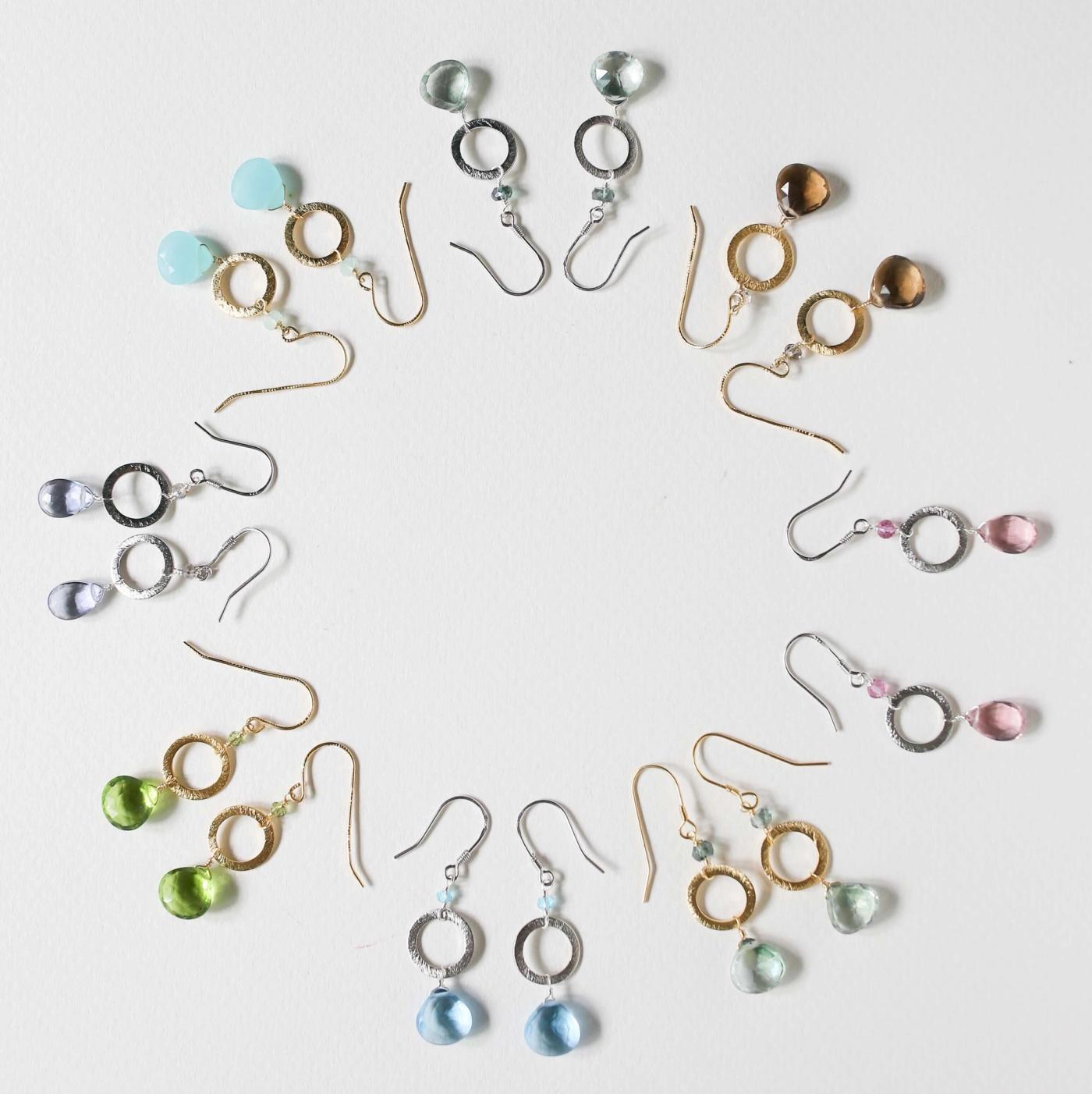
If you want jewelry you can layer, stack, and wear without thinking twice, green amethyst is the practical choice. It holds up to daily life in a way heavily included emerald just doesn't.
If you're after one statement piece for rare, formal occasions, something meant to be handled carefully and maybe handed down someday, emerald's cost and extra care might be worth it to you.
Parken's handmade, made-to-order pieces give you that green amethyst look paired with 14k gold vermeil or rhodium-plated silver at prices that don't require a special occasion to justify. And because these are natural gemstones, no two pieces look exactly alike. Slight variation in tone is part of what makes a green amethyst piece feel like yours, not something pulled off a shelf of identical copies.
Yes, green amethyst and prasiolite refer to the same stone: a naturally green variety of quartz. The name green amethyst is simply the more common term used in jewelry, even though it is not related to emerald or beryl.
Green amethyst is often chosen as an emerald-style alternative because it offers a similar green hue at a much more accessible price. It will not match emerald's deeper saturation, but it holds up well for everyday jewelry like necklaces, earrings, and stacking bracelets.
Green amethyst is a quartz stone with a Mohs hardness of 7, which makes it fairly resistant to everyday scratches. Like any gemstone jewelry, it is still best to avoid hard knocks and to keep it away from water, lotion, and perfume to protect the setting and plating.
Green amethyst is a form of quartz, which is abundant, while fine natural emerald is rare and often heavily included, which drives its price per carat much higher. That price gap is why green amethyst jewelry can offer a similar green look at a fraction of the cost.
Yes, green amethyst is a real, natural quartz gemstone, not a lab-created or dyed glass imitation. Parken's green amethyst pieces use genuine natural stone, and because natural stones vary slightly, no two pieces look exactly alike.
When it comes down to it, a green amethyst vs emerald decision comes down to three things: how deep you want the color, how much daily wear you need the stone to survive, and what you're comfortable spending.
If green amethyst sounds like the right fit, take a look at the green amethyst collection, including pieces like the green amethyst gold Isla necklace and the green amethyst silver drop earrings. Everything is designed in NYC and made to order by hand in the USA, so pieces typically ship within 3 to 14 business days.
And if you want first look at new gemstone drops and the occasional styling tip, join the newsletter. No pressure, just the good stuff when it's new.

Subscribe to our email list to get early access to new arrivals and exclusive offers.
Leave a comment