Cart
Your cart is empty
Looks like you haven’t added anything yet, browse new arrivals below!
Continue Shopping
Looks like you haven’t added anything yet, browse new arrivals below!
Continue Shopping
Pearls feel classic, but they're not all one shape, and the shape changes more than you'd think about how a piece looks and wears. Coin pearls vs round pearls is one of the first decisions you'll run into once you start shopping freshwater pearls instead of grabbing whatever's in a department store case. Both are genuine freshwater pearls, grown by a living mussel, not cast in a mold. The difference is in how that mussel grew them, and what that means for the way they catch light, sit against your skin, and fit into your jewelry box.
Coin pearls are flat, disc-shaped freshwater pearls, usually somewhere between 10 and 20mm wide. Think of a smooth, organic coin with a soft sheen instead of a printed face. They're prized for that wide, flat surface, which shows off luster in a way a smaller round pearl just can't.
Round pearls are the shape most people picture the second you say the word "pearl." Spherical, symmetrical, classic. They're the pearl of grandmother's strand and bridal studs.
Both are real freshwater pearls, grown in mussels, not imitation glass beads or shell pearls coated to look the part. And both will show natural variation, slightly different luster, a little surface texture here or there, because they're grown, not manufactured. From here, we'll get into how each shape actually forms, how they compare side by side, and how to pick between them based on how you actually want to wear your jewelry.
Pearl farmers don't just drop a bead into an oyster and wait. With freshwater pearls, they insert a small tissue graft into a mussel, and the mussel does the rest, layering nacre around that graft over months or years. The shape of the finished pearl depends a lot on the shape of that graft and how the mussel grows around it.
Coin pearls happen when the graft is tissue-nucleated and grows flat, pressed between the two valves of the mussel's shell. That pressure is what gives coin pearls their signature disc shape. It's a more natural, less controlled process, which is part of why coin pearls tend to be larger and more affordable for their size.
Round pearls take more precision. Getting a pearl to grow symmetrically in every direction requires more exact nucleation and, usually, more time in the water. That extra difficulty is a big reason perfectly round pearls cost more than coin pearls of a similar size.
Either way, no two pearls are identical. A little variation in shape, sheen, or surface marking isn't a flaw. It's just what happens when something is grown instead of stamped out by a machine.
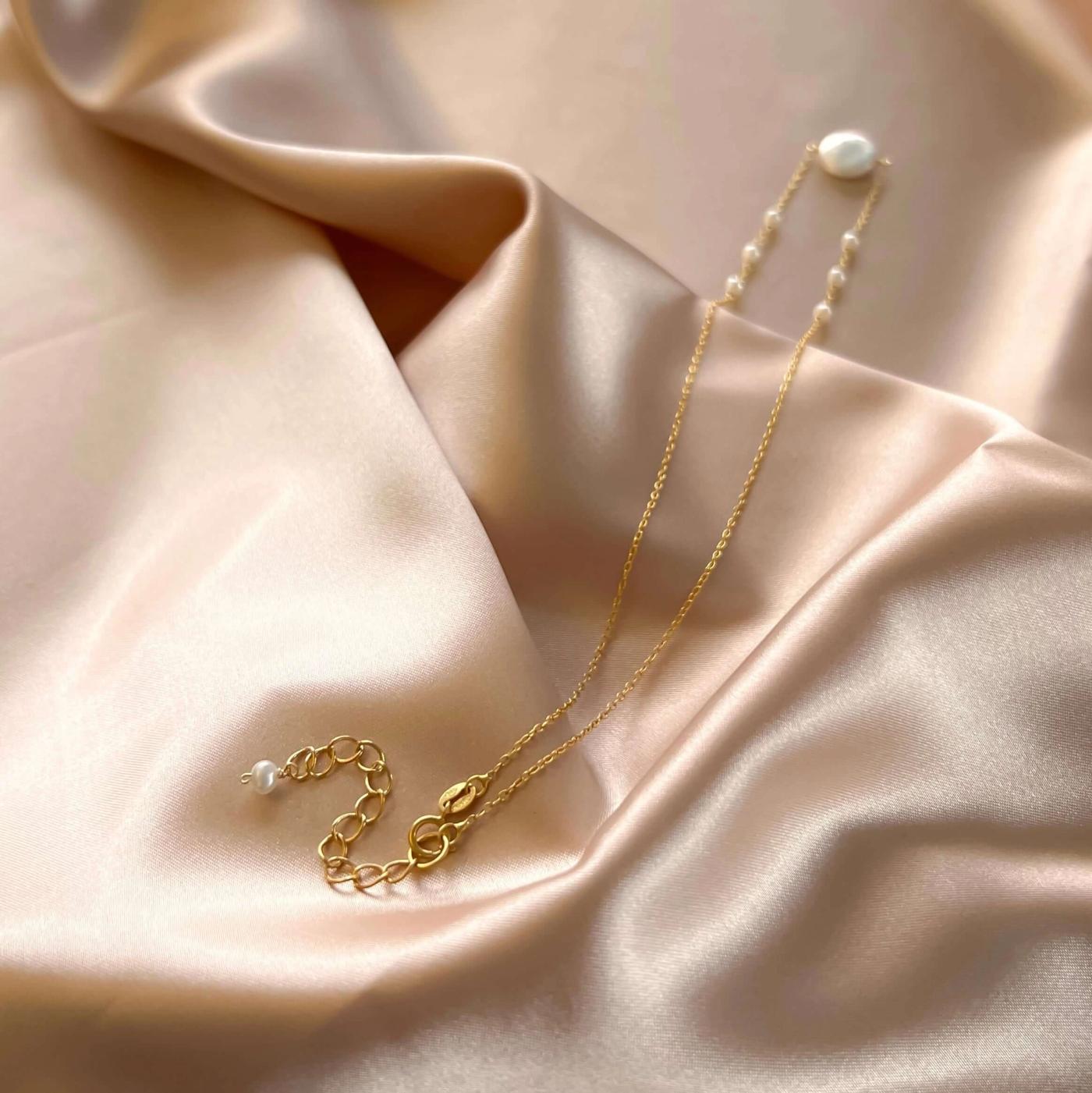
Here's how the two shapes stack up when you put them next to each other.
| Feature | Coin Pearls | Round Pearls |
|---|---|---|
| Shape | Flat disc | Spherical |
| Light reflection | Broad flash across one face | Even glow from every angle |
| Surface texture | More visible organic texture | Smoother, more uniform |
| Typical price for similar size | Generally lower | Generally higher |
| Everyday durability | Flat face can show marks more visibly | Curved surface hides minor marks better |
| Overall style | Modern, sculptural | Classic, timeless |
Shape and silhouette aside, the real differences come down to light and price. Coin pearls catch light across a broad, flat face, almost like a little mirror. Round pearls catch light evenly all over, which is what gives them that soft, consistent glow people associate with "pearly" in the first place.
Luster also reads differently. Coin pearls often show more visible texture, little ridges or natural patterning across the surface, while round pearls tend to look smoother and more polished at a glance.
On price, round pearls (especially high-luster, symmetrical ones) usually cost more than coin pearls of a similar size, simply because true roundness is rarer in nature. If you want a big, striking pearl without the price tag that comes with perfect roundness, that's where coin pearls earn their keep.
Both hold up fine for everyday wear as freshwater pearls. The one practical note: a coin pearl's flat face can show surface marks a little more visibly than a round pearl's curved one, just because there's more flat area to look at. Neither is more "fragile," it's just a different surface to live with.
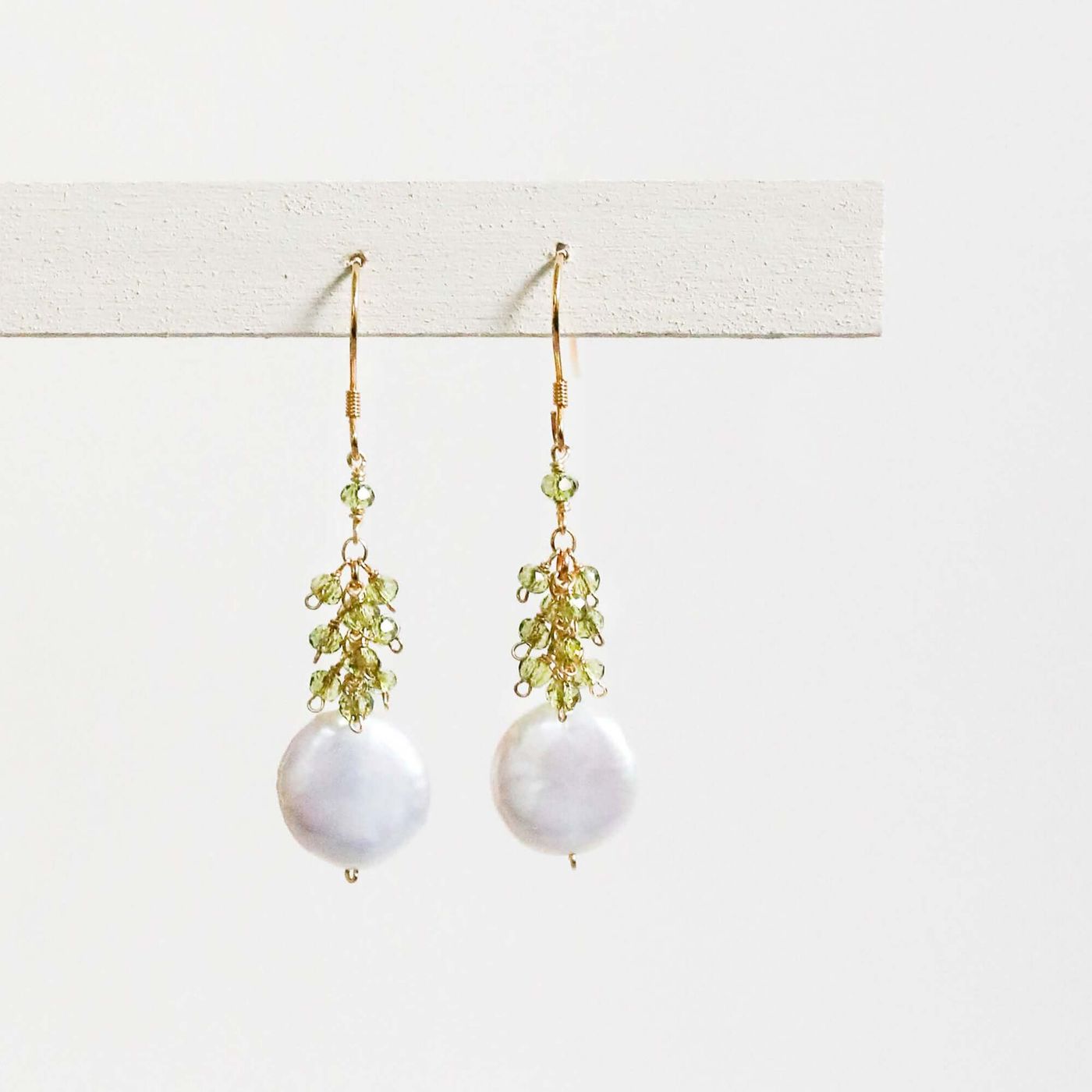
Coin pearls make excellent statement earrings. That flat face gives you a bold, architectural look without the weight you'd expect from something that size, since a coin pearl is thinner than a round pearl of the same width.
A single coin pearl hanging from a delicate gold chain makes a pendant that feels modern without trying too hard. It's minimal, but it has presence. Our pearl peridot coin pearl earrings pair that flat pearl shape with a pop of green stone for exactly this kind of look, and a gold coin pearl necklace does the same trick as a pendant.
Coin pearls also play well with other textured gemstones, think peridot, labradorite, anything with its own visible character. Layered together, they read like a collection built up over time rather than a matched set bought all at once.
If you want pearls that feel current, a little unexpected, maybe even a conversation starter, coin pearls are the shape to reach for.
Round pearls are built for classic styling. A single strand, simple studs, a solitaire pendant resting just below the collarbone: all of it reads timeless rather than trendy. This is the pearl shape that doesn't ask for attention, it just has it.
Because they're symmetrical, round pearls pair easily with other minimalist pieces. Nothing about their shape competes visually, so they slide into a simple gold stack or sit quietly next to a thin bezel pendant without any fuss.
They're also the safer bet for bridal looks, workwear, and gifting. If you're buying for someone who wants a piece they'll still wear in twenty years without it looking dated, round pearls are the answer. Browse pearl necklaces if you're picturing a strand or pendant style for that kind of gift.
One more practical point: round pearls layer cleanly with thin gold chains. Their shape doesn't catch or tangle the way an irregular or asymmetrical piece can, so they're an easy add to a layered look you're already wearing.
If you're shopping for everyday wear and lean toward a modern wardrobe, coin pearls bring texture and a sculptural edge that a plain round pearl won't give you.
If you're buying a classic gift, something meant to feel timeless the day it's opened and ten years from now, round pearls are the safer, more traditional choice. They're the shape people expect when they hear "pearl necklace" or "pearl earrings," which is exactly why they work so well for occasions.
Budget matters too. If you want a larger, more noticeable pearl without the price jump of a perfectly round one, coin pearls get you there. You're trading a bit of symmetry for size and savings, and for a lot of people that's an easy trade.
There's no wrong answer in the coin pearls vs round pearls debate. Both are genuine freshwater pearls with their own kind of beauty. It really comes down to the look you're going for, not which one is "better."
Pearls are soft compared to most gemstones, so a little care goes a long way, no matter which shape you choose. Keep them away from perfume, lotion, and water. Those everyday products can dull the luster over time, and luster is pretty much the whole point of a pearl.
Store pearls separately from the rest of your jewelry. Harder stones and sharp metal edges can scratch the nacre if they're tossed together in the same drawer or pouch.
After wearing them, wipe pearls down with a soft cloth instead of soaking or scrubbing. That's really all they need.
If you're ordering pearls as a made-to-order gift, give yourself a little lead time and check our shipping policy so you know when it'll actually arrive.
Yes, coin pearls are genuine freshwater pearls, grown inside mussels just like round pearls. Their flat, disc-like shape comes from how the tissue graft grows between the mussel's shell valves, not from any artificial shaping. Because they are natural, each coin pearl has its own slight variation in surface and sheen.
No, coin pearls simply look different from round pearls, not lesser. Their wide, flat face actually shows off luster and texture beautifully, and many people choose them specifically for a more modern, sculptural look rather than a traditional one. Price often comes down to size and luster quality more than shape.
Both coin and round freshwater pearls last for years with the same gentle care: avoiding water, perfume, and lotion, and storing them away from harder jewelry. Shape doesn't significantly affect how long a pearl lasts, though a coin pearl's flat face can show surface wear a bit more visibly than a round pearl's curved surface over time.
Yes, mixing coin and round pearls can work well, especially in a layered necklace stack or a mixed-earring moment, since both are genuine pearls with a similar soft luster. Keep the metal tone consistent between pieces so the mix feels intentional rather than mismatched.
Generally no, coin pearls tend to cost less than round pearls of a similar size because perfectly round pearls are rarer and take more precise growing conditions to form. That said, price also depends on luster, size, and overall quality, so it's worth comparing those factors alongside shape.
Coin pearls and round pearls are both genuine, both beautiful, and both worth owning. The real decision is just which look fits your style, or the person you're buying for, better.
Take a look through our pearl earrings to see coin pearl styles sitting right alongside classic round pearl pieces, and get a feel for which one you keep coming back to. Every piece is made to order by hand in the USA, so your pearls will typically arrive in about 3 to 14 business days. And if you want to be the first to see new pearl styles and gifting ideas as they land, join our newsletter.

Subscribe to our email list to get early access to new arrivals and exclusive offers.
Leave a comment